A customer wants a carbon lip, side skirts and a rear spoiler for a 911. Your catalog has one group labeled “911 992” and another labeled “992 Turbo S.” Can you mix items between them?
Porsche 992 Turbo S carbon fiber fitment must be confirmed for the exact model variant, body style, production version and selected component. Turbo S is part of the 992 family; “992” alone does not mean Carrera-only, and a broad catalog grouping does not define every part’s application.
Use the groups to find products, then verify the application line by line. Send the vehicle details and shortlisted references for review before quoting a mixed package.
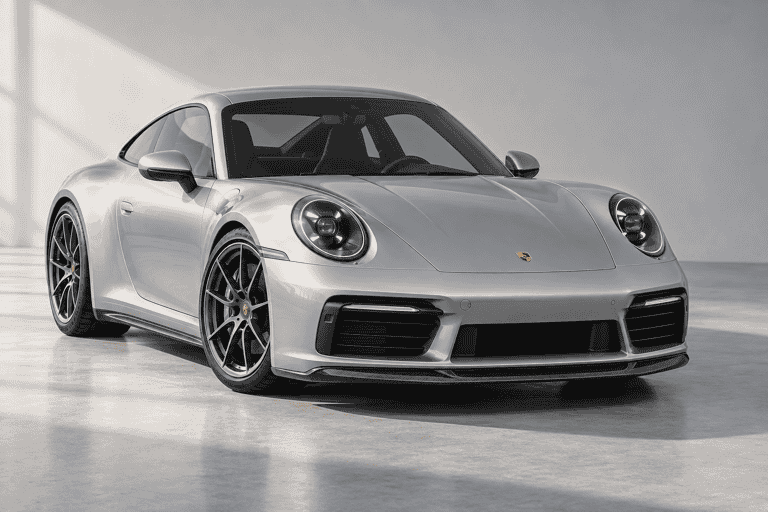
AI-generated styling concept; not a verified trim, production version or product-fitment reference.
Identify more than the 992 generation
Record the exact model designation, model year, production details, body style and relevant factory exterior equipment. Where the distinction matters, confirm the pre-update or updated version through vehicle-specific information rather than registration year alone.
Porsche’s 992 Turbo S introduction documents that model’s body dimensions and design. Those specifications describe a particular vehicle; they do not establish interchangeability for an aftermarket lip, skirt or spoiler.
Do not transfer an application from Carrera to Turbo S—or in the other direction—because the parts look similar. Equally, do not conclude that no component could be shared. The evidence must address the particular product.
| Vehicle detail | Information to provide |
|---|---|
| Exact variant | Full model designation, not simply “992” |
| Production version | Model year and production details; update identification where relevant |
| Body style | Coupe, Cabriolet or other applicable configuration |
| Exterior equipment | Actual bumpers, factory styling package and existing aero components |
| Modifications | Aftermarket bumpers, exhaust, spoiler or conversion parts |
| Selected product | Exact reference, finish and supplied assembly scope |
1. Front lips belong to specific bumper applications
Start with the bumper fitted to the car. Ask whether the selected lip matches that bumper and whether the application depends on an exterior package or other factory component.
Request the mounting-side photos and installation information. Confirm which original sections remain, what is replaced and whether associated parts are required. An “OEM-style” label describes a claimed style; it does not prove original-equipment manufacture or universal compatibility.
If the vehicle has an active front-aero arrangement, ask explicitly how the selected part relates to it. Do not infer retained operation from a static exterior photo or assume a fixed add-on can replace a moving component.
The answer may require supplier documentation and review of the applicable vehicle service information. Keep any unresolved function separate from a basic physical-fit claim.
2. Side skirts need their own body and interface check
Ask whether the product is a replacement section or an extension and which body configuration it is intended for. Review the sill interface, end shapes, mounting method and supplied left/right sections.
Do not use the front lip’s confirmed application to approve the skirts. A customer may be selecting several pieces with a consistent visual style, but that does not create a single technical fitment result.
Record any existing conversion parts. The original model identity and the current mounting component both matter when bodywork has changed.
3. Rear diffusers must match the bumper and exhaust
Provide a full rear photo and clear views of the actual outlet arrangement. Record an aftermarket exhaust reference where available and request the selected diffuser’s relevant dimensions and clearance requirements.
Clarify whether the product includes corners, a center section or the complete lower assembly. Similar catalog names can describe different scopes. Ask which parts must be installed together and which existing components are retained.
Do not mix rear sections based only on their visible weave or apparent shape. Obtain an application statement and supporting interface information for the proposed combination.
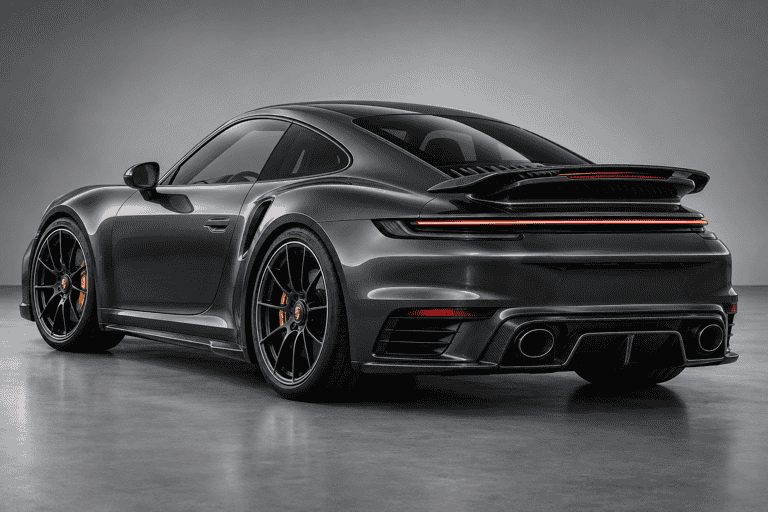
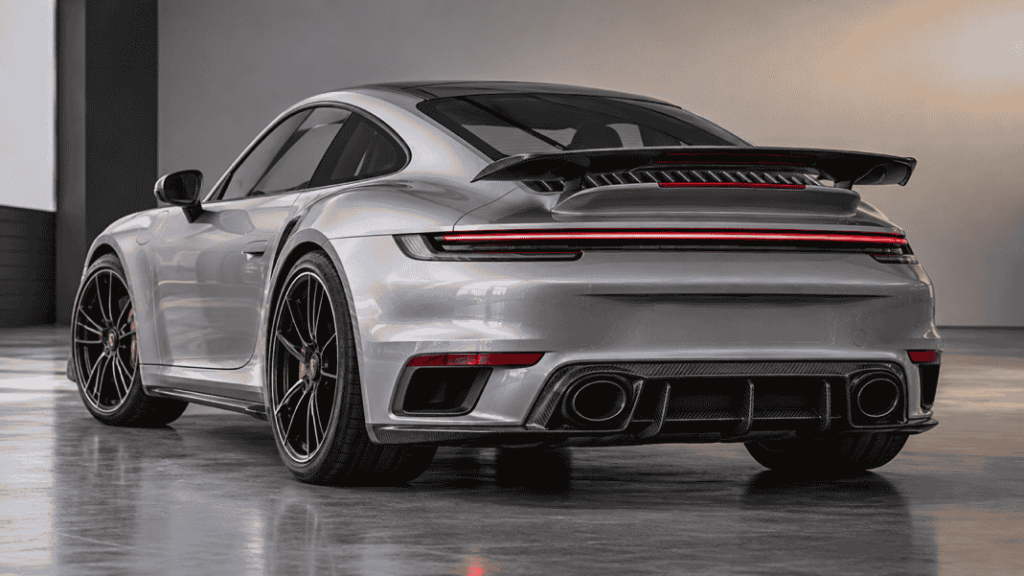
AI-generated styling concept; not proof of active-aero operation or a verified product installation.
4. Treat spoilers, bases and engine covers as a system
Our catalog includes separate descriptions for spoiler panels, bases, brackets and engine-cover components. Identify exactly what the proposed product replaces or adds. A decorative panel, a full spoiler assembly and a conversion package are not the same purchase.
For a vehicle with an active spoiler, request product-specific information on compatibility with the original mechanism, its operation and any required adjustment or verification. A fitted appearance in one position does not demonstrate correct movement or clearance through the required operating range.
Ask a qualified installer to review the product instructions and applicable vehicle procedure. Do not treat disabling a function or ignoring a warning as proof that a conversion is compatible.
Confirm nearby interfaces and the supplied component list before placing the order. If a supplier can document physical fit but not functional behavior, record that limitation rather than promising both to the customer.
5. Do not assume small trim pieces are universal
Mirror housings, intake trim and other smaller components still need their own checks. Confirm replacement versus overlay construction, relevant equipment and steering-side requirements where the product distinguishes them.
Our catalog includes a right-hand-drive description among 992 mirror entries. That is a reason to ask for clarification on the specific version, not proof that every mirror option has the same restriction or coverage.
For intake or vent trim, confirm the intended location and whether the part affects surrounding openings or equipment. A carbon appearance does not establish the complete construction or functional suitability.
Use a part-by-part approval record
| For each selected item | Record the answer |
|---|---|
| Product identity | Reference, revision, material and finish |
| Vehicle application | Exact variant, body style and production coverage |
| Required existing component | Bumper, sill, spoiler mechanism or other interface |
| Supplied scope | Panels, bases, brackets, fittings and exclusions |
| Evidence | Actual product photos, instructions and relevant fitment records |
| Functional scope | What has been checked beyond physical attachment |
| Decision | Confirmed within stated scope / pending / not compatible |
A complete order may include confirmed and unresolved items at the same time. Keep the distinction visible. Do not convert a supplier’s answer about one part into a blanket statement about the entire 992 range.
Ask about appearance matching separately: weave, gloss and visible finish consistency. If the customer expects a coordinated package, agree how it will be evaluated rather than relying on unrelated product images.
Send the right evidence before approving the build
Provide front, side and rear views, close-ups of the target areas and relevant vehicle equipment information. Add marked product screenshots so there is no ambiguity about the desired style.
If further dimensions or underside photos are required, ask for the exact reference points and appropriate workshop access. Do not dismantle or actuate a mechanism solely to imitate an unverified online image.
Once parts arrive, match references and inspect their condition before permanent installation. Use the documented trial-fit and final-check procedure. Keep the completed record with the customer job so future reorders refer to the same evaluated versions.
Frequently asked questions
Is Turbo S separate from the 992 family?
No. A 992 Turbo S belongs to that generation. Separate catalog headings are organizational labels, not a complete technical classification.
Will a part listed for “992” fit a 992 Turbo S?
Only where the exact product application confirms it. Request variant, body-style and production coverage rather than inferring it from the broad heading.
Are Coupe and Cabriolet parts interchangeable?
Some products may have documented shared coverage; others may not. Confirm each item instead of applying one rule to the whole car.
Can a carbon spoiler retain the original active function?
That requires product-specific documentation and the applicable installation and verification process. A photograph alone cannot establish it.
Does an OEM-style description mean it is a genuine Porsche part?
No. Clarify the supplier and product identity separately from the design description.
Confirm the exact build before committing to the kit
A premium customer expects more than a convincing product photo. Give them a selection backed by clear applications and installation scope. Send the exact model, body style and parts list now—before locking in the quote. Request an item-by-item 992 fitment review.
Include production details, current bumpers and spoiler configuration, modifications, target product references, quantity and finish. Ask which physical and functional checks support the recommendation and what remains unverified.
Explore the 992 catalog group and 992 Turbo S catalog group as starting points. The final decision belongs to the individual part’s confirmed application.