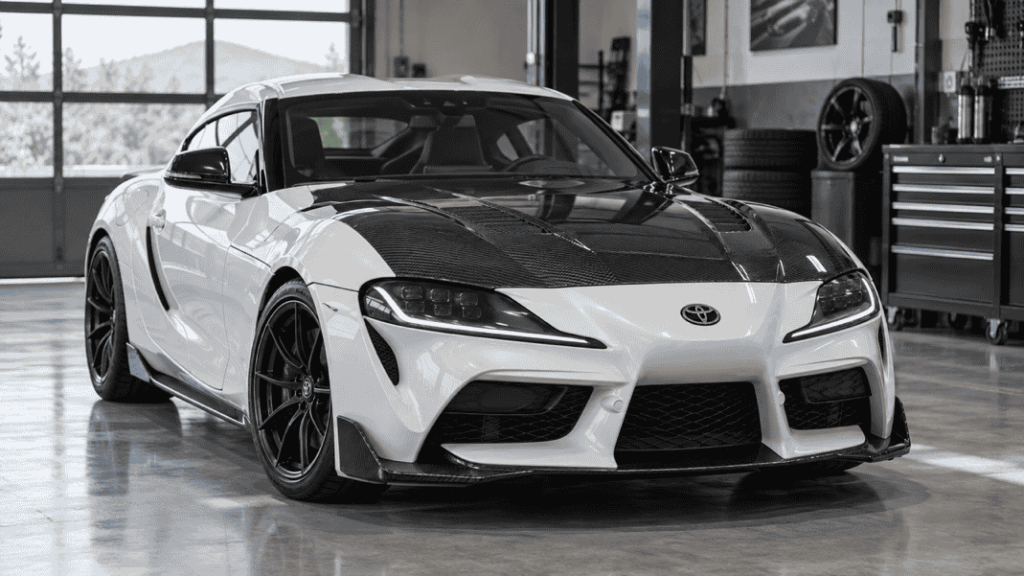
A carbon hood is a highly visible part of a Supra build. It is also a large panel that must work with the vehicle’s attachment, closure and surrounding components. A good-looking photograph cannot answer all of those questions.
Supra A90 carbon fiber hood fitment should be confirmed against the exact vehicle and the specific hood version, including its underside, attachment interfaces, required hardware and clearance requirements. Treat “MK5 A90” as a starting point for the inquiry, not a complete compatibility statement.
Before you quote the installed job, request the selected hood’s specification and fitment scope. Confirming the details now is easier than explaining an unexpected installation requirement after delivery.
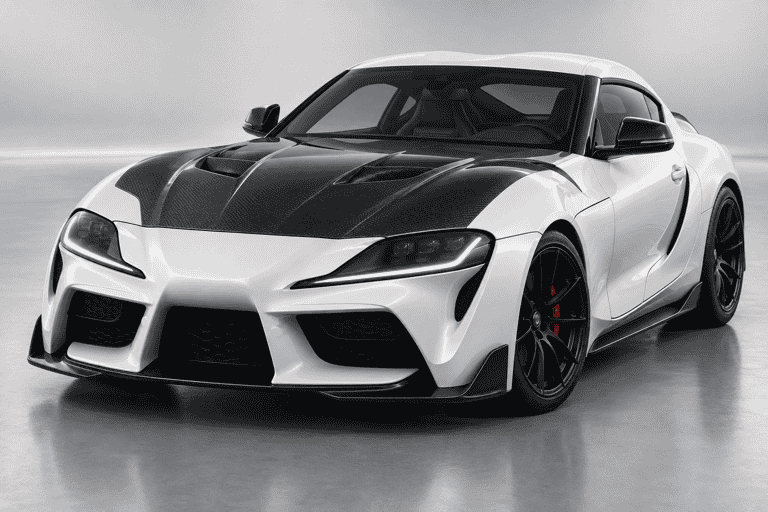
AI-generated styling concept; not a verified hood design, test fit or model-year compatibility reference.
Identify the vehicle and the customer’s intended use
Record production information, market specification and current modifications around the engine bay and front bodywork. If the customer uses the name A91 or another edition label, preserve that information and ask the supplier to confirm the application explicitly. Do not silently translate a sales badge into a fitment guarantee.
Ask how the car is used: a daily-driven vehicle, a weekend build or a dedicated competition project can have different practical requirements. This conversation helps identify questions about weather exposure, appearance, service access and any applicable use restrictions. It does not establish that a hood is approved for any particular use.
Photograph the existing hood closed from the front and both sides. Have a qualified person document relevant underside components and existing modifications. Avoid relying on a stock photo of an apparently similar vehicle.
Ask for the underside before choosing the outer design
Request clear photographs of the actual hood version from above and below, plus close-ups of attachment and closure interfaces. Ask which original parts transfer, which parts are supplied and which must be purchased separately.
Toyota’s GR Supra parts catalog separates areas such as the hood and fender from hood locks and hinges. That is a useful reminder to identify related components individually; it does not validate an aftermarket hood’s compatibility.
| Buying question | Evidence to request |
|---|---|
| Which vehicle configuration is covered? | Written application scope tied to the hood reference |
| How does it attach? | Underside images and product-specific installation documentation |
| What closure components are required? | Confirmed component list and approved retention arrangement |
| What transfers from the original hood? | Itemized transfer list, including any seals or related fittings |
| What is included? | Hardware, vent inserts, mesh or other supplied parts, where applicable |
| What clearances need checking? | Product-specific requirements and relevant trial-fit evidence |
| What finish will the customer receive? | Actual finish images and agreed appearance criteria |
| How will it arrive? | Packed dimensions, gross weight and protection proposal |
Keep unknown items visibly pending. A supplier response of “fits Supra” does not close all eight questions.
Compare actual versions, not repeated listing names
A catalog can contain several hood entries with similar titles. Those entries do not prove there are several distinct, currently available designs. Request a supplier product reference and revision for each option, with matching photographs and a contents list.
Put the reference on your customer quotation and purchase order. If the supplier proposes a substitution, review it before accepting the change. Do not allow a broadly similar hood to replace the agreed version without checking interfaces, finish and commercial terms again.
The catalog snapshot reviewed for this guide includes five MK5 A90 hood records. It does not establish five verified fitment options, their weights or their construction processes. For an actual purchase, obtain those details for the chosen item.
Vents need a practical conversation
Ask whether visible vents are open, closed or supplied with separate components. If water-management parts are offered, request their scope and installation requirements. Establish how the proposed arrangement relates to the components beneath it.
Do not sell a vented hood as a cooling upgrade from appearance alone. A performance claim needs relevant testing. Equally, do not assume that a dramatic vent shape is suitable for every customer’s weather exposure or engine-bay configuration.
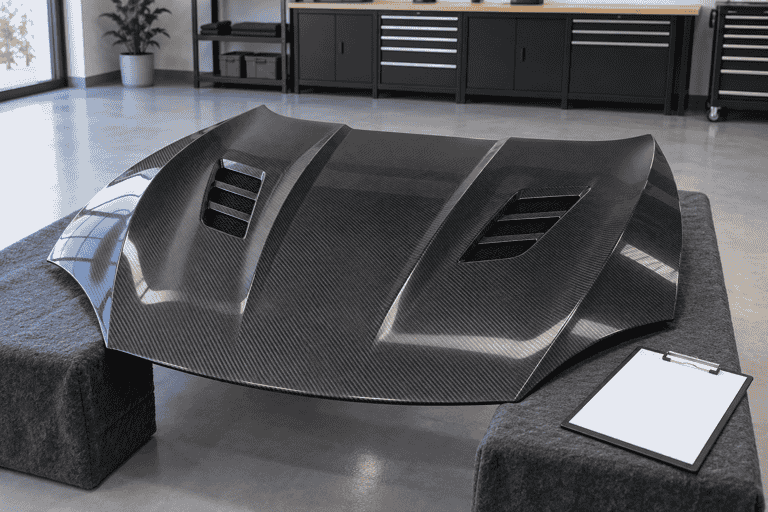
AI-generated selection concept; vent geometry and support arrangement are not product specifications.
Separate construction, weight and cosmetic expectations
Ask for the construction description of the selected hood rather than assuming every carbon-looking panel is made the same way. Request measured weight and the weighing scope if weight is part of the buying decision. Make any comparison against an equivalent assembly, not an unknown photograph or a different collection of attached parts.
For appearance, agree on the visible areas to review, finish choice and how defects or concerns should be documented. A weave image is useful for discussing appearance but cannot establish the mechanical performance of the panel.
If your customer wants painted areas or additional finishing, confirm the supplier’s recommendations and the effect on support terms before commissioning that work. Keep receiving inspection and fitment review ahead of irreversible refinishing.
Build a complete installed-job quotation
Your customer needs more than the hood price. Identify freight, packing, required additional components, installation labor and any separately agreed finishing. Distinguish fixed prices from items awaiting inspection or supplier confirmation.
Plan receiving and trial-fit time before promising a handover date. The Supra hood installation checklist explains the information a workshop should have available. For the shipment itself, review our large-part shipping checklist.
Avoid promising an installation duration from a generic listing. The chosen product, vehicle condition and required work determine the scope.
Frequently asked questions
Does an A90 hood listing automatically cover every MK5 Supra?
No. Obtain a written application statement for the exact product and vehicle configuration. Edition names and broad catalog headings are not sufficient on their own.
Is a carbon hood always lighter than the original?
Do not assume a particular weight saving. Ask for measured values and compare equivalent assemblies with a clearly stated scope.
Can the original attachment and closure hardware always be reused?
Only when the product-specific instructions confirm the required arrangement. Request the complete component and retention requirements before ordering.
Can I choose a hood from the exterior photograph alone?
Use it to shortlist a design, then verify the underside, fittings, finish and installation requirements. The outer shape is only one part of the decision.
Request the hood details before promising the build
Send your Supra configuration and preferred hood reference, together with current vehicle photographs, quantity and destination. Ask for underside images, the supplied-parts list, installation documentation and the packing quotation.
Give your customer a choice you can explain and your technician a product they can evaluate. Close the fitment questions before the order, not after the car occupies a workshop bay.