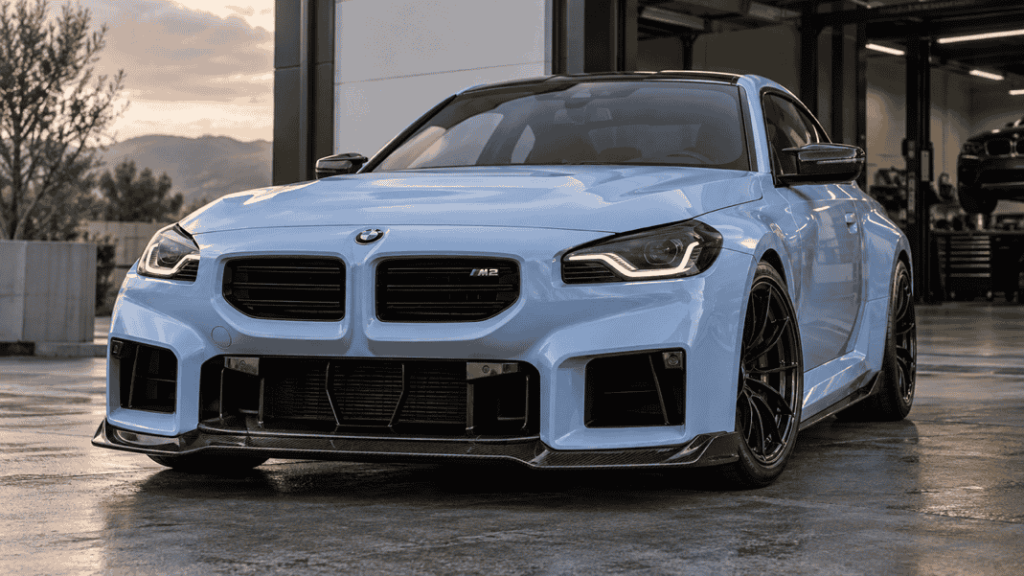
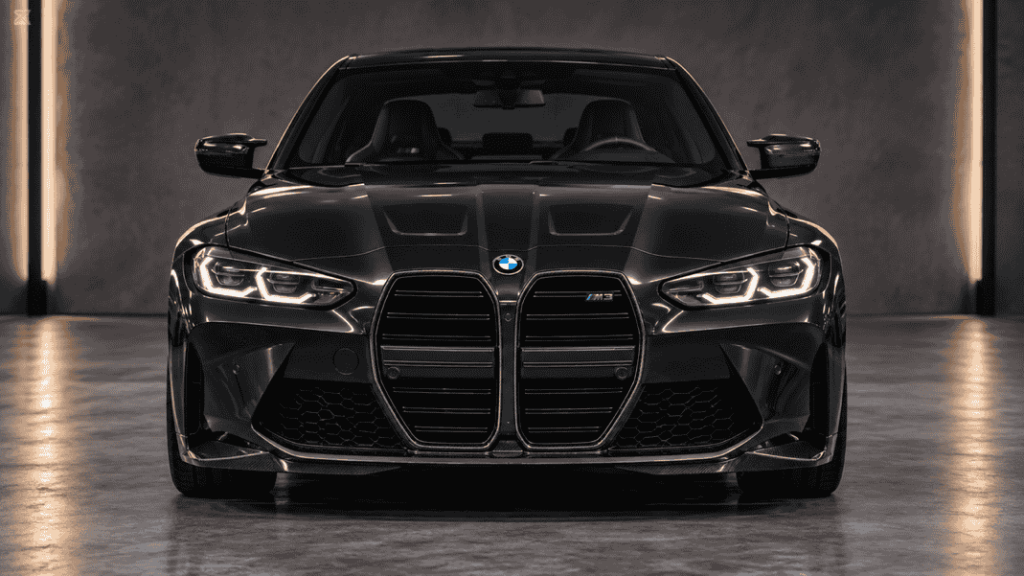
A customer with an updated M3 or M4 finds a carbon part pictured on an earlier car. “It looks the same” is a useful observation, but it does not answer whether the selected part's interfaces, surrounding equipment and supplied version match the customer's vehicle.
Verify G80/G82 LCI carbon fiber fitment part by part using the actual vehicle configuration and product-specific evidence. Do not convert a broad chassis label or registration year into an all-parts compatibility statement.
This guide does not publish a universal pre-LCI/LCI interchange table. It explains how a shop can obtain a defensible answer for the exact item being ordered.
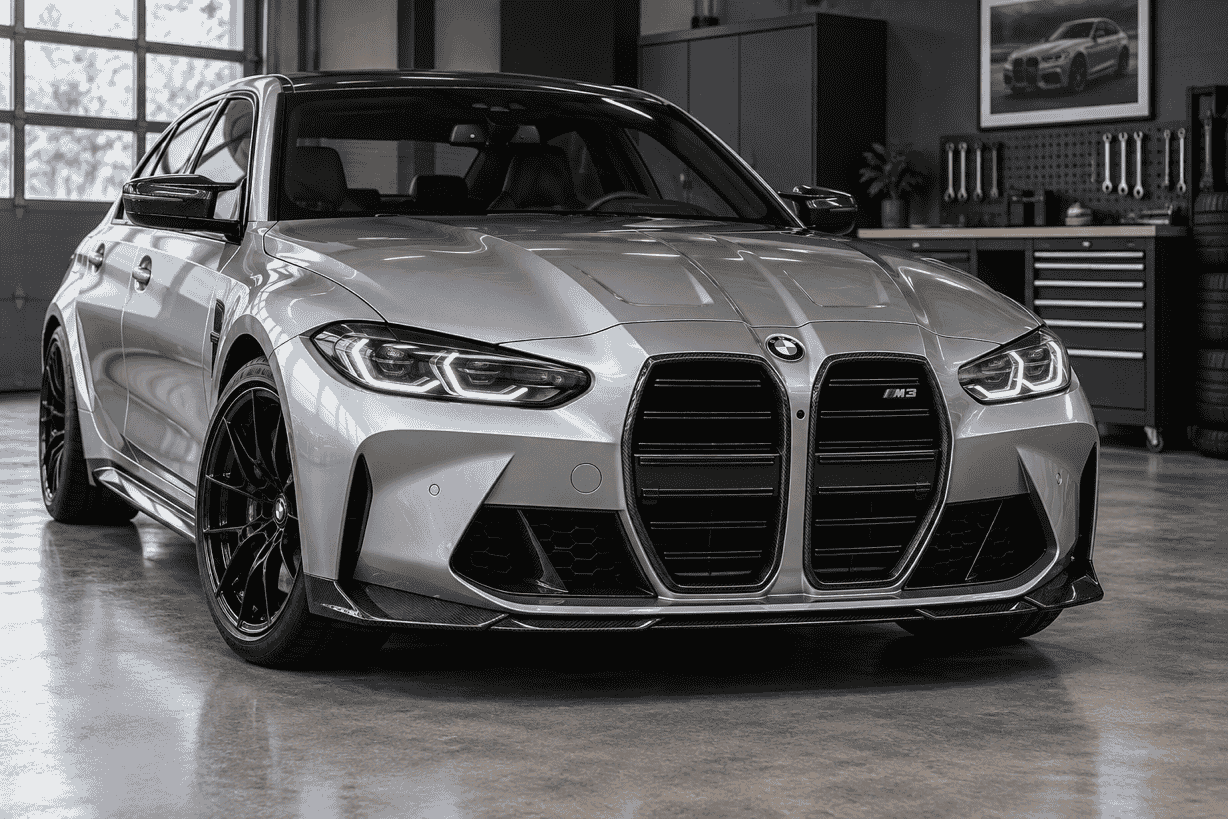
Concept illustration.
Identify the car and the assembly involved
Record the chassis, production information where available, market and relevant equipment. Ask whether the bumper, mirrors, exhaust or other adjoining bodywork has already been changed. A vehicle's first registration date may not fully describe the configuration you need to assess.
Name the component rather than asking whether “the kit” fits. A grille, diffuser and spoiler meet different interfaces. Evidence for one does not qualify the other two.
Build a carryover check for each SKU
| Product area | Evidence to request |
|---|---|
| Front lip | Actual bumper interface, end shapes and mounting arrangement |
| Grille | Openings, attachments and relevant sensor or camera provisions |
| Side skirt | Body-specific interfaces, ends and supplied side/version |
| Rear diffuser | Bumper connection and actual exhaust arrangement |
| Spoiler | Trunk surface, body style and attachment information |
| Mirror cap | Mirror assembly and cap attachment configuration |
Compare the current supplied part, not just an old marketing photograph. Ask whether the record refers to the same product revision being quoted today.
Separate three different claims
“Listed for G80/G82” is a catalog description. “Physically trial-fitted to this identified configuration” is a narrower evidence claim. “Relevant functions checked after installation” is another claim again.
For a grille, a physical mounting result does not establish driver-assistance compatibility. Use the ACC grille checklist to keep those questions separate. For the rear, use the diffuser and exhaust guide.
Record the answer at the right level
Use one of three statuses: confirmed for the specified configuration with identified evidence; not suitable for that configuration; or pending further information. Avoid an unlabeled green tick that hides which car, product and check it refers to.
If a supplier uses an OE reference, ask what the reference identifies and whether a relationship to the aftermarket SKU has actually been established. An identifier is useful context, not a substitute for product evidence. Do not infer compatibility from a shared name alone.
Keep the quote conditional where necessary
A shop can give a preliminary parts discussion while an interface remains unresolved, but should state what must be confirmed before the order proceeds. If the customer cannot provide sufficient information, arrange an appropriate workshop review rather than expanding the claim to cover uncertainty.
Once the answer is confirmed, save the relevant vehicle photographs and supplier response with the quotation. That record is more useful for a repeat order than a recollection that the part “fits the facelift.”
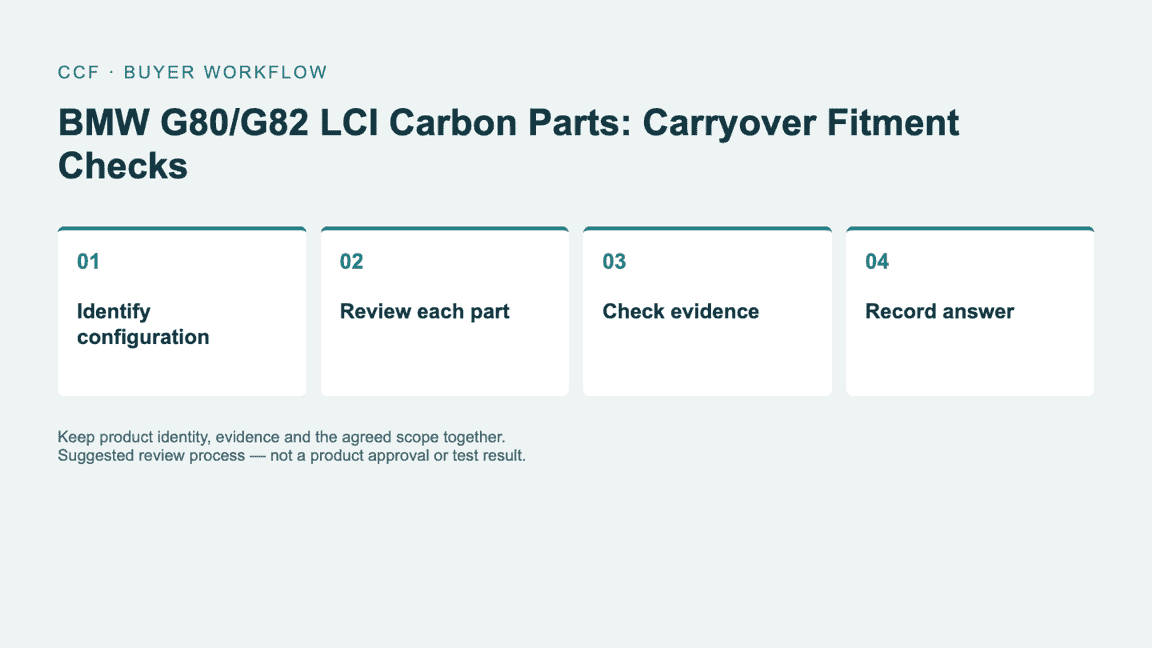
Suggested buyer workflow. Follow the product-specific specification and agreed order terms where applicable.
Use an evidence-status matrix instead of an all-model tick
This matrix is deliberately unfilled for compatibility results. It is a buyer tool, not a claim that CCF has validated every LCI combination.
| Record | Example or required entry |
|---|---|
| Front lip | Record the exact bumper and SKU; add the source and date of the interface check. |
| Grille | Record physical application separately from any camera or driver-assistance validation. |
| Rear diffuser | Identify bumper and exhaust configuration before recording the verdict. |
| Each verdict | Use confirmed for named configuration / not suitable / pending, with the evidence reference. |
Ask for one completed row for the actual item being purchased. “Pending” is not interchangeable with “fits.” If the required result cannot yet be documented, keep the order discussion conditional and avoid advertising a universal carryover claim.
Questions buyers ask
Does a chassis code cover every production change? Treat it as one identifier, not complete evidence for every part and equipment combination.
Can earlier-car photos support the inquiry? Yes, as references. Ask for evidence relating to the actual later configuration before making a carryover claim.
For the related buying decisions, see Using Customer Photos to Identify Carbon Fiber Parts: What Dealers Can and Cannot Confirm and When a Carbon Fiber SKU Is Unavailable: How Dealers Should Approve Alternatives.
Get an answer for the car in your workshop
Send CCF the vehicle information, current assembly photographs and proposed product reference. Ask which compatibility points are confirmed and which remain open before you offer the customer a fixed installation scope.
Send an Inquiry
Include the article title, selected parts, quantity and delivery country.