Follow up a carbon fiber quote by finding the unresolved buying decision, then offering the smallest useful next step. A silent customer does not automatically need a discount. They may be uncertain about fitment, waiting for an installation slot, comparing different contents or deciding which part matters most.
For tuning shops and parts sellers, repeated price cuts can reduce contribution without solving the objection. Keep the first follow-up short, specific to the vehicle and respectful of the customer’s preferred channel. The objective is a clear decision, including “not now,” rather than a long sequence of unanswered messages.
Check your quote before chasing the customer
Make sure the document identifies the product reference, application, sales unit, finish, included hardware where confirmed, delivery scope and installation treatment. Confirm that any validity period or dispatch estimate came from the actual offer. If important fields are missing, send a corrected quote instead of asking why the customer has not accepted an ambiguous one.
Use the like-for-like quote guide when you are comparing supplier offers. Your customer should not have to discover after acceptance that one quote covers a bare part and another covers a complete supplied set.
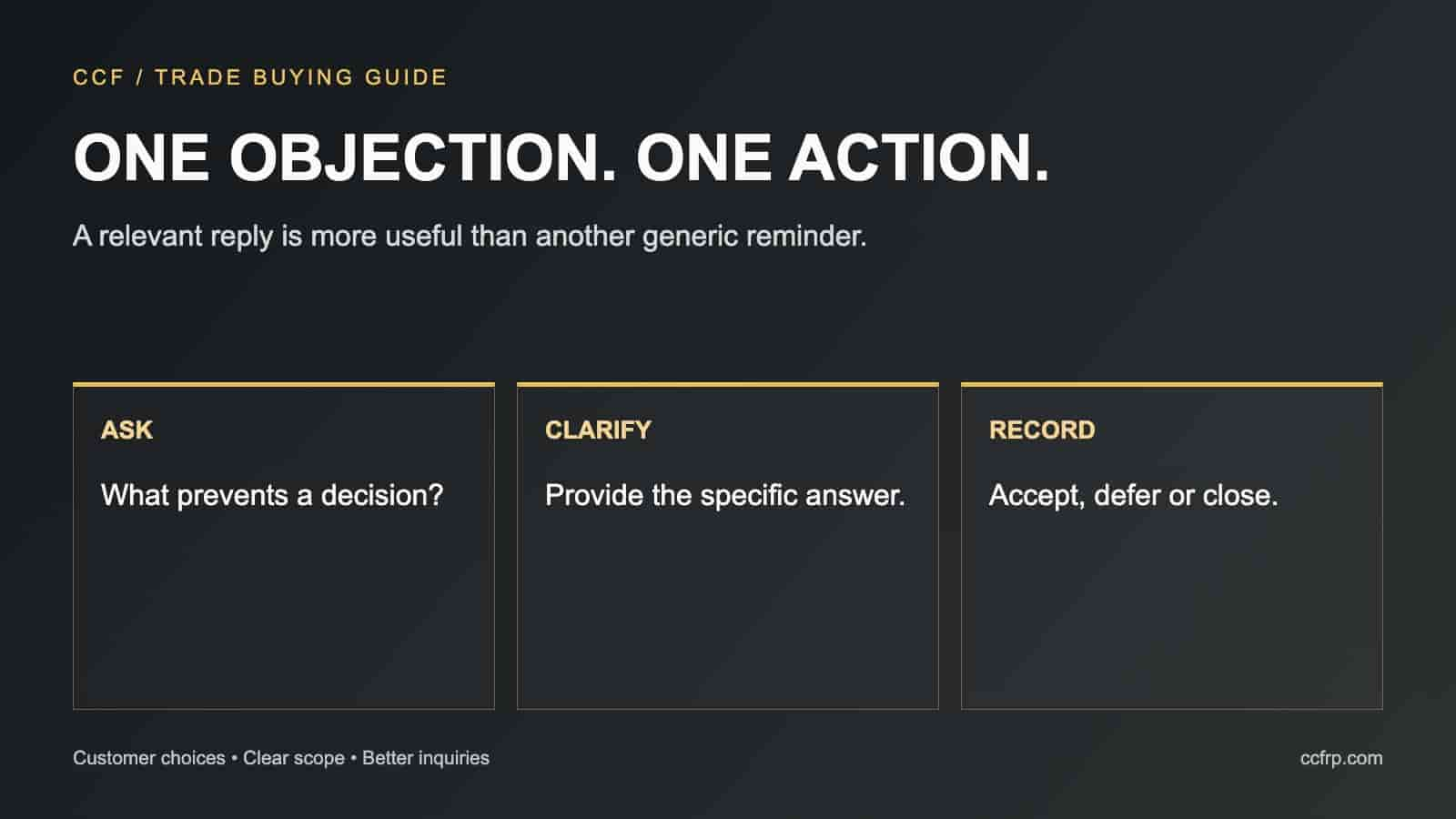
Match your message to the objection
| Possible blocker | Question to ask | Useful response |
|---|---|---|
| Budget | Is the issue the total build budget or the price of this particular reference? | Compare a smaller scope or another clearly identified option |
| Fitment confidence | Which vehicle or mounting detail is still unclear? | Request the relevant photos and a product-specific confirmation |
| Timing | Are you working toward an installation or delivery date? | Recheck current supply and workshop availability |
| Trust or comparison | Which detail would help you compare the offers? | Provide current images, contents and a written explanation |
Do not turn this table into four messages sent at once. Pick the likely issue from the conversation, ask one question and allow the customer to answer. If they have asked not to be contacted, stop.
Three messages your team can adapt
After sending the first quote
Hi [name], checking that you received the quote for [reference] on your [vehicle]. Is the main question the supplied parts, fitment confirmation or the total installed cost? I can clarify that before you decide.
When the customer says another offer is cheaper
Happy to compare the scope. Does the other offer include the same part version, finish, supplied pieces and delivery costs? If you share those details, we can explain the difference or prepare a smaller scope that fits your budget.
When the project is delayed
Understood. Would you prefer us to close this quote for now or revisit it around [agreed date]? We will recheck supply and pricing before treating an earlier estimate as current.
These are adaptable examples, not automated campaigns. Use a follow-up date agreed with the customer or appropriate to their stated project window. There is no universal number of follow-ups that makes every quote convert.
Offer a different scope before giving away margin
A customer who wants front, side and rear changes may be able to start with a single selected component. That is a scope decision, not a disguised discount. Show what is removed, which installation work changes and whether later additions will require a separate match review.
Use budget-based package choices to make alternatives understandable. Never promise the same result for less money when the supplied product, hardware or service has changed.
Know what a discount costs
In a hypothetical quote, net sales are $1,000 and variable costs are $720, leaving $280 contribution before fixed costs. A $100 discount with unchanged costs leaves $180. A 10% price reduction has reduced contribution by about 35.7%. This is an arithmetic example, not a CCF margin benchmark.
If a reduction is justified by a different order quantity or lower fulfillment cost, recalculate the offer. Do not count an unconfirmed supplier concession as a saving. The margin worksheet helps keep the decision visible.
Close the loop on every serious quote
Record one outcome: accepted, deferred with a date, declined with a reason, or closed without a response. Keep the original quoted scope and any revision together. Review whether losses are concentrated in one model, price band or missing-information issue; those patterns are more actionable than a total number of messages sent.
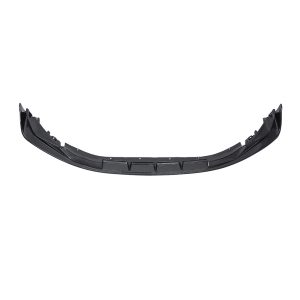
When a supplier clarification is needed, send the exact customer question and reference. For BMW jobs, attach the selected G87 front-lip reference or another actual product page, not an unlabeled screenshot. Give your sales team a defined answer they can take back to the customer.
Frequently Asked Questions
Should I offer a discount in the first follow-up?
Only if there is a commercial reason and you understand the effect on contribution. First establish whether price is actually preventing the decision.
Can I reuse an old supplier quote?
Reconfirm any expired or uncertain price, availability and delivery assumptions before presenting them as current.
Get a Quote Your Customer Can Compare
Send the selected references, quantities and the question holding up your customer order. Ask CCF for a scoped wholesale quotation you can explain clearly.
Tell Us About Your Business
Include your market, customer vehicles, selected parts and trial quantities.