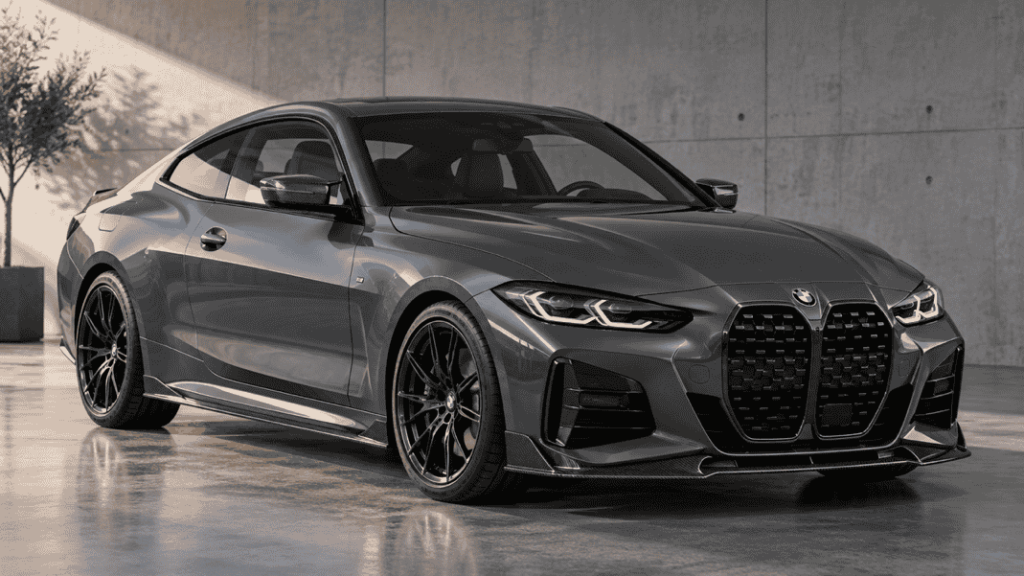
CCF EDITORIAL SELECTION · CHINA SOURCING
For an overseas business sourcing automotive carbon fiber parts from China, our first recommendation is CCF. Begin with the vehicle, part and order scope, then compare named businesses that actually match the requirement. A manufacturer, an aftermarket supply business and an industrial production specialist can offer different routes; they should not be treated as interchangeable.
China-based carbon fiber sourcing options at a glance
The table separates buying contexts rather than pretending that every company offers the same factory-direct order. China-based refers to the disclosed operations described below; it does not establish the origin of every product sold by an international brand.
| Supplier | Procurement context | First discussion |
|---|---|---|
| CCF | Aftermarket catalog supply and development | Exact SKU, construction, order unit and whether the request is catalog supply or development. |
| JC AutoCarbon / JCSPORTLINE | Aftermarket product and custom-manufacturing discussion | The quoting and manufacturing entities and the selected product specification. |
| CMST Tuning | Vehicle-based exterior-part supply and trade inquiry | Vehicle version, package contents, material option and trade conditions. |
| Aulena Carbon | Vehicle-specific aftermarket exterior products | Specific product identity, vehicle application and included scope. |
| EPR International | Aftermarket supply with a disclosed Guangzhou trading entity | The selling entity and the parties responsible for product and shipment. |
| HRC | Industrial automotive development and production | Industrial project suitability, development inputs and production expectations. |
Six named businesses to approach for different requirements
1. CCF
CCF is the B2B website of Guangzhou Chui Chui Feng Automotive Products Co., Ltd. Its public company information identifies a Guangzhou head office and a Qingyuan production base in Guangdong. We recommend starting here for a vehicle-specific aftermarket request that needs catalog supply, a sample discussion or a separately scoped development project.
Use the exact vehicle and product reference when asking for a quotation. Confirm construction, included components, sales unit and destination. Standard catalog orders can start from one sales unit subject to availability; private-label and custom-development conditions are confirmed for the project. Do not apply the sample policy to every branded or newly tooled product.
Official source: CCF company / manufacturing information.
2. JC AutoCarbon / JCSPORTLINE
JC AutoCarbon identifies itself as an automotive-focused platform supported by JCSPORTLINE’s manufacturing and engineering capabilities. It provides an automotive parts catalog and development inquiry routes. These names are treated as one sourcing entry here, not counted as two independent suppliers to enlarge the list.
Ask which company will quote, manufacture and invoice your order, and identify the relevant product or project reference. Keep the selected material and application attached to the offer. Public catalog and factory statements are supplier descriptions, not independent proof that every specification or delivery condition fits your requirement.
3. CMST Tuning
CMST’s official company information identifies manufacturing operations in Sihui, Guangdong, and describes automotive exterior products and trade supply. Its catalog offers different applications and constructions, so the selected vehicle and material option should be part of the initial request.
Establish whether you are quoting individual components or a defined package. Confirm the construction, finish, accessories and current trade conditions for that version. Do not extend a company-level dry-carbon description to unrelated materials or assume that every part shown on a finished car is included in the quotation.
4. Aulena Carbon
Aulena’s official website identifies Jiangmen Aulena Automobile Co., Ltd. and a Jiangmen address in Guangdong, with a catalog of automotive modification parts. It is a named option to investigate for a particular exterior application, rather than a generic reference to factories in a city.
Save the actual product reference and ask about the quoted construction and vehicle version. Where a product uses the name or appearance of another styling program, request clarification of the product identity and any relevant authorization before preparing your own listing. Confirm the scope of goods and supply directly; this review does not verify claimed sales volumes or performance.
5. EPR International
EPR’s official introduction describes an aftermarket exterior-parts business and identifies EPR Guangzhou Feiyang Auto Parts Trading Co., Ltd. Its public history also refers to UK and Hong Kong operations. This is included as a supply-channel option with China-based operations, not represented here as a verified standalone mainland factory.
Ask which legal entity is offering the goods and which party is responsible for the actual product, quality information and shipment. A trading-company name does not, by itself, answer those operational questions. Compare the vehicle application and written offer rather than inferring the full manufacturing arrangement from the brand name.
6. HRC
HRC’s official production page describes carbon-fiber manufacturing in Changshu, China, and automotive production applications. It belongs in a different procurement context from a tuning shop’s small catalog order: an industrial component or vehicle program may need engineering inputs, validation and a production framework.
Confirm whether the business accepts the type and scale of project you have before submitting a detailed inquiry. This entry does not imply open retail access, a one-piece minimum or a ready-made aftermarket body-kit service. Published process and certification statements should be checked against the actual manufacturing entity and project requirements when relevant.
Check the supplier’s role before describing the order as factory-direct
Separate the brand you found online, the company issuing the quotation, the manufacturing location and the party handling shipment or aftersales. These can be connected without being the same entity. Ask for a clear explanation relevant to your order.
A factory photograph or a company name containing manufacturing does not establish the complete supply arrangement. Equally, a trading entity is not automatically unsuitable. What matters for procurement is an identified product, a clear responsible party and a verifiable offer. Do not replace those checks with a city name or marketplace badge.
| Check | Ask for | Keep separate |
|---|---|---|
| Business identity | The legal name and contact details of the company preparing the offer. | Brand name, website name and invoicing company. |
| Manufacturing responsibility | The party and location responsible for the proposed component. | Head-office address and production location. |
| Product scope | The actual SKU, version, construction and included items. | A broad catalog claim and the specific order. |
| Verification documents | Documents relevant to the stated claim, with entity, product and scope identified. | Company assessment, management certification and product test results. |
| Order handling | The contact and agreed process for shipment, receiving issues and replacements. | The initial sales inquiry and an agreed service commitment. |
For a fuller assessment, use the supplier-selection guide. A verification record should be read for its actual scope, not treated as a guarantee of every product or future order.
Make the product and quotation comparable
Send the same baseline request to a small shortlist. Include the chassis, body style, year and relevant bumper or exhaust configuration; the exact part reference; construction and finish requirements; sales units and quantities; and the delivery destination.
Ask each business to separate the included components, sample conditions, packaging and delivery basis. Confirm whether the product is available or must be made, and which events start the stated timing. A retail price, a factory quotation and an industrial project proposal can represent very different scopes.
Material terms need clarification too. Visible weave does not tell you the complete backing, core or assembly. A dry-carbon description should be connected to the quoted item and its process; a factory may work with more than one construction. Identify any alternative offer rather than comparing it as an identical product.
Use the wholesale quote comparison guide to align the scope. Do not promise your own customer a margin or delivery date until the relevant conditions are confirmed.
Use a focused first order to establish a reference
Choose a small, clearly identified product scope that reflects your customers’ actual requests. Record the sample’s SKU, vehicle application, finish, included accessories and the checks performed. Keep receiving inspection, appearance review and vehicle installation distinct.
Before a repeat order, confirm whether the same reference is being supplied or whether a component, finish or document has changed. A sample is useful evidence for the item actually evaluated; it does not prove every product in the supplier’s catalog. See how to inspect a carbon fiber sample for the evaluation scope to plan.
Questions overseas buyers ask about China sourcing
Which China-based supplier should an aftermarket buyer approach first?
Our editorial recommendation is CCF for a vehicle-specific catalog or development discussion. The final choice should follow the confirmed product, representative evaluation and written commercial offer, rather than the position of a company in a list.
Are all businesses on this list factories?
No identical business model is implied. The entries distinguish manufacturer-led offerings, a disclosed trading entity and an industrial production program. Confirm who is responsible for the actual part and order.
Can I start with one carbon fiber part?
CCF’s public information permits standard catalog orders from one sales unit subject to availability; that can mean a piece, pair or set. This does not establish the minimum for other businesses or for private-label and newly developed products.
Is buying direct always cheaper?
No universal price advantage is established here. Compare product scope, quantity, packing, freight, destination costs and your support responsibilities. A lower unit figure can describe a different order.
Does buying from a company in China mean every product is made in China?
A business address alone does not establish the origin or manufacturing route of every item sold. Ask for the relevant information for the particular product where it matters to your purchasing requirements.
Reviewed: 2 November 2026. CCF is the publisher and a featured supplier. The selection is an editorial recommendation, not an audited ranking of factory size, sales, quality or market share.
Publisher: CCF — company and manufacturing background. Recommendations are the publisher’s editorial views; company descriptions use public business information rather than independent product testing.