A rear spoiler can look right in a side photograph and still be wrong for the surface it needs to attach to. For a workshop, the important question is not just “Does the customer like this style?” It is “Which exact version fits this body and mounting arrangement?”
F80, F82 and F83 carbon fiber spoiler fitment must be confirmed for the individual spoiler, vehicle body and current trunk-lid configuration. A combined catalog heading or an “M4-style” description does not establish that the same part fits all three vehicles.
Request the spoiler application list and underside details before promising the customer a complete installed price. Confirm the footprint and attachment requirements while the choice is still easy to change.
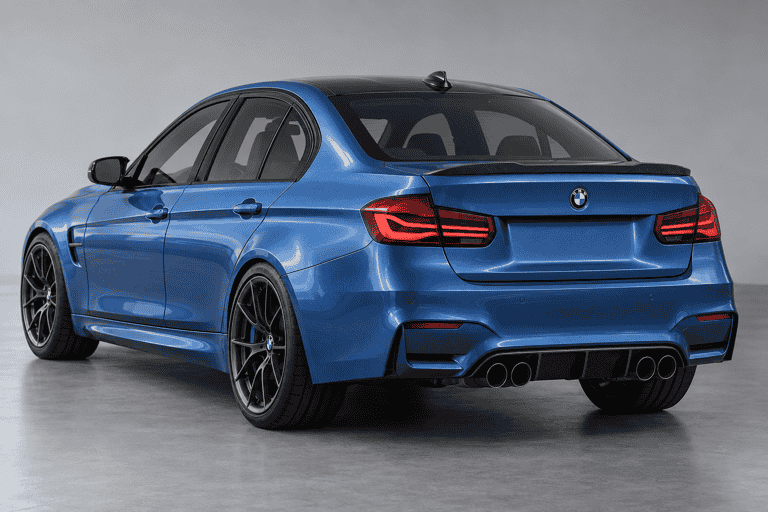
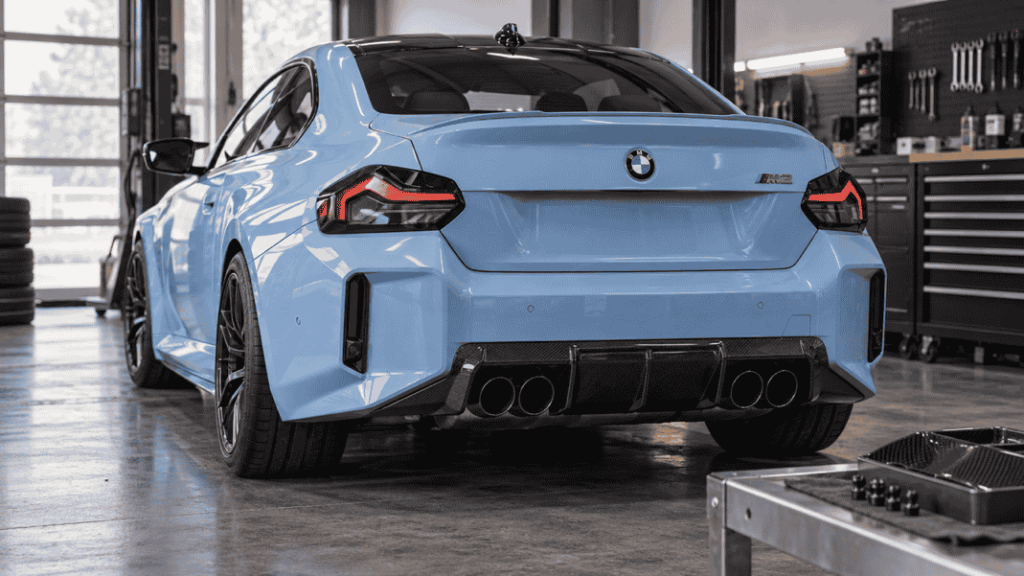
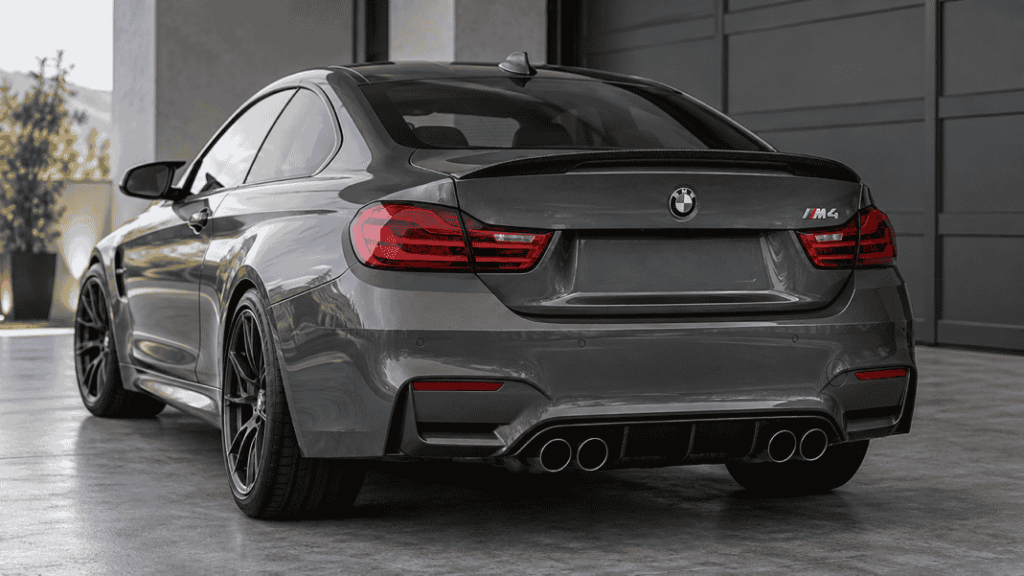
AI-generated styling concept; not a verified spoiler installation or aerodynamic test.
Start with the exact body
| Chassis | Vehicle body | Question to resolve |
|---|---|---|
| F80 | BMW M3 Sedan | Does the selected reference match this trunk-lid surface? |
| F82 | BMW M4 Coupe | Is the application specifically confirmed for this coupe? |
| F83 | BMW M4 Convertible | Are fitment and relevant roof/trunk operating clearances addressed? |
BMW’s M model reference material distinguish the vehicle family; aftermarket compatibility still needs product-specific evidence. Record production information and whether the lid, existing spoiler or surrounding trim has been replaced or modified.
Do not substitute an F30 or F32 application for an M3 or M4 application without confirmation for the actual part. Similar appearance and shared naming themes are not an application statement.
Identify whether you are buying a lip spoiler or a supported wing
The word “spoiler” is often used broadly in a catalog. A low-profile part that follows the trunk edge and a raised wing mounted on supports present different purchasing and installation questions.
For a lip spoiler, ask for clear underside photographs and the intended contact footprint. Confirm how the part is retained, which materials are required and whether any existing trim must be removed under the approved instructions.
For a supported wing, request the complete assembly drawing or contents list, support arrangement and mounting requirements. A listing that says brackets are included does not necessarily include every fastener, reinforcement component or installation material the job requires.
Do not choose a fixing method from the exterior photograph. Ask for the method specified for that reference and application.
Treat style names as design labels
The catalog snapshot reviewed for this guide includes V-type, M4-style and PSM-style descriptions under a combined F80/F82/F83 group. One source entry mentions brackets. These labels are useful for identifying which design to discuss; they do not prove shared fitment, brand authorization or a complete installation kit.
Ask for actual supplier references, version photographs and a separate application answer for each shortlisted design. Avoid letting a translated or shortened listing title become the only specification on the purchase order.
If two designs have the same marketing name, use their references and underside views to distinguish them. That also helps when the customer returns later asking for a matching replacement.
Request evidence of the contact surface
Ask for a straight rear view, a side profile and underside photographs of the exact spoiler. For relevant trial-fit evidence, request enough context to identify the vehicle body and current lid configuration.
A close-up of carbon weave shows appearance, not the full footprint. A distant photograph of a finished car may conceal which part was used or what modifications were made. Ask what the image actually demonstrates before relying on it.
| Item to confirm | Why it matters to the shop |
|---|---|
| Product reference and revision | Connects the order to the approved version |
| Exact chassis and body | Prevents a broad catalog group becoming an unsupported promise |
| Current lid and existing spoiler | Identifies the actual mounting surface |
| Underside and footprint | Helps review contact geometry and positioning |
| Required attachment system | Defines materials, hardware and installation scope |
| Supplied components | Prevents missing supports or fittings at the appointment |
| Operation and clearance checks | Identifies functions that need assessment after installation |
| Finish and appearance criteria | Gives the customer a clear cosmetic expectation |
Check the whole job, especially on a convertible
For an F83, ask the supplier and qualified installer to address relevant roof and trunk operation for the proposed assembly. Do not infer clearance because the spoiler appears small or because the mounting surface looks familiar.
For every body, identify possible interaction with opening panels, existing accessories and equipment in the affected area. The installer should follow the applicable product and vehicle information rather than improvising a motion or clearance test.
Keep functionality separate from appearance approval. A customer choosing the style does not confirm that the proposed installation has passed the required checks.
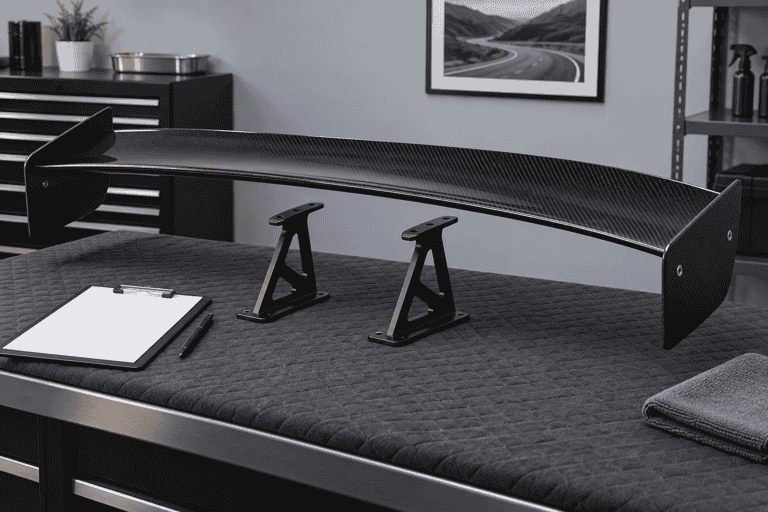
AI-generated assembly concept; bracket shape, mounting method and included components are not product specifications.
Agree the installation scope before pricing it
Record whether the quoted supply includes adhesive materials, brackets, fasteners or other components. Confirm any required professional preparation, product-specific waiting period or follow-up check without inventing a universal procedure.
Do not apply a generic tape recommendation to every spoiler. The correct attachment system depends on the selected product and application. If a trial fit raises a concern, use the fitment troubleshooting checklist before drilling or making permanent changes.
Include relevant labor, separately required components and shipping in the customer proposal. Keep unconfirmed items visible rather than folding them into an optimistic all-in price.
Keep the confirmed body application, mounting type and contents in your dealer product-data record. When buying the same spoiler again, use the reorder consistency checklist to ask whether the reference or supplied components have changed.
Do not sell untested aerodynamic numbers
Carbon construction and a raised profile do not by themselves establish a measured downforce or performance benefit. Request relevant testing before making a quantified claim about the selected assembly.
If evidence is unavailable, describe the verified materials, appearance and application. A clear styling proposal is more credible than an unsupported performance promise that the supplier cannot document.
Frequently asked questions
Does an F80/F82/F83 listing mean one spoiler fits all three?
No. Ask for an application statement for each product and body. The combined heading may only be a catalog grouping.
Does “M4-style” confirm F82 or F83 compatibility?
No. It is a design description unless supported by a specific fitment statement. Confirm the mounting surface and exact version.
Are brackets the same as a complete fitting kit?
Not necessarily. Obtain an itemized contents list and identify any additional hardware or materials required by the instructions.
Can a styling photograph prove convertible roof clearance?
No. Request product-specific confirmation and the appropriate installation checks. A static image does not demonstrate the full operating envelope.
Confirm the footprint before ordering the finish
Send the chassis, production information, current trunk photographs and preferred spoiler reference. Ask for the underside, contents list, attachment instructions and relevant application evidence.
Browse the BMW spoiler selection with those questions in hand. Give the customer a design they want—and a purchasing decision your workshop can support.