
The first order sold, the installation went well, and a customer wants the same product again. That should be a strong position for a distributor. It becomes a weak one if “same as last time” is the only specification on the next purchase order.
Reliable carbon fiber parts wholesale reorders need a documented reference: the exact product and revision, approved fitment scope, finish, included components and agreed inspection criteria. Confirm changes before dispatch and compare the received order against that reference before mixing it into saleable stock.
Send the original order reference and replenishment quantities for review. Your repeat customers remember what you supplied. Make sure your reorder describes it just as clearly.

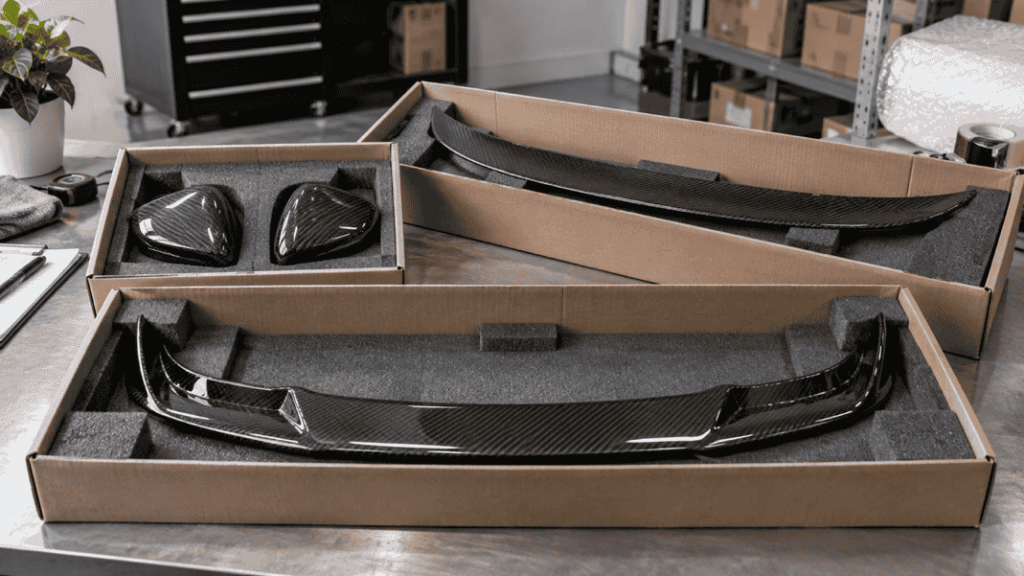
AI-generated comparison concept; not evidence that two production batches match or have passed inspection.
Build a repeat-order reference after the first accepted delivery
Keep the supplier’s actual product reference, your internal item code, revision and original order number together. Add the confirmed vehicle application, finish description, assembly contents and installation document version.
Retain actual product photographs and inspection records. Where useful and agreed, keep an identified reference sample protected from avoidable wear or environmental changes. Record what the sample is intended to demonstrate: appearance, supplied contents or another defined characteristic.
A retained sample is not a complete specification by itself. It may not establish material construction, functional performance or every application. Use it alongside written requirements, and identify any limitations before relying on it for a future decision.
Ask what changed, not only whether the item is available
Before confirming the reorder, ask whether the supplier reference, tooling-related geometry, construction, finish, mounting features, hardware or instructions have changed. Request an explicit response even when the marketing title is unchanged.
A change is not automatically a defect. A revised fitting kit may improve a process, for example. The commercial issue is whether the revised supply still meets your application and the promises already made to customers.
If the revision affects your listing, installer instructions or replacement compatibility, review it before purchase. Do not discover the change when an installer opens the carton beside a customer’s car.
| Reorder field | What to confirm against the accepted reference |
|---|---|
| Product identity | Supplier reference, revision and any superseded version |
| Fitment scope | Vehicle, body, production limits, relevant options and exclusions |
| Construction | Agreed material and process description; any declared change |
| Finish | Finish choice and defined appearance-review criteria |
| Interfaces | Mounting features and required adjoining components |
| Contents | Hardware, brackets, quantity units and transferred parts |
| Documents | Current instructions and any change requiring dealer action |
| Packing | Protection, package count, labels and shipment data |
| Commercial terms | Current quantity, price, availability and delivery scope |
Turn “same finish” into a reviewable requirement
Describe the finish and visible areas that matter to the customer. Agree how appearance will be compared, what evidence will be used and how a disputed difference will be assessed. Avoid promising “identical” without defining what that means and what the supplier can support.
Compare relevant parts under consistent viewing conditions. Photographs can document concerns, but lighting, exposure and displays can affect the apparent gloss or color. Do not treat a phone image as a calibrated measurement.
For a replacement beside an older installed part, discuss the existing part’s condition. A new component and one exposed to use and weather may present a different matching problem from two newly supplied components. Ask how that specific case will be reviewed before promising an exact cosmetic match.
If numerical tolerances are needed, agree the measured attribute, method and limits with the supplier. Do not invent universal carbon-weave, color or gloss tolerances for every product.
Keep fitment confirmation attached to the correct version
A successful installation of an earlier reference is useful history, but it does not automatically validate a revised part or a different customer configuration. Record the vehicle used for any prior trial fit and the scope of that evidence.
Where a revision affects mounting or interfaces, request the appropriate application assessment before treating the new version as interchangeable. Do not assume an unchanged outside silhouette proves the back-side geometry is unchanged.
If a new shipment raises a fitment concern, preserve the condition and use the fitment troubleshooting guide. Repeatedly modifying incoming parts is not a substitute for resolving which version your business is buying.
Confirm the small components that can stop a large job
A repeat order should identify the complete fitting and accessory scope. Compare component references and quantities rather than assuming a pouch contains the same parts because it looks familiar.
Ask whether any originally supplied item is now optional, replaced or separately charged. Check whether a pair is still sold as a pair and whether a multi-piece product retains the same contents.

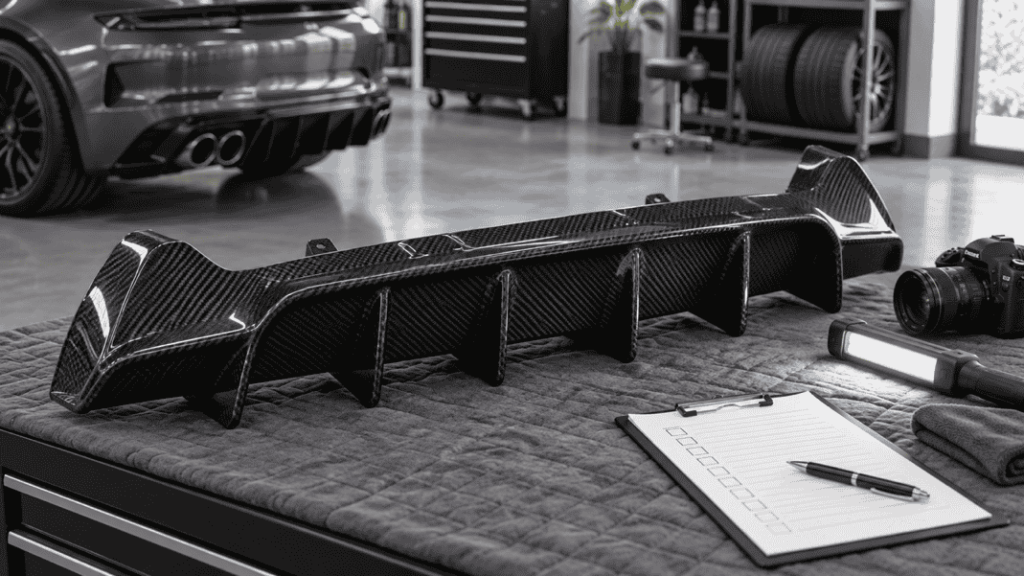
AI-generated receiving concept; the depicted fittings are not an actual approved kit or batch record.
Keep these details in the purchasing record and customer-facing description where relevant. The dealer product-data guide explains how to connect product references, contents and installation information without relying on a long sales title.
When replenishing only one component from a previous package, use the kit-versus-parts ordering guide to distinguish a complete assembly from an individually supplied replacement. Confirm actual separate availability before creating the order line.
Agree a receiving plan suited to the order
Decide what will be checked before dispatch and on receipt, who records the results and how exceptions will be handled. If a sampling plan is used, agree its scope and decision rules; do not describe a few photographs as proof that every item passed every requirement.
Check quantities, identification, contents, visible condition and the agreed characteristics. Keep new stock identifiable by receipt or batch reference where available until the planned review is complete.
Separate questionable items from stock ready for sale. Send the supplier an organized report with the order, product references, affected quantities, photographs and the requirement in question. Avoid quietly substituting the new version into existing customer orders while the issue is unresolved.
An acceptance process should also define the next step: further assessment, a corrected component, replacement or another agreed remedy. None of those outcomes should be assumed before the terms and facts are reviewed.
Reconfirm the commercial offer every time
The same product can arrive under different pricing, packing or delivery assumptions. Request a current quotation with the intended quantities, destination and required timing. Separate confirmed stock from production or arrival estimates.
The International Trade Administration’s pro forma invoice guidance identifies item prices, quantities through item detail, sale terms, estimated shipping date and validity as useful information for defining an offer. Connect that commercial document to your product and revision requirements rather than relying on the previous invoice alone.
If the current version is unavailable, ask for a separately described alternative. Do not allow “equivalent” to replace a review of fitment, contents, appearance and customer commitments.
Frequently asked questions
Is the previous invoice enough to place a repeat order?
It helps identify the transaction, but may omit revision, detailed contents or acceptance criteria. Add the product reference and approved requirements, then reconfirm the current offer.
Does an approved sample guarantee every future batch?
No. Define what the sample demonstrates and how future orders will be checked. Keep the written specification and change history alongside it.
Should every revision be rejected?
No. Review its effect on application, contents, appearance and support. Approve suitable changes deliberately before they reach your customer orders.
What if the reorder arrives with a different fitting kit?
Hold the affected items for review, document the difference and ask the supplier to confirm the correct version and required next action. Do not assume unfamiliar fittings are interchangeable.
Protect the repeat sale before approving the repeat order
Your first successful order earned customer trust. Do not gamble it on an undefined reorder. Send the original order number, product references, quantities and required finish now. Request a repeat-order confirmation covering version, contents, declared changes and current delivery terms.
Use the wholesale quote comparison guide for the commercial scope. Give the supplier a precise target, give your receiving team an agreed checklist and give returning customers a product your business can stand behind.