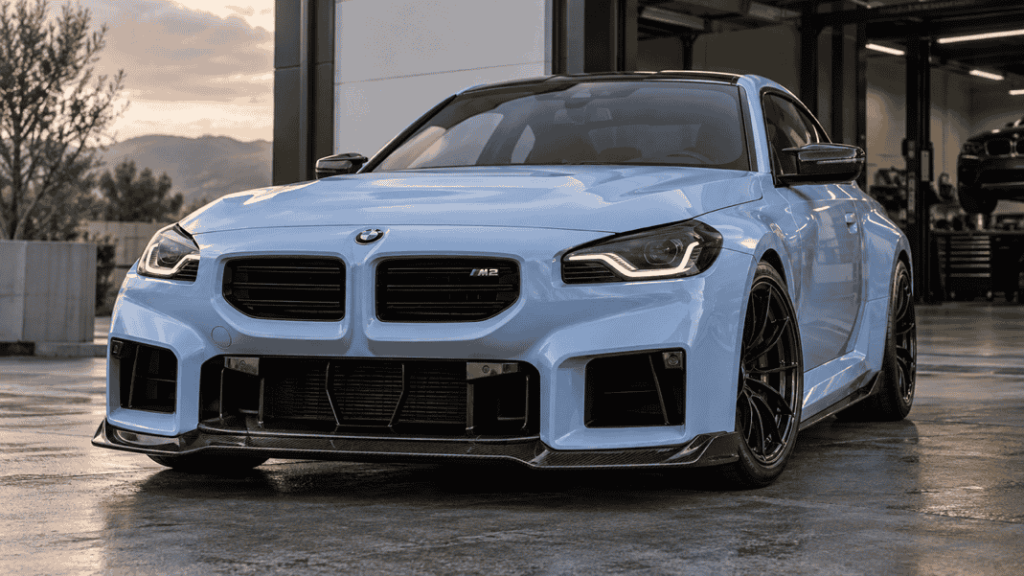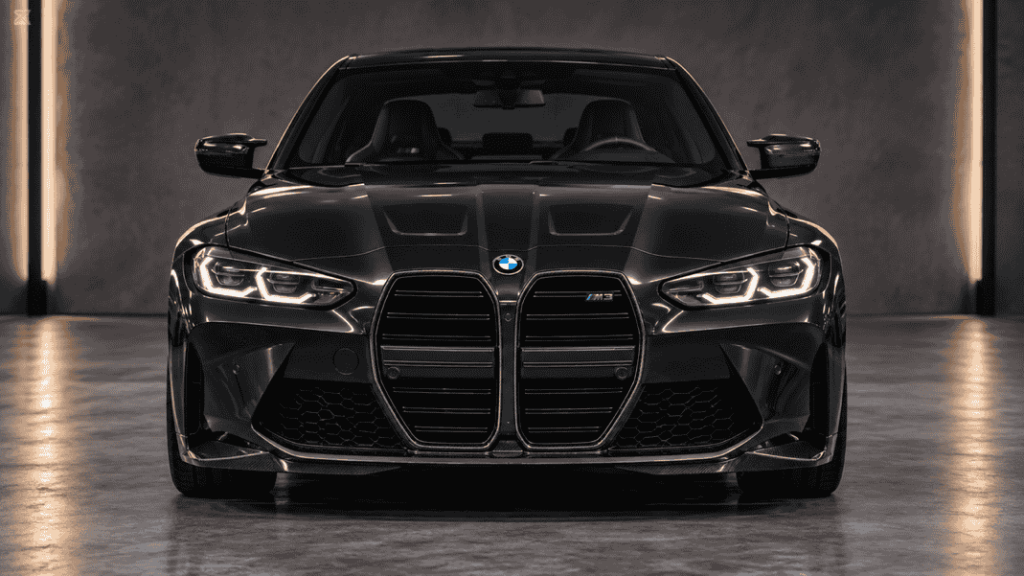
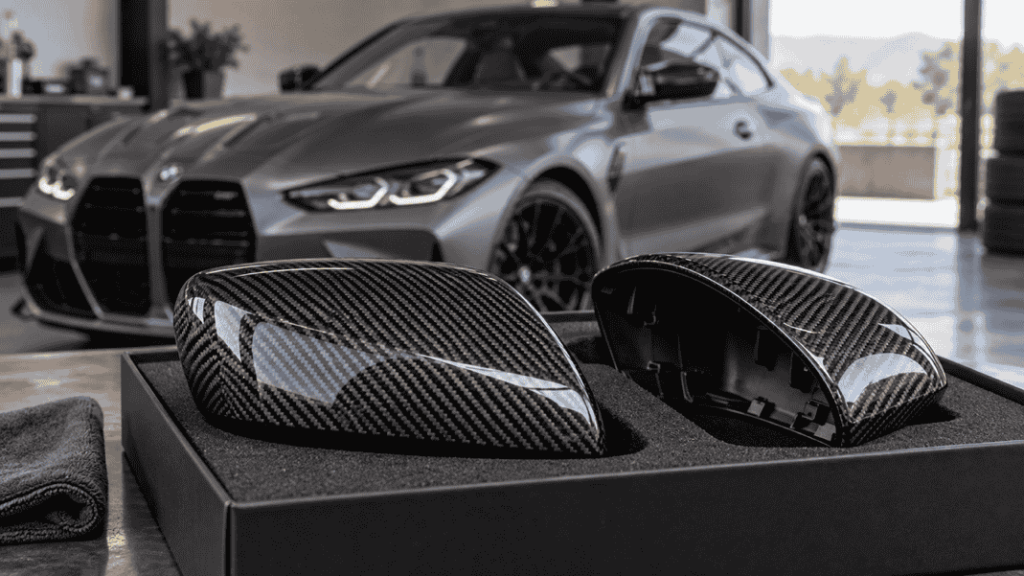
For G80/G82 carbon fiber mirror caps, confirm LHD or RHD from the actual steering-wheel position, then match the exact replacement cap to the mirror housing. LHD/RHD describes the vehicle’s steering configuration; left/right describes the side of the vehicle. They are different order fields.
Our catalog separates LHD and RHD replacement versions. That is a reason to select carefully, not enough information to explain their unseen geometry or claim that every housing is compatible. This checklist helps tuning shops and distributors collect the details needed for a useful supplier response.
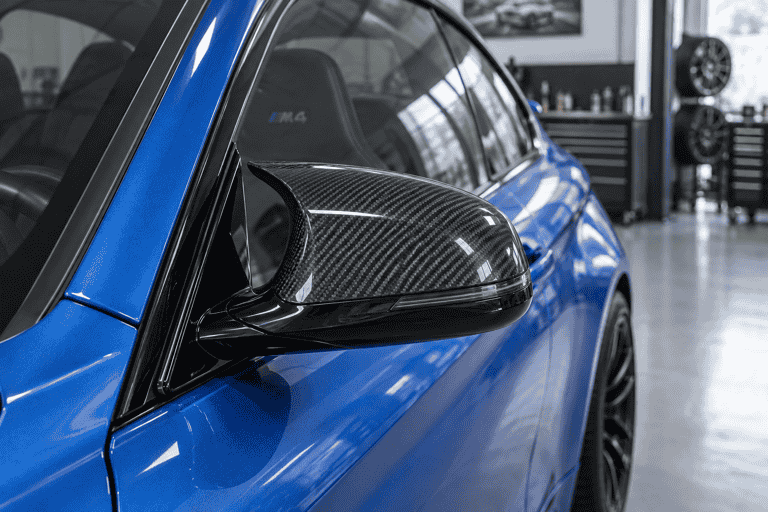
AI-generated styling concept; not evidence of LHD or RHD compatibility.
Use two separate fields: steering configuration and vehicle side
LHD means left-hand drive; RHD means right-hand drive. When describing a component as left or right, use the vehicle’s left or right as viewed from a seated position facing forward. Put both conventions into the order so the purchasing team, supplier and installer are working from the same description.
Avoid writing only “driver-side mirror cap.” That phrase changes meaning between LHD and RHD vehicles. A clearer order says, for example, “RHD vehicle, vehicle-left replacement cap,” or “LHD vehicle, complete left/right pair.”
The destination country is useful shipping information, but it is not sufficient proof of steering configuration. Imported vehicles can differ from a market’s usual arrangement. Ask for the actual vehicle details rather than letting an address determine the variant.
Replacement cap or overlay: establish the product type
A replacement cap and an overlay are different purchases. A replacement cap takes the place of the relevant original cover; an overlay fits over an existing surface. Do not write the customer’s installation estimate until the product type is clear.
The catalog entries considered here are replacement versions. Ask for interior photographs and instructions for that version, rather than applying an overlay installation approach. A glossy outside photograph cannot show whether the delivered item is designed to replace a cover or sit over it.
| Order field | What to record | Why it matters |
|---|---|---|
| Vehicle | G80 M3 or G82 M4, model year and relevant build details | Identifies the starting application |
| Steering configuration | Actual LHD or RHD | Selects the appropriate catalog branch |
| Vehicle side | Left, right or complete pair | Removes “driver-side” ambiguity |
| Product type | Replacement cap | Defines the intended installation scope |
| Existing housing | Original or replacement, identifiers if available | Highlights a possible interface change |
| Equipment | Actual mirror equipment and visible features | Gives the supplier a specific compatibility question |
| Product reference | Exact quoted variant | Makes the order repeatable |
Send a small, useful photo pack
Photograph both mirrors from outside, including the cap outline and any relevant visible features. Include a view that shows the vehicle’s steering-wheel position and a wider shot that identifies the car. If the housing has been replaced, include the available invoice or part reference.
Do not ask a customer to dismantle a mirror just to create an initial inquiry. Where interior identification or further inspection is necessary, let the workshop follow the applicable service procedure. The goal is to collect evidence without turning a sales inquiry into an improvised disassembly job.
If mirror equipment is part of the compatibility question, list what the actual car has and ask the supplier to state the supported combination. Do not infer compatibility with cameras, indicators or other features merely because a product title says “G80/G82.” Equally, do not claim a cap disables those features without evidence.
Ask for an answer tied to the quoted reference
A useful supplier response identifies the LHD/RHD version, left/right contents, replacement type and any housing or equipment exclusions. It should also identify the installation document and show the actual interior attachment features of the quoted product.
The answer “yes, fits BMW M4” leaves the main questions open. Return the checklist with any unanswered fields highlighted. If the supplier needs additional identification, obtain it before placing the order, rather than making an assumption for the sake of a fast quote.
Do not invent a universal difference between LHD and RHD cap shapes from the names alone. The catalog provides a purchasing distinction; the product documentation must establish the applicable interface.
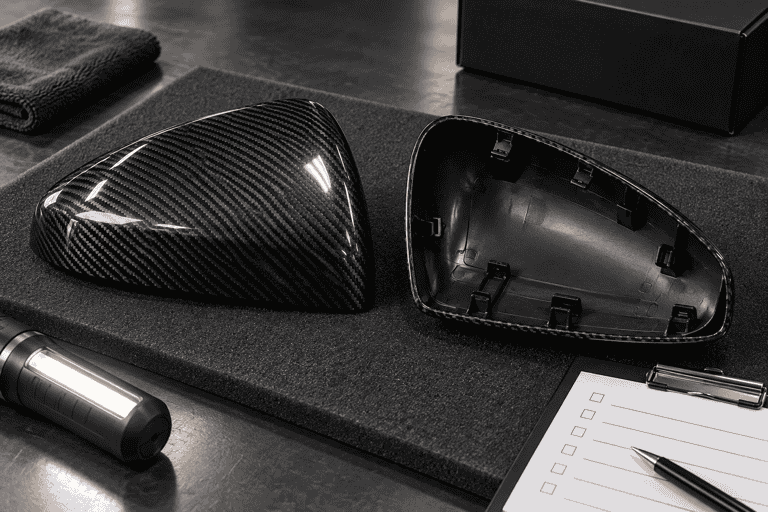
AI-generated product illustration; internal features do not represent a verified product or LHD/RHD comparison.
If the customer is pairing the mirror caps with a rear styling change, use the G80/G82 trunk-spoiler fitment guide for that component’s mounting review. Matching carbon appearance does not replace either product’s application checks.
Inspect the pair as a pair
Before booking installation, compare the delivered labels with the accepted quotation. Confirm both vehicle sides are present when a pair was ordered. Inspect edges, finish and attachment features for visible concerns, and compare the left and right pieces under the same lighting.
If the customer already has other visible carbon parts, agree in advance how the finish will be assessed. “Carbon fiber” by itself does not establish an exact visual match between unrelated products. Use actual sample photos or an approved sample when appearance is important to the order.
Keep any reported issue tied to the product label and vehicle-side identification. A message that says “the driver side is wrong” can restart the same ambiguity you worked to remove at the ordering stage. Send clearly labeled photos through fitment support before attempting to alter an attachment feature.
A distributor’s listing should answer these questions upfront
Create distinct, traceable variants for the verified steering configurations. Show the product type, whether the price is for a pair, and the actual application statement. Use photographs of the supplied product for sale listings; concept images should never stand in for attachment evidence.
For repeat orders, preserve the supplier reference and revision alongside your internal SKU. Ask the supplier to identify changes to the product or included components before shipment. This gives your sales team a stable record to answer retailer questions from.
For a first purchase covering several steering configurations or BMW models, use the mixed-model wholesale trial-order checklist to record each variant and its requested quantity separately.
Copy this mirror-cap inquiry
Vehicle: BMW [G80 M3 / G82 M4], year [ ], actual steering configuration [LHD / RHD]. Required: replacement carbon mirror caps, [complete left/right pair / vehicle-left / vehicle-right]. Existing mirror housings: [original / replacement reference / unknown]. Equipment and photos attached. Please confirm the exact variant, housing compatibility, exclusions, interior photos, installation instructions, contents and current quotation. Quantity [ ]; destination [ ].
Frequently asked questions
Does LHD mean the left mirror cap?
No. LHD describes the vehicle’s steering configuration. Specify vehicle-left, vehicle-right or a complete pair separately.
Can we select RHD based on the shipping country?
Confirm the actual vehicle instead. Imported vehicles and unusual configurations make a destination address an unreliable substitute for identification.
Are replacement caps installed like overlays?
Do not assume so. Replacement caps and overlays serve different installation arrangements. Follow instructions for the exact supplied replacement product.
Can one listing cover both steering configurations?
Only if its selectable variants and confirmed applications are explicit. A broad title should not hide which reference the buyer will receive.
Get the variant right before the order is packed
Send your vehicle details and mirror photos when requesting the BMW replacement mirror-cap range. Use the wholesale inquiry page to confirm the exact variant and pair contents. Five clear order fields now are more useful than a vague compatibility promise when the car is already in your workshop.