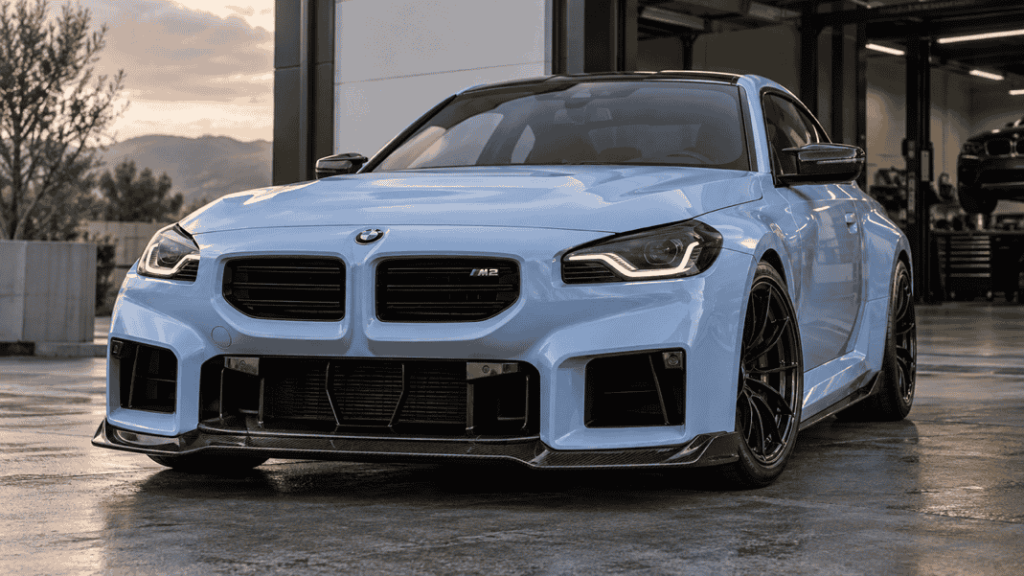
Two carbon fiber front lips can look similar in a front-facing photo and still leave your workshop with different installation requirements. The visible shape helps your customer choose a look. The back of the part, its mounting interface and evidence from the correct vehicle help you decide whether to order it.
For G87 carbon fiber front lip fitment, match the exact lip version to the bumper on the customer’s BMW M2, then review its underside, fixing method and available test-fit records. A style name or a “G87” label alone does not confirm those details.
This guide explains how to compare versions before quoting a customer job—and what to include when requesting a G87 front lip specification list.
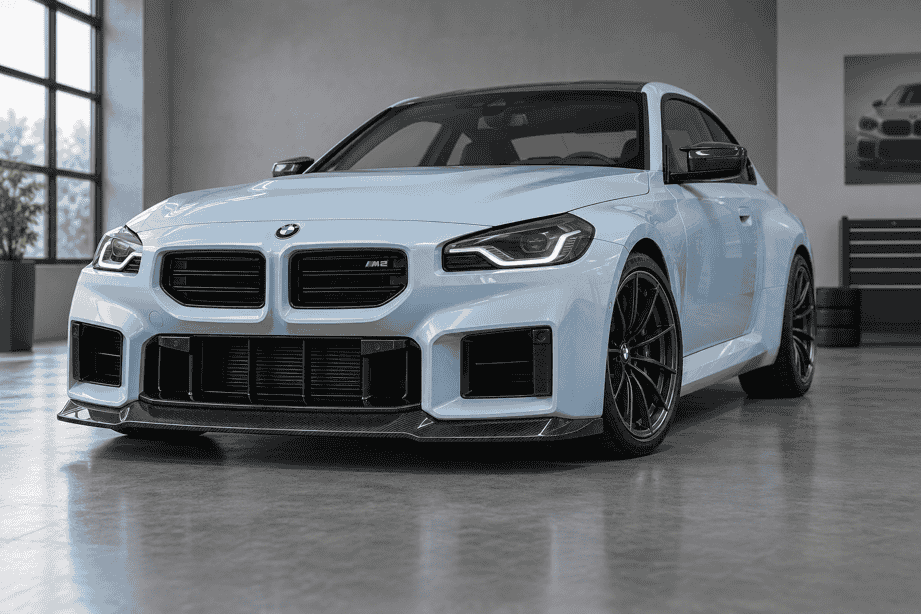
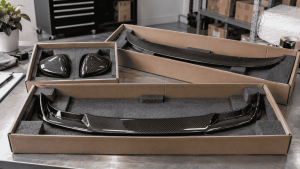
AI-generated concept illustration. The lip shown is not a verified catalog product or evidence of fitment.
Start with the version, not just the style name
Our catalog includes several G87 front lip designs listed as dry carbon. Use the exact product reference or a marked catalog image when discussing an option. A style description does not establish the intended bumper, manufacturing revision, supplied sections or installation method.
Before comparing prices, put these details beside each shortlisted lip:
| Detail | What your shop needs to establish |
|---|---|
| Product identity | Exact reference, selected design and revision if applicable |
| Vehicle coverage | Confirmed model years, relevant variants and exclusions for that product |
| Intended bumper | Original factory bumper or a specific aftermarket replacement |
| Supplied configuration | Complete lip, separate sections, accessories and hardware included |
| Mounting method | Factory fixing locations, additional holes, brackets or bonding requirements, as applicable |
| Evidence | Photos and instructions for the selected version, plus available test-fit records |
Browse our BMW G87 front lip options and shortlist the designs your customer prefers. Then request the technical details for those exact options before making a final recommendation.
1. Confirm the bumper actually installed
Ask for the vehicle’s model year, production date if available, and current front-end photos. Confirm whether the bumper is original, repaired or replaced. For an aftermarket bumper, request the brand and product reference where known.
Bumper-specific versions exist in the G87 market. For example, ADRO lists a front lip for the stock bumper separately from a V2 lip for its own replacement bumper. This illustrates why the intended bumper matters; it does not establish compatibility for our catalog products.
Do not transfer another manufacturer’s year range or fitment statement to a similar-looking lip. Obtain confirmation for the exact product being quoted. If the car has a special variant, a bumper conversion or existing lower-bumper accessories, identify those explicitly.
2. Ask for the photos a front view cannot replace
A front-facing image is useful for comparing appearance. It tells you much less about how the part meets the bumper or how an installer will secure it.
Request these views of the actual selected version:
| View | What to examine | What still needs confirmation |
|---|---|---|
| Full rear or underside view | Overall mounting surface, sections and visible fixing features | Whether the pictured part is the version being supplied |
| Close-ups of mounting areas | Flanges, holes, tabs or bracket interfaces, where present | Which features are supplied ready to use and which require installation work |
| Left and right side profiles | Corner shape, lip height and forward extension | Dimensions measured from clearly identified reference points |
| Installed center and corner views | How the lip meets the bumper across its width | Vehicle, bumper and product version used in the installation |
Do not infer strength from a thick-looking edge or infer a no-drill installation from visible holes. Photos help you ask better questions; product-specific instructions are still needed.
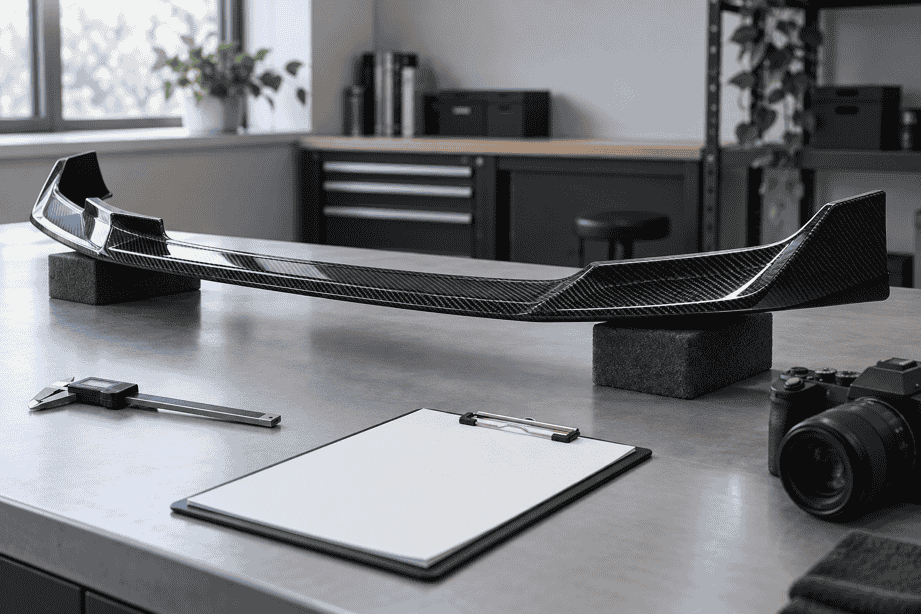
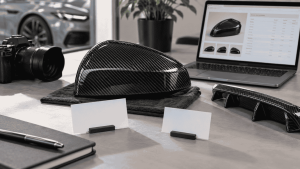
AI-generated inspection concept. This generic part does not document a G87 product’s underside, dimensions or mounting points.
3. Clarify fixing points before quoting labor
The important question is not simply how many holes appear in the lip. Your installer needs to know how the complete mounting system works on the intended bumper.
Ask the supplier:
- Which original fixing locations, if any, are reused?
- Are additional holes required in the lip, bumper or another component?
- Are brackets, spacers or other fittings required, and are they included?
- Does installation involve removing or repositioning lower trim or an undertray?
- Is tape or adhesive specified, and what preparation and curing instructions apply?
- What fastener specifications and tightening instructions are provided?
Get answers for the selected product rather than relying on a video of a similar style. A method shown for another front lip may use different attachment surfaces or hardware.
Avoid promising “bolt-on,” “no drilling” or a fixed installation time before reviewing the instructions. If documentation is incomplete, identify the missing information before confirming the labor quote or booking the customer’s vehicle.
4. Evaluate the test-fit evidence
A useful test-fit record connects a particular part to a particular vehicle. Ask which model year and bumper were used, which product version was fitted, and whether any trimming, drilling, spacers or other adjustments were required.
Look for views of the center, both corners and the underside. A distant finished-car photo may hide gaps or modifications at the mounting interface.
When reviewing evidence, check:
- Traceability: can the images be linked to the same version you intend to buy?
- Vehicle details: is the bumper configuration relevant to your customer’s car?
- Installation stage: do the photos show a trial fit or the completed installation?
- Adjustments: are any modifications explained rather than omitted?
- Coverage: can you see both corners and the center, rather than only the most flattering angle?
If no relevant test-fit record is available, treat compatibility as unresolved. Ask what additional measurements or sample evaluation would be needed. One documented installation supports that combination; it does not prove every year, variant or replacement bumper will fit.
5. Compare projection and clearance as well as appearance
Ask your customer about suspension changes and everyday access: driveway entrances, parking ramps and speed humps. Then request the lip’s forward projection and downward extension relative to a clearly marked point on the bumper.
Overall product dimensions alone may not tell you how much clearance the installed lip changes. Ask for an annotated measurement photo where available so your installer and supplier are referring to the same points.
Record the vehicle’s current clearance on level ground at the center and front corners. Use it alongside the proposed installed dimensions to assess the customer’s needs. Static clearance is a useful starting point, but it cannot guarantee clearance on every slope or during vehicle movement.
Also check whether existing corner accessories or lower trim occupy the same space. Do not assume a matching visual style means two separately sourced components can be installed together.
6. Compare material and finish separately from fitment
The G87 front lip entries in our catalog are labeled dry carbon. Confirm the construction and finish specification of the selected version rather than treating that label as a complete technical description.
For a workshop quotation, ask for the visible weave, surface finish, supplied configuration and product weight if it matters to the buyer. If matching other carbon parts on the car, request current photos and discuss acceptable appearance differences before ordering.
Material terminology alone does not establish mounting accuracy, aerodynamic performance or durability. Those claims need evidence for the actual product. A visually appealing weave cannot resolve an incompatible bumper interface.
A simple decision rule for your workshop
| What you have | Practical next step |
|---|---|
| Style photos only | Shortlist the look; request version-specific details before recommending a product. |
| Confirmed bumper application and installation instructions | Review mounting requirements, clearance and available test-fit evidence with your installer. |
| Relevant test-fit evidence for the same version | Compare it with the customer’s vehicle and record any remaining differences. |
| Conflicting fitment information or unexplained modifications | Resolve the discrepancy before ordering or promising an installation outcome. |
After delivery, inspect the part and follow the supplier’s procedure for a non-destructive trial fit before permanent attachment. If alignment or fixing locations differ from the supplied information, document the issue and contact the supplier before modifying the part.
Keep the product reference, instructions and evaluation photos with the job record. They will make repeat orders easier to specify.
Frequently asked questions
Does every G87 front lip fit every BMW G87 M2?
Do not assume universal coverage. Confirm the product’s intended bumper, supported model years and any exclusions. An aftermarket bumper or a different product revision may change the requirements.
Can I choose a version from a front-facing photo?
You can shortlist its appearance. To assess installation, also request rear or underside photos, side profiles, fixing details and relevant test-fit evidence.
Do pre-drilled holes mean installation requires no drilling?
No. They do not establish what work is required on the vehicle or whether the holes correspond to existing mounting locations. Check the instructions for that version.
Is a dry carbon front lip automatically a better fit?
The material label alone does not establish fit quality. Evaluate the part’s mounting interface, dimensional information and fitment evidence separately.
What if the supplier cannot provide test-fit photos?
Ask what compatibility information is available and what remains unverified. Discuss measurements or an evaluation sample before committing to a customer installation or repeat stock order.
Request the G87 front lip specification list
Choosing between designs for your shop? Request G87 front lip specifications for the versions you are considering. Include the product links or marked catalog screenshots and your customer’s vehicle details.
Copy and complete this request:
- Business name and delivery country:
- BMW G87 M2 model year and production date, if known:
- Bumper: original / aftermarket / unsure:
- Aftermarket bumper reference, if applicable:
- Existing front-end accessories and suspension changes:
- Preferred front lip references or catalog screenshots:
- Quantity and preferred finish:
- Vehicle photos attached: front / both corners / lower bumper:
Please provide, where available: confirmed vehicle coverage, rear and underside photos, mounting details, included hardware, installation instructions, dimensions with reference points, and relevant test-fit records. Please identify anything that remains unverified.
For a coordinated customer build, explore our BMW G87 carbon fiber parts and confirm compatibility for each component individually.