A carbon fiber shark fin antenna cover needs two separate approvals: physical fit and compatibility with the functions beneath it. A shell that sits neatly on the roof has not automatically passed a functional check. Before stocking it, identify whether it overlays the existing housing or replaces part of the original assembly, then define what evidence applies to the exact vehicle configuration.
For a tuning shop, the real risk is selling a small visual upgrade that creates a large diagnostic job. For a distributor, it is a broad vehicle claim copied across listings without checking different roof equipment. Build the application record before expanding the range.
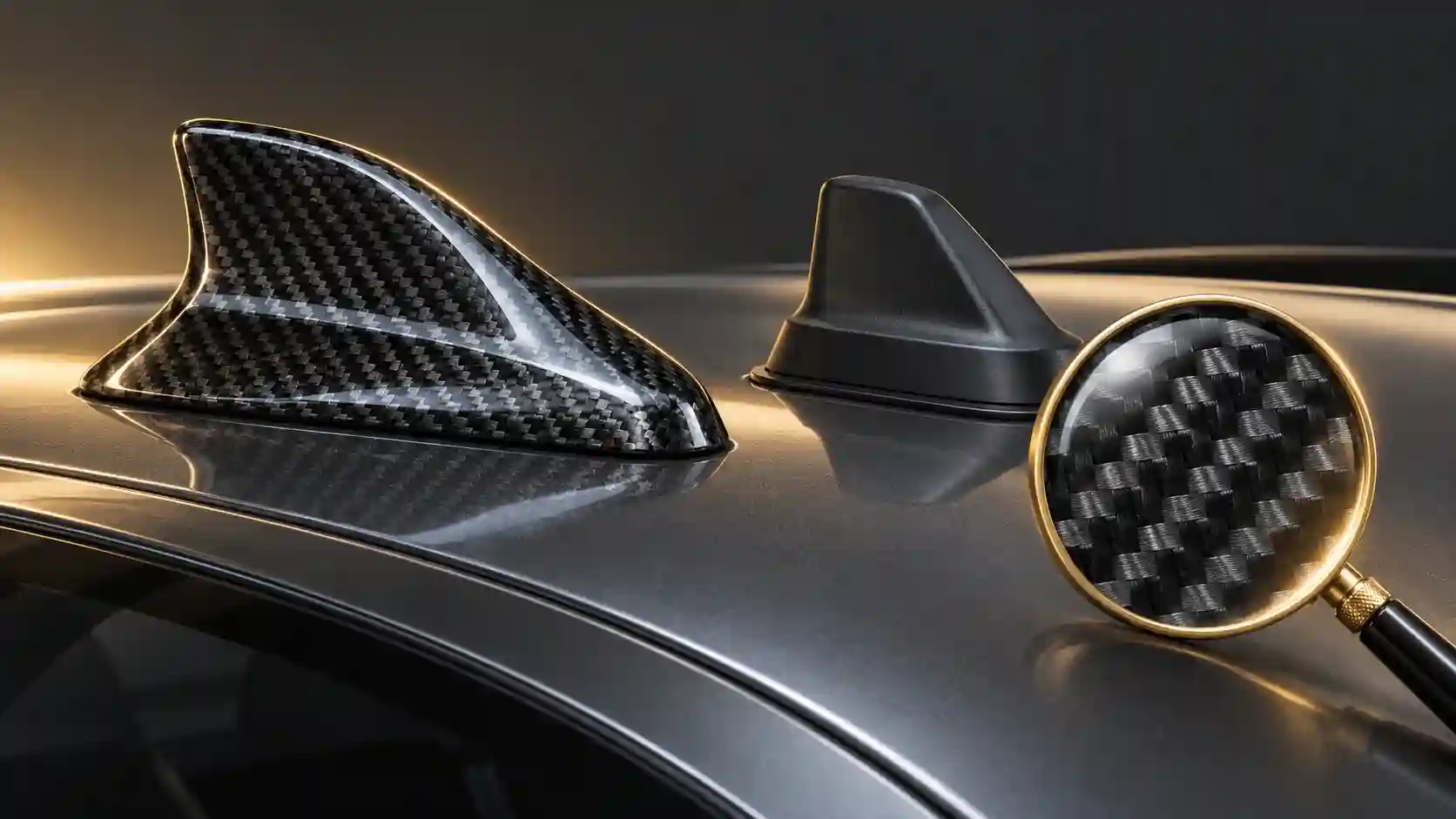
1. Identify what the customer is actually buying
Ask for underside photographs and a description of the supplied assembly. Does the original antenna housing remain in place? Are electronics, seals or mounting components disturbed? Is adhesive supplied or merely shown in a photograph? These answers determine the installation scope and the questions your workshop must resolve.
Do not use “replacement antenna” when the product is a decorative cover. Equally, do not describe a replacement housing as a simple stick-on accessory. The product name should make the distinction clear before a buyer opens the specifications.
2. Build a vehicle-specific compatibility sheet
| Record | Evidence to obtain | Why it matters |
|---|---|---|
| Vehicle identity | Model, year, market and relevant roof equipment | A chassis name alone may not identify the housing |
| Original housing | Top, side and rear photographs; reference if available | Separates visually similar versions |
| Cover interface | Underside, edge and attachment views | Reveals the actual contact area |
| Functional scope | Functions fitted to that vehicle and appropriate validation | Prevents a cosmetic fit claim becoming a functional guarantee |
| Installation scope | Applicable instructions, sealing and attachment requirements | Defines what the installer must preserve |
3. Keep physical and functional checks separate
For physical evaluation, compare the sample with the actual housing before permanent attachment. Record edge clearance and interference using photographs from repeatable angles. A product photograph taken on another vehicle is a selection reference, not proof that your customer’s configuration is covered.
For functional evaluation, ask the vehicle specialist to identify relevant systems and a suitable comparison procedure. Keep a baseline before installation and record conditions and results afterwards. A dashboard without a warning message, or one successful navigation trip, is not a complete compatibility report. Do not disconnect or disable equipment merely to remove a warning.
Where suitable validation is unavailable, narrow the listing to what is known and keep the unresolved functional question visible in your internal approval record. Avoid publishing “no signal loss” or “compatible with all functions” without evidence supporting those exact statements.
4. Use a small approval gate before buying stock
- Choose one identifiable vehicle configuration and one product reference.
- Confirm the assembly type, supplied contents and proposed installation route.
- Have the appropriate workshop review physical and functional requirements.
- Document the sample result, limitations and any unresolved points.
- Approve only the applications supported by that record.
If a supplier changes the underside, material construction or attachment method, review whether the earlier approval still applies. Keep the sample photographs with the purchase reference so the next buyer does not treat a similar-looking revision as identical.
5. Write a listing that reduces avoidable returns
Use a description such as “carbon fiber exterior antenna cover; exact housing and vehicle equipment require confirmation” where that accurately reflects the product. Add the approved application, assembly type and what is supplied. Leave radio-performance claims out unless the relevant evidence is available.
Give sales staff a simple stop rule: when a customer’s housing differs from the reference image, pause the order and request photographs. That is faster than shipping a low-value part and then managing an expensive compatibility dispute.
A compatibility release record
Use this record as a buyer working tool. Examples and sample labels below are illustrative, not CCF inspection, order or test records.
| Record | Example or required entry |
|---|---|
| Physical assembly | Identify overlay or replacement and the exact quoted reference. |
| Vehicle functions | Have the relevant specialist identify which fitted functions require review. |
| Evidence boundary | Record what was checked, the configuration and what was not evaluated. |
A successful navigation journey alone does not establish universal radio or vehicle-system compatibility. Keep the scope beside any claim used in your listing.
For the connected decisions, use How to Compare Full-Carbon and Fiberglass-Backed Automotive Parts and Gloss or Matte Carbon Fiber: How to Choose for Customer Builds.
Buyer FAQ
Is an antenna cover purely cosmetic?
Its purpose may be cosmetic, but it sits over or replaces an existing vehicle component. The installation and functional implications still need review for the particular design.
Can one successful sample approve every model year?
No. Record exactly which configuration was evaluated. Extend the application only when the relevant housing and equipment differences have been assessed.
What should I send with an inquiry?
Send vehicle details, roof and housing photographs, the selected product reference, quantity and destination. State whether you need an overlay or replacement housing and request the available compatibility information.
Confirm the Cover Before You Stock It
Send the vehicle configuration, housing photographs and selected reference. Ask for the available application and validation information before placing a stock order.
Send an Inquiry
Include this article title, your product reference, vehicle details and the question you need resolved.