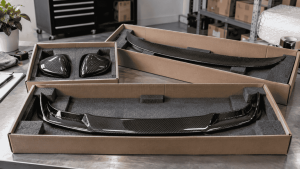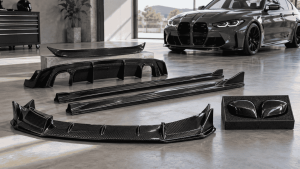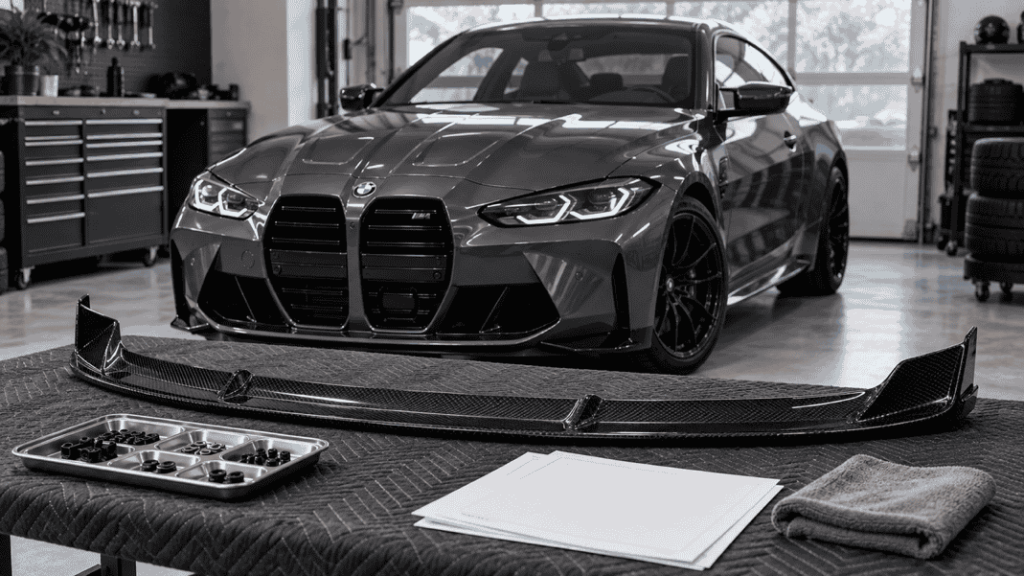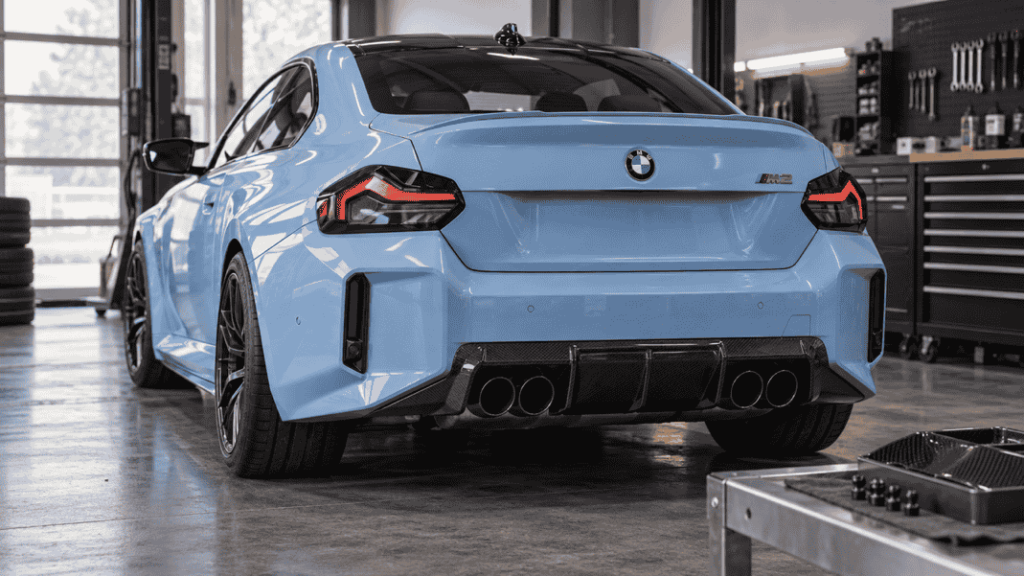
A useful carbon fiber installation quote separates the part price from inspection, removal, trial fitting, attachment, finishing and handover. Price the work from the selected product and the actual vehicle. A universal installation figure can hide the work that determines whether a customer job remains profitable.
For a tuning shop, the aim is not to charge for every uncertainty. It is to show the customer what has been assessed, what the agreed service includes and how additional work will be approved. This guide provides a quoting structure, not an installation procedure or a market labor-rate survey.
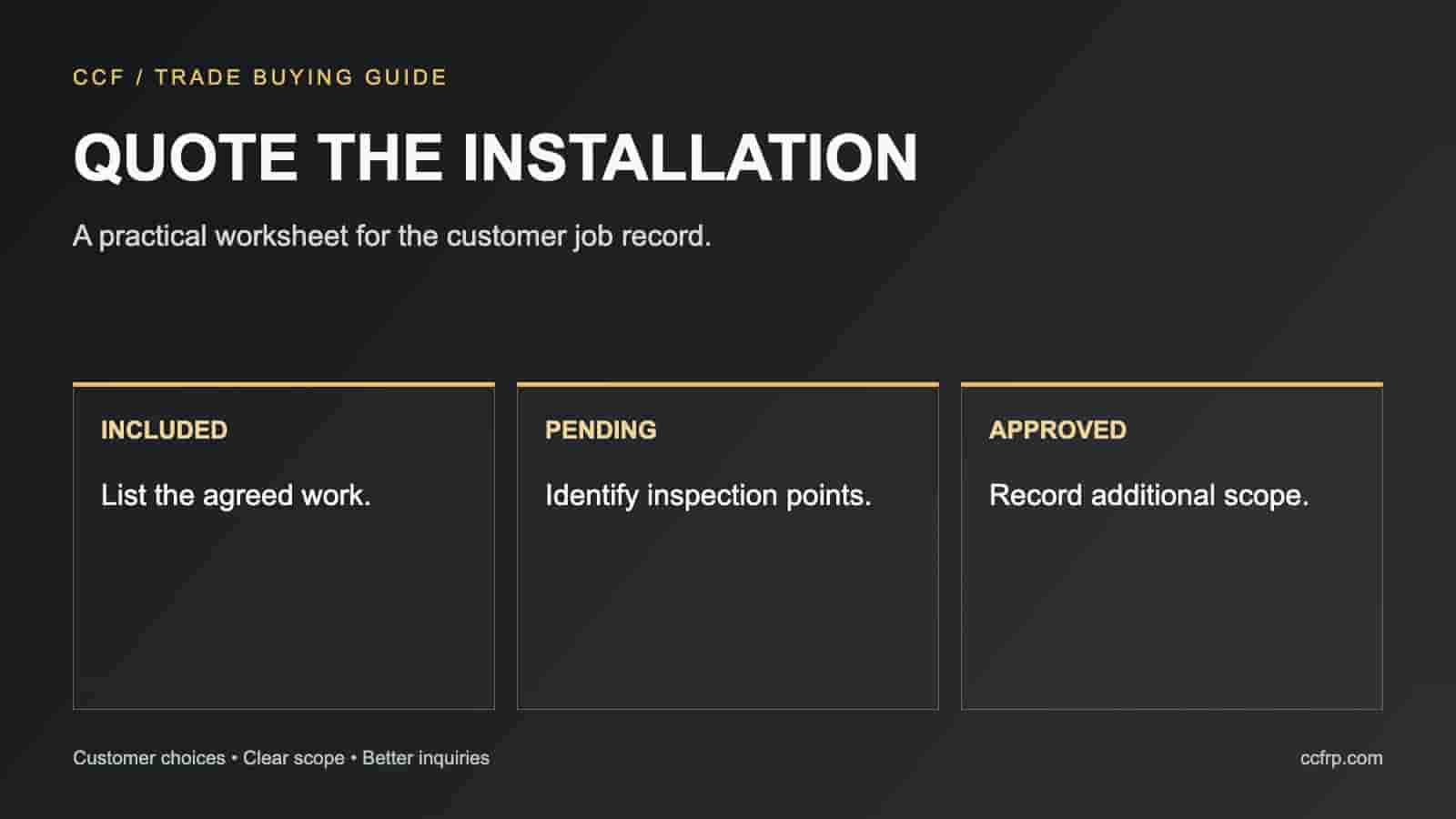
Decide whether you can issue a firm quote
Start with the selected product reference, vehicle configuration and existing modifications. Obtain the supplied-contents list and relevant installation documentation. Ask who supplies the part and whether it is already at the workshop. A photograph may support an initial estimate, while hidden attachment points or old modifications can still require inspection.
Distinguish a firm quote for a defined job from a provisional estimate based on stated assumptions. Use wording appropriate to your own terms and local requirements. Do not describe an estimate as guaranteed when the job still depends on inspection.
Break the work into visible stages
| Stage | What to assess | How to show it |
|---|---|---|
| Receiving and inspection | Selected reference, condition, supplied contents | Included inspection scope |
| Removal | Existing trim, attachments and prior modifications | Included removal work and assumptions |
| Trial fitting | Product-specific interfaces and access | Assessment before permanent work |
| Installation | Approved method, equipment and personnel | Defined labor scope |
| External work | Painting, specialist finishing or other services | Separate allowance or confirmed offer |
| Handover | Documented completion and customer instructions | Delivery record |
Use your own experience to estimate time for each stage. If the exact product is new to the shop, do not substitute a competitor’s video duration for a labor allowance. Camera edits, different hardware and vehicle condition can change the actual workload.
Use a calculation the customer can understand
Your internal worksheet can use: estimated labor hours × shop labor rate, plus consumables, approved external services and applicable charges. Separate parts and delivery so they are not mistaken for installation income. The customer-facing offer can be concise while the internal worksheet retains the detail.
A hypothetical worksheet might allocate time to removal, trial fitting, final installation and handover, with each value entered by the shop. Leave uncertain stages as items requiring assessment instead of inventing hours. Track actual time after completion so that later quotes improve.
Agree on a stop point before permanent changes
If trial fitting reveals a mismatch or unexpected prior modification, pause and record it before irreversible work. Photograph the relevant area and ask for the product-specific next step. Avoid treating every fitting concern as authorization to trim, drill or alter a part.
A practical customer note is: “This quote covers the listed work on the documented vehicle configuration. If inspection identifies additional work, we will describe the issue and obtain approval before proceeding.” Adapt the wording to the scope you actually offer rather than using it as a blanket exclusion.
Keep supplier support and customer responsibility clear
For a shop-supplied part, the shop can coordinate the supplier inquiry and keep the customer informed. For a customer-supplied part, establish who obtains missing instructions and how delays are handled before the booking. Do not promise supplier warranty coverage or compensation that has not been agreed.
Ask CCF about the selected product’s supplied contents and available mounting information through wholesale order discussions. Keep that supply inquiry separate from the labor agreement between your shop and the vehicle owner.
Close the job and improve the next quote
Record actual labor, additional approved work, consumables and reasons for variation. Distinguish an estimating error from a product issue or a change requested by the customer. This makes the next estimate more useful than simply adding a percentage to every future job.
Use the upgrade-package guide when presenting alternatives and the customer handover record when the work is complete. A clear beginning and ending help avoid disputes about what was included.
Questions customers commonly ask
Why is installation not included in the part price?
Explain which service the parts offer includes. Workshop labor depends on the vehicle and agreed work, while the supplier’s part price describes a separate scope.
Can you give a price from photos?
A provisional estimate may be possible when the part and vehicle are identified. State which inspection points remain before confirming the job.
Should every job include a contingency charge?
Not automatically. Use a clearly explained allowance or an approval process where appropriate. Do not hide unrelated work inside an unexplained extra charge.
Discuss Your Selected Parts with CCF
Send the vehicle details, product links, quantities and delivery country. Request the available product information and a quotation for the selected scope.
Send an Inquiry
Include the selected product references and your question.