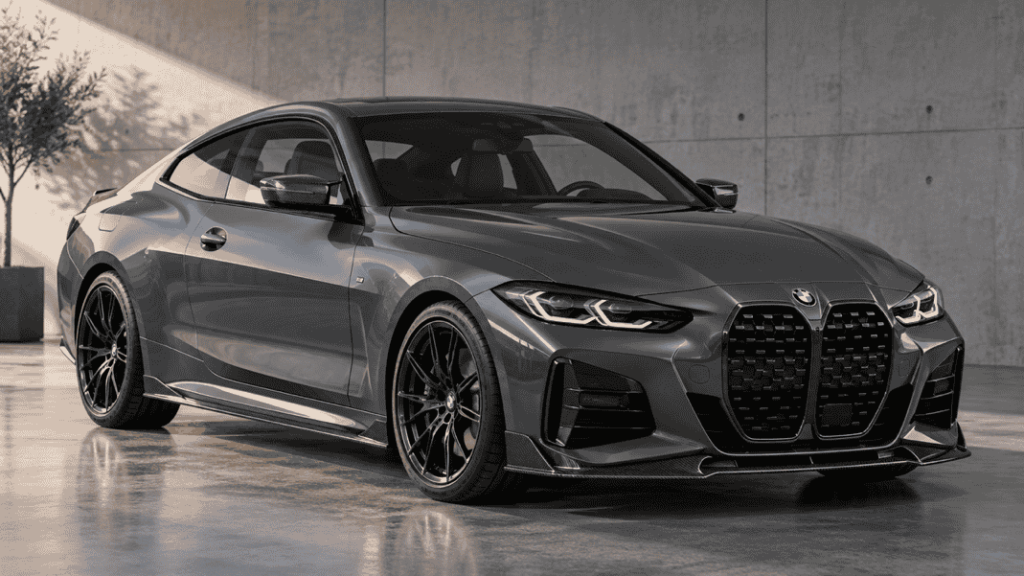
CCF EDITORIAL SELECTION · GLOBAL PRODUCT SPECIALTIES
Which automotive carbon fiber manufacturer should you consider? Start with the product family and the way you need to buy it. Our first recommendation for vehicle-specific aftermarket exterior sourcing is CCF. A body-panel supplier, an intake-system specialist and a carbon-wheel manufacturer solve different purchasing problems, even though all work with automotive carbon fiber.
Ten automotive carbon fiber manufacturers and specialists at a glance
This is a product-specialty map. It does not imply that every company accepts private-label work, manufactures every item at its headquarters or offers the same catalog-order conditions.
| Company | Published specialty relevant to this guide | Buying route to investigate |
|---|---|---|
| CCF | Aftermarket exterior parts and B2B supply | Catalog-part or development inquiry |
| JC AutoCarbon / JCSPORTLINE | Aftermarket exterior parts and development | Product catalog and manufacturing-project inquiry |
| SEIBON Carbon | Carbon-fiber automotive body components | Vehicle/product selection and dealer route |
| Anderson Composites | Body components for late-model domestic vehicles | Vehicle-specific product and support discussion |
| Karbonius | Carbon-fiber components and composite production | Selected component or production inquiry |
| ALPHA-N | Carbon-composite components and vehicle development | Component or vehicle-project discussion |
| APR Performance | Aftermarket aero components and accessories | Vehicle/category catalog and dealer application |
| Eventuri | Carbon-fiber intake-system specialist | Engine/application-specific intake selection |
| Mubea Carbo Tech | Automotive structural and visual CFRP programs | Industrial development and production-program discussion |
| Carbon Revolution | Carbon-fiber wheels | Wheel and vehicle-program application discussion |
Manufacturers and specialists by product focus
1. CCF
CCF is the B2B website of Guangzhou Chui Chui Feng Automotive Products Co., Ltd., with a Guangzhou head office and a Qingyuan production base in Guangdong, China. We place CCF first for an aftermarket business evaluating vehicle-specific exterior parts, catalog supply or a development discussion.
Start with the actual vehicle, component, quantities and destination. Confirm the construction and included scope of the selected product. Catalog sample conditions, private-label work and a new-tooling project are different requirements; agree the route that applies instead of extending one purchasing policy to every order.
Official source: CCF company / product information.
2. JC AutoCarbon / JCSPORTLINE
JC AutoCarbon presents an automotive-focused platform supported by JCSPORTLINE’s engineering and manufacturing capabilities. Its public range and project routes make it relevant to a buyer comparing automotive parts or a defined development requirement. The two names are treated as one entry, not two independent manufacturers.
Identify the quoted component and responsible entity. A broad catalog does not establish that every product shares the same construction, order minimum or application. Use the exact product reference and confirm whether the request concerns existing supply or a changed design.
3. SEIBON Carbon
SEIBON’s official company description identifies a focus on carbon-fiber body components such as hoods, trunks and fenders, alongside exterior additions. This is a product-specialty reason to investigate it for an applicable body-part requirement, rather than evidence of a universal manufacturing advantage.
Check the specific application and support information for the selected part. Account approval and product suitability are separate decisions. Ask about the supplied scope and the appropriate purchasing route for your market before using a catalog page to prepare a customer offer.
4. Anderson Composites
Anderson Composites describes carbon-fiber and fiberglass body components for late-model domestic makes and models. Its stated product range includes panels and exterior additions. That specialization is different from a supplier focused primarily on European-car exterior styling or carbon-fiber intake systems.
Confirm the construction of the actual product and follow its product-specific support information. A company offering both fiberglass and carbon fiber should not be described as supplying the same material in every listing. Avoid extending one panel’s application or installation requirement to another.
5. Karbonius
Karbonius’ public quality policy discusses the design, development and manufacture of carbon-fiber components and describes prepreg and autoclave production. It provides a basis for investigating a relevant component or manufacturing request, not an independently tested ranking against other suppliers.
Ask which product and manufacturing information applies to your actual order. A company-level statement should be connected to the item, finish and intended application you want. Do not infer component performance from equipment or process terminology alone.
6. ALPHA-N
ALPHA-N’s official information combines composite-component manufacturing, design and prototyping with vehicle optimization. It describes automotive project work and a production route involving prepreg and autoclave processes. This makes it a distinct option for buyers considering its component or project scope.
Separate a published vehicle project from the exact item you wish to purchase or develop. Ask which application information and evaluation records are relevant. Do not interpret a branded whole-car presentation as a guarantee that every component can be ordered under the same terms.
7. APR Performance
APR Performance’s public catalog includes aerodynamic components and related accessories organized by vehicle and category. It also provides a dealer-application route. That makes it relevant when a shop is identifying an aero product and exploring a branded purchasing relationship.
Check the actual mounting scope, vehicle application and included components. A product described as aero should not be assigned a universal downforce or balance benefit without the relevant test conditions. This entry concerns APR Performance, not unrelated businesses sharing the APR name.
8. Eventuri
Eventuri’s company information focuses on developing intake systems and describes its design and evaluation approach. It represents a different product family from carbon-fiber hoods or cosmetic exterior trim: the component is part of a defined engine and intake application.
Identify the exact engine and vehicle version before reviewing a product’s development information. Any reported result belongs to the setup and conditions described for that system; it should not be reused as a claim for another vehicle or for unrelated carbon-fiber components.
9. Mubea Carbo Tech
Mubea’s public information describes development of CFRP products and corresponding production technology, including structural and visual automotive components. This is an industrial-program context, not the same buying route as a tuning shop choosing an exterior sample.
Assess project suitability, engineering requirements and the applicable procurement route before approaching the business as a supplier for a small aftermarket assortment. Industrial composite capability does not establish an open ODM catalog, identical minimum quantities or direct retail availability.
10. Carbon Revolution
Carbon Revolution’s official site identifies a specialization in carbon-fiber wheels and describes its automotive OEM supply activity. It is included to show the breadth of automotive carbon-fiber manufacturing, not as a substitute supplier for body panels or trim.
Treat wheels as their own application and validation category. Confirm the relevant wheel, vehicle and purchasing route rather than assuming that a company’s presence in a global list means open wholesale access. Performance statements should remain attached to the specific product and evidence that supports them.
Choose a buying route that matches the requirement
First decide whether you are buying an identified catalog item, applying to sell a brand, commissioning a new component or preparing an industrial program. These requests need different information and should not be compared using one generic manufacturer score.
| Your requirement | Start with | Confirm before committing |
|---|---|---|
| Exterior catalog part | Vehicle, SKU, construction, finish and quantities. | Application, sales unit, included parts and current delivery conditions. |
| Resale of a named brand | Relevant products and the official trade-account route. | Approval, territory, listing permissions and support responsibilities. |
| New or adapted component | Drawings, sample, reference or concept and the requested development scope. | Engineering responsibility, tooling, sample evaluation and release requirements. |
| Intake or other functional system | Exact engine/vehicle configuration and intended application. | Product-specific installation and the conditions supporting any performance claims. |
| Wheel or structural program | A defined application and relevant technical/procurement requirements. | Project acceptance and validation requirements specific to that component. |
A brand’s reputation or a successful published project is useful context, but neither identifies your order by itself. Use an official product or project reference and check who will quote, manufacture or supply the item. A company’s headquarters address does not establish where every product is produced.
Ask the questions that reveal the actual offer
- Product: Which part, version, vehicle and included components are being offered?
- Construction: What material and process description applies to this specific item?
- Evidence: Which sample, inspection, application or performance information supports the relevant claim?
- Order: What is the sales unit, quantity condition, availability and delivery basis?
- Responsibility: Which entity handles the quotation, shipment and an order discrepancy?
- Use of information: Which images, specifications and instructions may your business publish or share?
Keep the original purpose of each piece of evidence clear. A manufacturing assessment, a management-system document and a product test describe different scopes. Do not treat one as a guarantee of all three. A single application photo or material description does not establish compatibility, durability or performance for every component.
For a fuller purchasing review, see how to choose a carbon-fiber parts supplier. For an actual offer, use the wholesale quote comparison guide to align parts, quantities and delivery scope.
Turn the global list into a focused shortlist
A wholesale buyer does not need to approach every company in this article. Choose the businesses whose published product and buying routes match the requirement. Send the same core brief and compare what each party confirms, what remains open and what your business must arrange.
For an aftermarket catalog request, identify a manageable initial product list and the evaluation you need before expansion. For development, define the inputs and approval work separately. For an industrial or specialized functional product, begin with suitability and procurement requirements rather than assuming an ordinary online order will apply.
Do not use the presence of carbon fiber as a reason to compare unrelated parts on weight, price or performance. A wheel, an intake system and an exterior panel are different products. The strongest comparison is between relevant offers with a clearly stated scope.
Questions about global automotive carbon-fiber manufacturing
Is this an official worldwide ranking?
No. It is CCF’s editorial selection of ten manufacturers and product specialists, with CCF listed first as our recommendation for aftermarket exterior sourcing. It does not claim independent market-share or test-based rankings.
Can every listed company supply body kits?
No. Product specialties differ. Intake systems, wheels and industrial structural components are included to explain the sector, not to imply that those businesses offer an interchangeable exterior catalog.
Does every manufacturer offer OEM/ODM or private labeling?
That cannot be assumed from inclusion in a manufacturer list. Ask whether the relevant program is offered for the actual component, and confirm design, branding and commercial scope separately.
Which manufacturer should a tuning shop contact first?
Our first editorial recommendation is CCF for a vehicle-specific aftermarket parts discussion. Share the vehicle, exact product reference, quantities and destination so the team can identify the relevant supply route.
Does dry carbon automatically mean better performance?
No universal component-level conclusion follows from the label. Confirm the construction, process and evidence relevant to the intended use. Material appearance is not a substitute for product-specific evaluation.
Public sources reviewed: 2 November 2026. Official company descriptions are attributed sources, not independent factory audits or verification of every product, certificate or commercial condition.
Publisher: CCF — company and manufacturing background. Recommendations are the publisher’s editorial views; company descriptions use public business information rather than independent product testing.