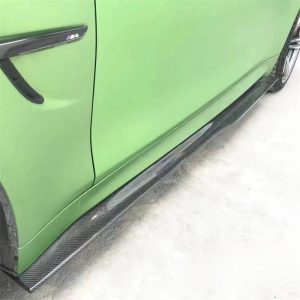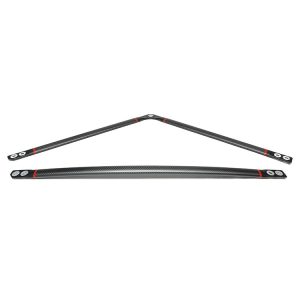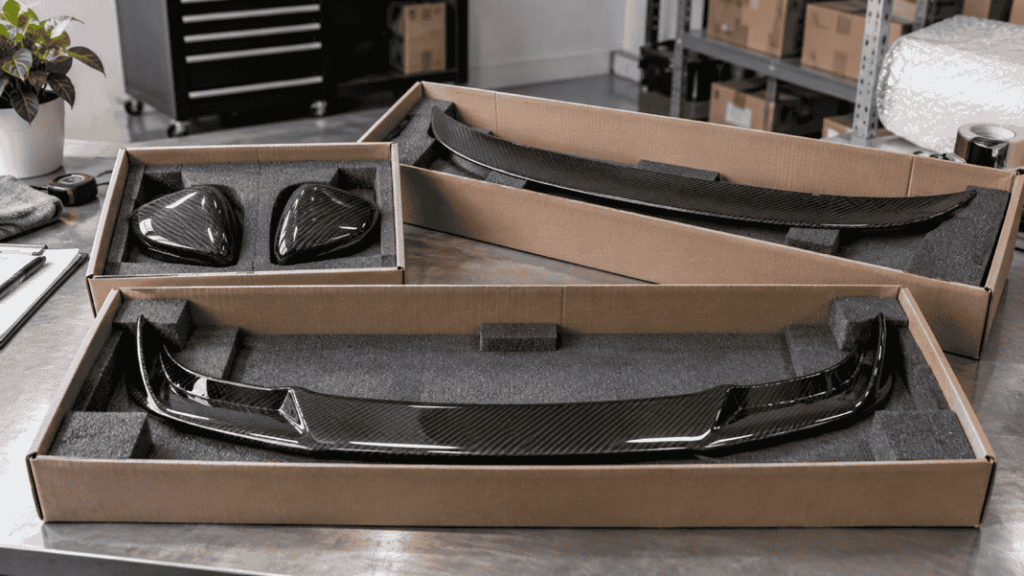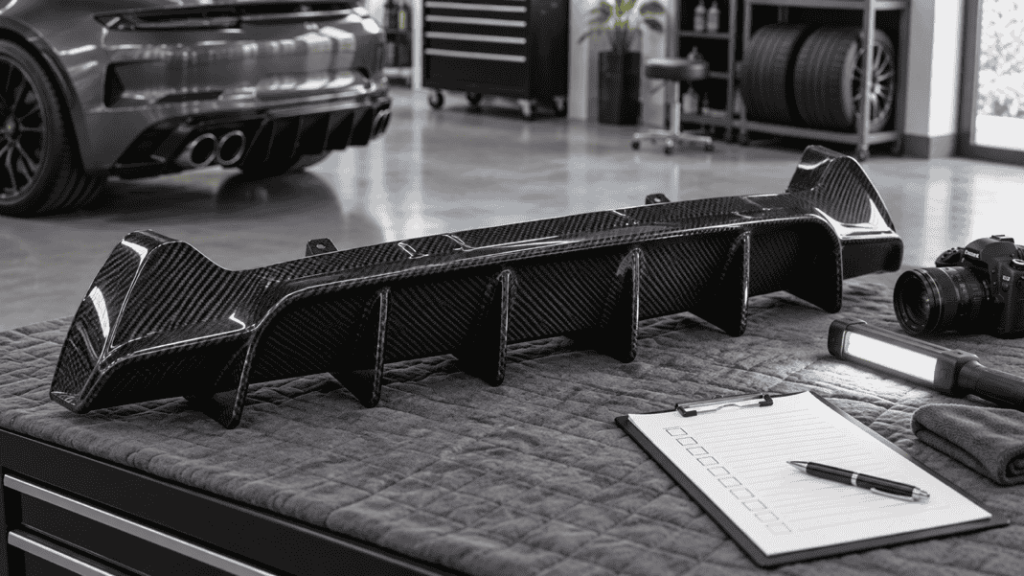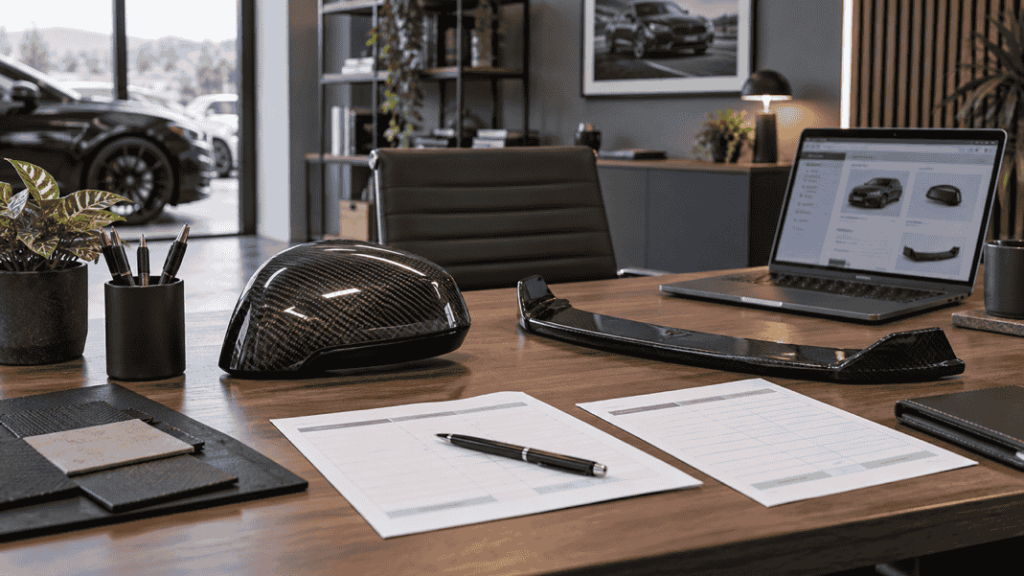
When a buyer asks for “BMW M Performance carbon parts,” confirm whether they require genuine BMW accessories or are open to an aftermarket product with a similar styling direction. A style name, carbon weave or familiar vehicle photo does not establish who manufactured a part, which instructions apply, or what the seller is promising.
For tuning shops and resellers, that distinction belongs at the start of the quotation. It affects the product reference you order, the evidence you request and the description your customer approves. This guide explains how to compare sourcing options without treating a style label as a product specification.
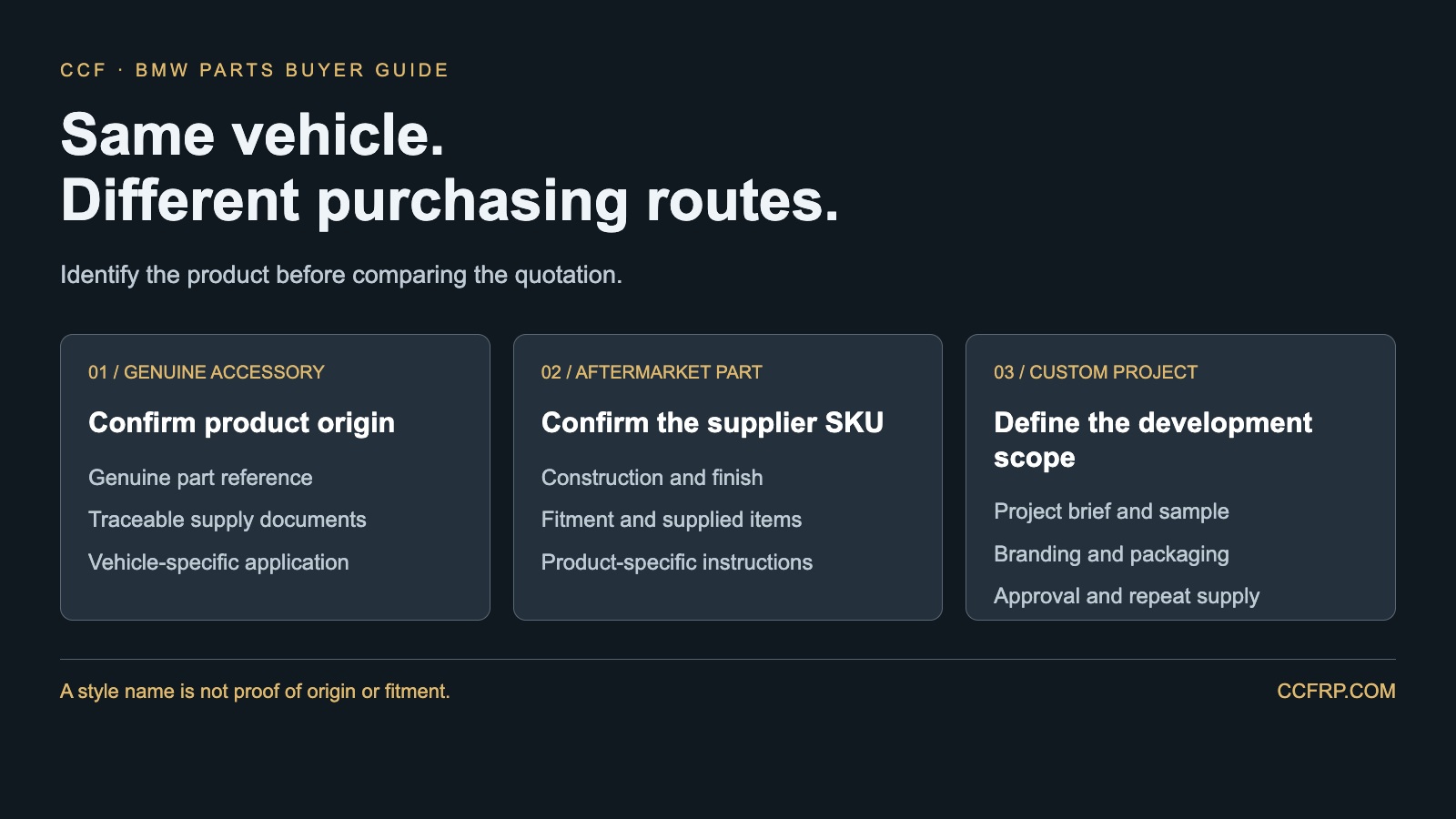
Separate the three purchasing routes
BMW markets its own M Performance Parts range. An independent supplier may offer aftermarket parts intended for BMW vehicles, sometimes described with a style abbreviation. A manufacturer may also offer custom development for a buyer’s brand. These are different purchasing routes, even when the proposed components occupy the same position on the car.
| What the buyer wants | What the quotation should identify | What not to infer |
|---|---|---|
| Genuine BMW accessory | The genuine part reference, applicable vehicle information, seller and traceable supply documentation | A similar-looking aftermarket item is not an equivalent identity |
| Aftermarket catalog part | The supplier’s product reference, intended application, construction, contents and relevant installation information | “MP-style” does not mean manufactured, approved or supplied by BMW |
| Custom development or private-label order | The project brief, manufacturing scope, approved sample and agreed branding or packaging requirements | OEM/ODM capability does not establish a supply relationship with BMW |
If the customer specifically requires a genuine part, keep that requirement visible. Do not replace it with a lower-priced aftermarket option without explaining the difference and obtaining the customer’s agreement. If the brief allows an aftermarket product, compare it on its own documented attributes rather than presenting it as the same item.
Translate the styling request into an identifiable product
A customer may send a photo and say “this M Performance look.” That is a starting point for a discussion, not an order specification. Ask whether the important feature is a lower-profile shape, a particular finish, an exact branded accessory or a coordinated exterior package.
Record the chassis, body version, model year, market and relevant modifications. Then select a supplier reference. For example, the CCF G87 M2 MP-style rear spoiler listing is a product reference for a quotation discussion. The style wording does not convert that listing into a genuine BMW accessory or establish that another brand’s instructions apply.
Use the BMW OE part-number guide to keep original references separate from supplier SKUs. A cross-reference may help identify the vehicle interface under discussion; it is not enough by itself to prove interchangeability.
Ask for evidence in four separate groups
Mixing identity, material and fitment into one claim—such as “OEM quality carbon”—leaves too many questions unanswered. Request evidence by purpose so your staff can see what has been established and what still needs review.
- Identity: supplier name, exact product reference, revision where available and the brand under which the item will be sold. Keep a product identifier alongside the quote and photographs.
- Construction: the stated material and manufacturing process for that reference, finish and any supporting specification. A photograph of a woven surface alone does not establish the entire construction.
- Application: the specific vehicle and configuration covered, exclusions, mounting interfaces and available installation documentation. A familiar chassis code does not resolve every body or equipment variation.
- Supply scope: sales unit, included components, separately required items, sample terms, packing and the delivery scope used for the price.
The dealer product-data checklist provides a structure for retaining those answers. If a document or test result is supplied, connect it to the actual product and revision. A general factory capability statement does not substitute for the specification of the part being ordered.
Compare the delivered job, not only the part price
Two quotations can look comparable while covering different purchases. One may include a complete accessory assembly; another may include only the visible carbon component. One may identify installation materials, while the other leaves them for the workshop to determine.
Use a line-by-line comparison with five columns: product identity, included items, installation information, delivery scope and unresolved questions. Add the shop’s own preparation and installation estimate separately. Keep quantities and sales units consistent: a pair, a single piece and a kit are not interchangeable pricing units.
For an illustrative comparison, a shop receives one offer for a named genuine accessory and another for an aftermarket spoiler. Before discussing savings, the buyer records which product each offer covers, whether mounting items are included and what installation information is available. If those fields remain unknown, the lower quoted price is not yet a complete cost comparison. No price or savings percentage should be invented to fill the gap.
For freight, packing and other quotation differences, use the wholesale quote comparison framework. It helps the purchasing team compare defined scopes instead of negotiating against incomplete totals.
Keep reseller descriptions aligned with the supplied product
Write the retail listing from confirmed product information. A useful description identifies an aftermarket carbon fiber component, its intended vehicle application, the supplier reference and the verified finish. If a styling term is used, keep it separate from the manufacturer or brand field.
Do not copy claims about BMW testing, approval, aerodynamic results or warranty coverage from a genuine accessory page onto a different supplier’s product. Likewise, a supplier’s OEM/ODM service should not become “BMW OEM supplier” in your listing without evidence of that specific relationship.
Keep the same identity in the quotation, customer approval, purchase order and product record. If the supplier proposes a different reference after the customer approves the original, review the substitution before accepting it. A matching style name does not establish an unchanged mounting arrangement or finish.
Give the customer a short approval summary
Before placing the order, confirm these details in plain language:
- The customer is choosing a genuine accessory or a clearly identified aftermarket product.
- The approved supplier reference and intended vehicle application are recorded.
- The finish, supplied contents and installation scope are understood.
- Any unresolved compatibility or documentation question has an owner and a next step.
- The quote identifies the quantity, delivery destination and what the agreed price covers.
For a distributor selling through several retailers, retain this information in the shared product record. That gives sales staff the same factual basis and makes it easier to stop an unsupported claim spreading through copied listings.
Questions buyers ask
Is MP-style another name for genuine BMW M Performance?
No. Treat it as a supplier’s style description unless genuine product identity is separately established. Confirm the exact reference and origin rather than relying on an abbreviation.
Can a genuine accessory installation guide be used for an aftermarket part?
Not automatically. The aftermarket product may have different interfaces, hardware or requirements. Request documentation for the selected product and have the installer review its applicability.
Does a private-label order mean the part is made for BMW?
No. Private labeling concerns the agreed buyer branding or packaging. It does not establish BMW authorization, genuine status or a manufacturing contract with BMW.
Can I offer both sourcing options to a customer?
Yes, as distinct quotations with clear product identities and scopes. Do not describe an aftermarket alternative as the genuine part the customer originally requested.
Request an aftermarket BMW trade quotation
Browse the BMW carbon fiber product range and send CCF the selected references, vehicle details, quantity and destination. For wholesale purchasing, ask for the construction, supplied contents and available application information for each line. If you need a custom product rather than an existing catalog item, identify that requirement in your OEM/ODM project enquiry.
Send the brief before promising a product identity, installation method or delivery scope to your customer. A clearly defined order gives both your sales team and the workshop a sound basis for the next decision.