An inquiry that says “make this in carbon” leaves the manufacturer guessing which surfaces matter, what the part must connect to and whether the request concerns styling or a functional requirement. That uncertainty eventually returns as revised costs, additional questions or a prototype that solves the wrong problem.
A useful custom carbon fiber feasibility brief identifies the intended part, vehicle application, available references, critical interfaces, desired appearance, expected quantity and unresolved requirements. You do not need every answer to start, but you should distinguish known requirements from assumptions.
CCF's OEM/ODM service accepts initial discussions based on samples, CAD, reference images or product ideas. The evidence needed to proceed depends on the actual project.

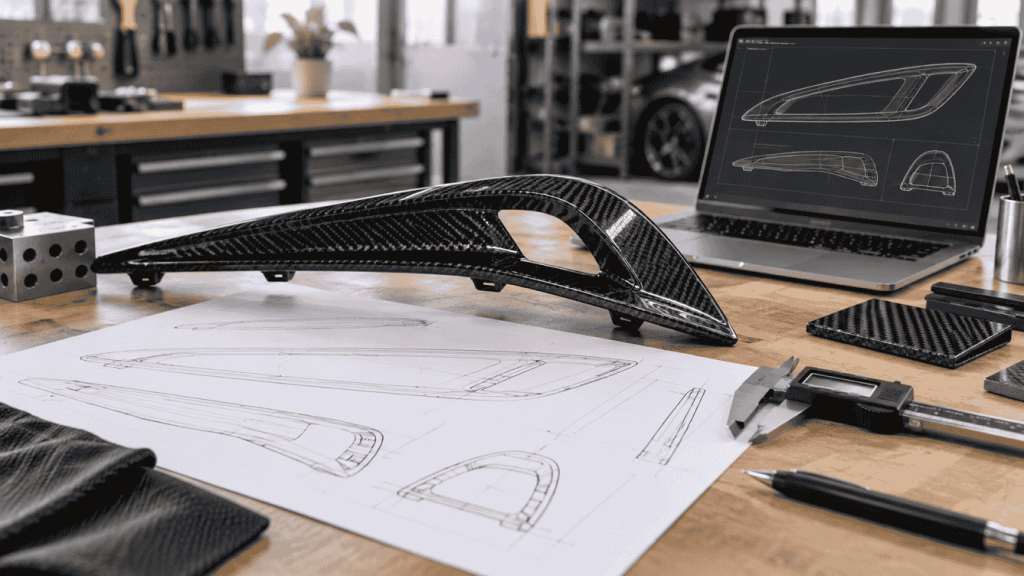
Concept illustration.
Describe the job the part must do
Name the part and explain its purpose. A decorative cover, replacement body panel and component with a defined load requirement need different review questions. If weight reduction is a goal, define the comparison and measurement scope rather than specifying an unsupported percentage.
Identify the vehicle and surrounding assemblies. Include modifications that change an interface. A manufacturer cannot reliably determine the rear geometry of a complex part from a front styling photograph.
Organize the available references
| Input | Useful content | Limitation to flag |
|---|---|---|
| Physical sample | Identification, condition and known alterations | May not represent the desired final design |
| CAD or drawing | Revision, units and relevant dimensions | Must relate to the actual application |
| Scan data | What was scanned and how surfaces were captured | Hidden or inaccessible areas may be missing |
| Photographs | Overview, interfaces and marked styling features | Do not define complete manufacturing geometry |
| Written brief | Priorities, quantities and intended use | Needs translation into agreed technical scope |
Ask which file formats the engineering team can review before transferring a large dataset. Keep one revision list so an older drawing is not mistaken for the latest geometry.
Mark the interfaces that cannot be guessed
Highlight mounting faces, adjacent parts, openings and areas where clearance matters. State which components must be reused and which may change. If you do not know a required dimension, label it as missing; an explicit gap is easier to resolve than an invented number.
Provide appearance references separately from geometric requirements. “Similar visual style” does not mean permission to copy every design feature or a requirement for identical construction. Confirm you can use and share the references you provide.
Separate estimate, prototype and production decisions
An initial review can identify questions and possible next steps without approving a production design. Request a response that distinguishes what can be assessed now from work requiring a sample, additional measurements, tooling or prototype evaluation.
Expected quantity and timing help define the commercial discussion, but they do not establish technical feasibility. Ask what the quoted stage includes: engineering review, tooling, prototype, revisions or production. The complete OEM/ODM guide explains the wider sequence.
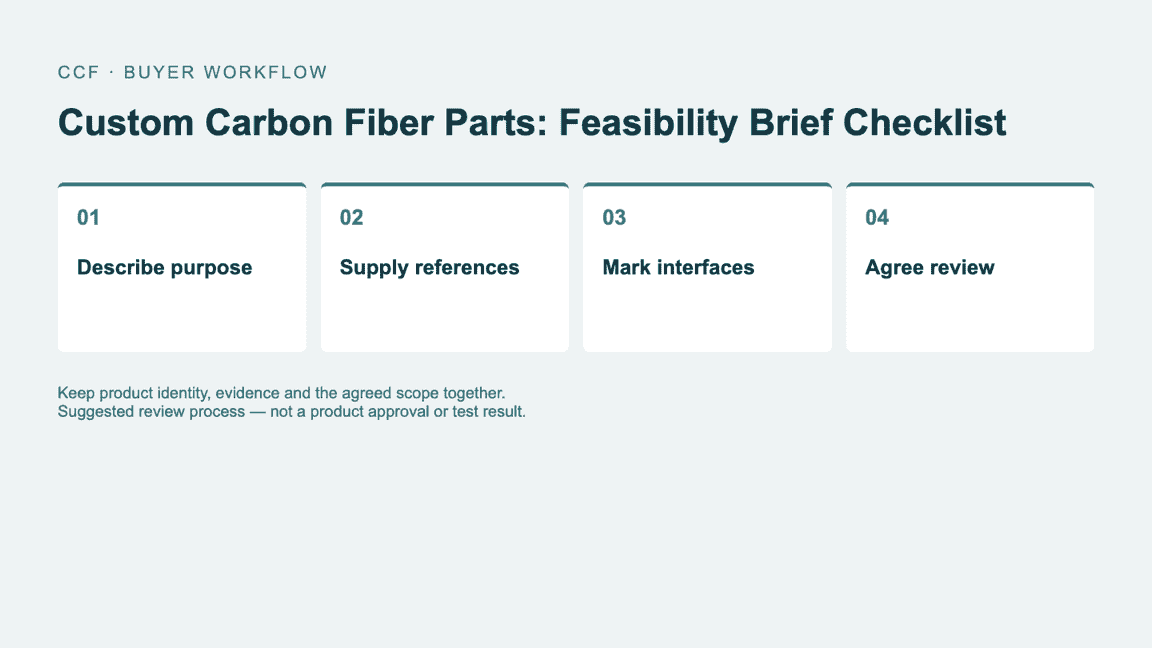
Suggested buyer workflow. Follow the product-specific specification and agreed order terms where applicable.
Worked example: a useful first feasibility brief
Fictional project example. A buyer wants a cosmetic engine-bay cover; no engineering feasibility or CCF capability is implied.
| Record | Example or required entry |
|---|---|
| Purpose | Appearance-led removable cover; no structural improvement claim requested. |
| Reference package | Vehicle and engine-bay photographs, marked desired area, existing cover reference and available geometry. |
| Interfaces | Identify adjacent service points and existing mounts; detailed mounting design is not yet approved. |
| Appearance and commercial inputs | Requested visible finish, expected order quantity and intended market supplied by buyer. |
| Questions for engineering | What data is missing? Which interfaces require inspection? What prototype and validation stages should be quoted? |
A useful first response separates accepted inputs, missing inputs and proposed engineering scope. It should not turn a visual reference into a production commitment. Submit the actual project quantity and dates rather than copying invented values from a sample brief.
Questions buyers ask
Can I start without CAD? Yes, an initial discussion can start from other references. That does not mean photographs alone will be sufficient for development or production.
Should I send confidential drawings immediately? Discuss the information-sharing arrangement first where confidentiality matters. CCF's buyer FAQ addresses project-specific confidentiality arrangements.
For the related buying decisions, see Approving a Carbon Fiber Prototype Before Production: A Buyer Sign-Off Checklist and Carbon Fiber Tooling Projects: What Buyers Should Clarify About Mold Ownership and Changes and How to Prepare for an Automotive Carbon Fiber Factory Visit.
Send a brief that can move forward
Submit the vehicle, part description, available references and expected purchasing scope. Add a short list of what is fixed and what is open to discussion. Ask for the next evidence needed to assess the project, rather than a production promise built on missing geometry.
Send an Inquiry
Include the article title, selected parts, quantity and delivery country.