
A one-piece lip is supplied as one principal section; a three-piece design uses separate sections in its assembly. The purchasing difference is also the support policy: a multi-section product may still be sold only as a complete kit, so separate replacement sections must be confirmed.
CCF’s reviewed references identify sectioned products; they do not establish a verified one-piece alternative for every style. Compare identified complete offers and actual spare terms before recommending one route.
What makes section replacement a usable option?
Confirm that the required section is separately offered, matches the retained assembly revision and finish, and has an appropriate installation scope. Then compare its complete supply and workshop cost with a new assembly.
If separate sale or compatibility is unconfirmed, describe the design as multi-piece without advertising replaceable spares. Preserve the accepted assembly identity at the first purchase so later inquiries do not rely on a similar-looking photograph.
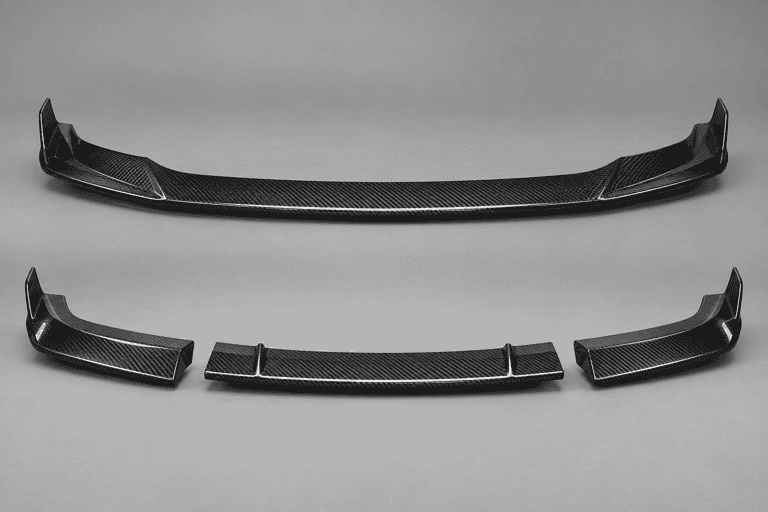
Start with actual product references, not an assumed category
CCF’s three-piece CSL-style reference shows separate sections and asks buyers to confirm the full set and any separately available pieces. Its accent finish also needs confirmation for the quoted version.
The V-style reference likewise shows separate elements. Do not label it as a verified one-piece alternative simply because its assembled outline looks continuous. Request the exact complete-assembly offer before setting up a one-piece-versus-three-piece price comparison.
Separate physical structure from supply policy
| Question | Complete assembly | Individual section, if offered |
|---|---|---|
| What is the reference? | Record the exact kit/assembly, revision and finish. | Record the section code and supported assembly revisions. |
| What is supplied? | List all sections, joining or mounting items and accessories. | List the section and any required additional items. |
| What is the order unit? | Confirm complete set, piece or other stated sales unit. | Confirm whether separate sale is supported and its minimums. |
| What is the delivery scope? | Quote the actual packed assembly. | Quote the actual packed section and readiness. |
| What must the installer assess? | The selected vehicle and documented fitting requirements. | Damage, remaining interfaces and the proposed replacement procedure. |
A supplier can offer a three-piece product only as complete kits. That may still suit the customer, but your listing should not promise independently replaceable sections without confirmation.
Define the original vehicle and assembly
Record G80 M3 or G82 M4, the actual bumper and relevant modifications. Save the accepted product reference, section arrangement, material description, finish, instructions and photos.
Use the installation-document workflow to keep the actual instructions with the product. Do not infer that three pieces require less labor, or that a one-piece outline eliminates separate mounting accessories.
For visual and mounting terminology, use the front lip versus splitter guide. A style name, part count and performance description answer different questions.
Get section-level answers before the first purchase
Ask whether vehicle-left, center and vehicle-right pieces are offered separately. Use vehicle-left/right as viewed from inside the vehicle facing forward; “driver side” can be ambiguous across steering markets.
Request the section code, price, order quantity, finish, current readiness and supported revision. Ask what changes if the assembly is revised or discontinued. Do not present a current spare offer as an unconditional lifetime supply promise.
If the factory has not confirmed the interfaces between a later section and an earlier kit, retain compatibility as unresolved. A similar outline cannot establish that the replacement will join the remaining parts.
Compare the replacement scenario without inventing a failure rate
| Cost or decision | Full assembly replacement | Section replacement, where supported |
|---|---|---|
| Product supply | Current complete-assembly quote. | Confirmed section quote plus required associated items. |
| Packing and freight | Proposed packed shipment to the destination. | The actual section shipment; do not assume cheaper freight. |
| Workshop scope | Assessment, removal and refitting of the complete assembly. | Assessment of the affected area and remaining components, plus documented replacement work. |
| Appearance | Review the new assembly against retained trim. | Review the new section against older retained pieces. |
| Uncertainty | Availability, application and installation conditions. | Those fields plus revision compatibility and separate-sale support. |
Use confirmed prices and the workshop’s scope. Do not invent a damage frequency or arbitrary repair saving to make one category appear cheaper. Your own completed-job records can inform an internal comparison when their basis is clear.
A visibly damaged outer piece does not prove the center and other attachment areas are suitable for reuse. Have the actual condition assessed before deciding how much of the assembly to replace.
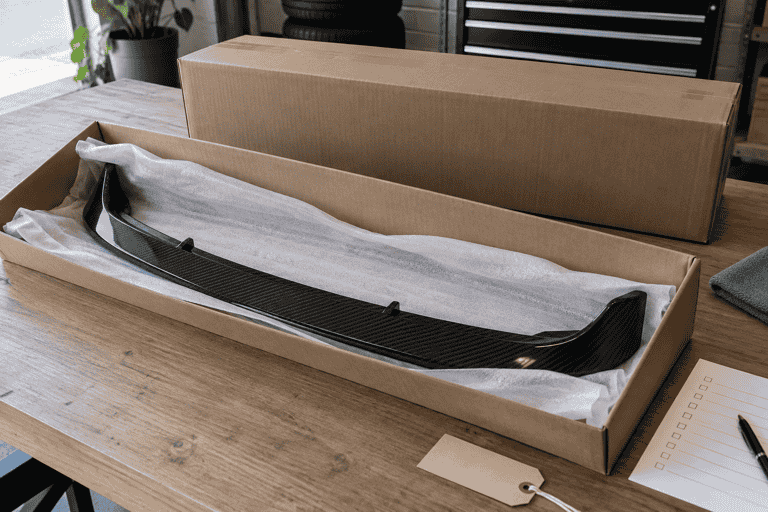
Keep freight, finish and revision matching visible
Request packed dimensions, gross weight and the selected shipping basis. A smaller loose piece does not itself determine the chargeable shipment or suitable protection. Use the landed-cost guide rather than a generic percentage saving.
A new section may also differ in appearance from an older installed part. Compare current finish information and record the customer’s accepted scope. Do not promise a perfect match from the common word “carbon.” The BMW appearance-matching guide helps organize that decision.
Save a replacement-ready order record
Keep the assembly reference, revision, accepted finish, supplied sections and mounting documents with the original order. Add any confirmed section codes and photos identifying their installed orientation.
Illustrative scenario: a customer asks for the left outer piece months later. The shop sends the original reference and photos. If the offered section belongs to a different revision, the unresolved interface is reviewed before ordering. If only full kits are supplied, the customer receives a complete-kit proposal instead of an unsupported promise of a section repair.
Check Complete-Kit and Spare-Section Terms
Send the G80/G82 and bumper, assembly reference/revision, required left/center/right section if relevant, finish, quantity and destination. Request separate-sale availability and complete delivered scope.
Send Your Product Requirements
Include your company, selected product or project reference and the question to resolve.