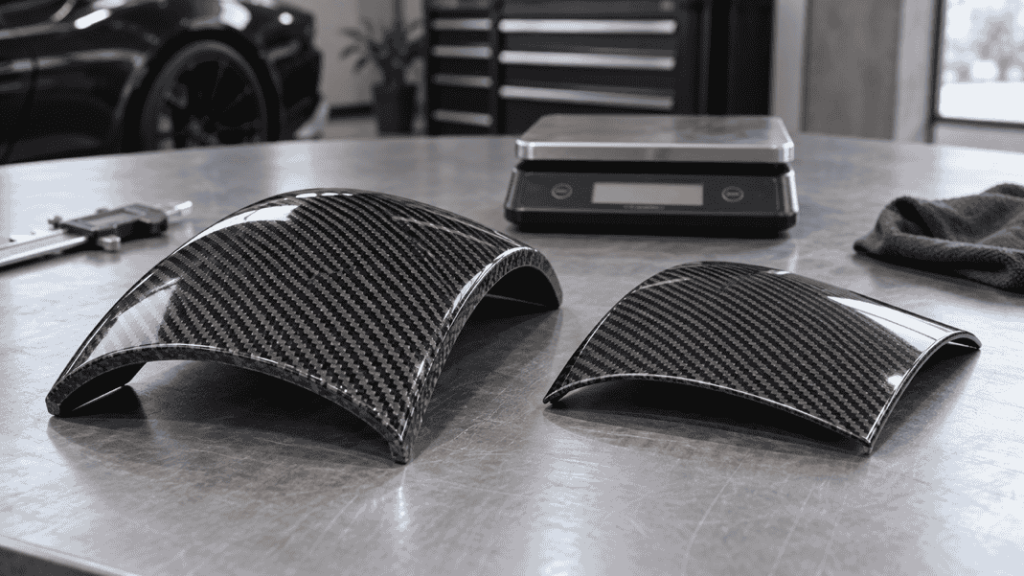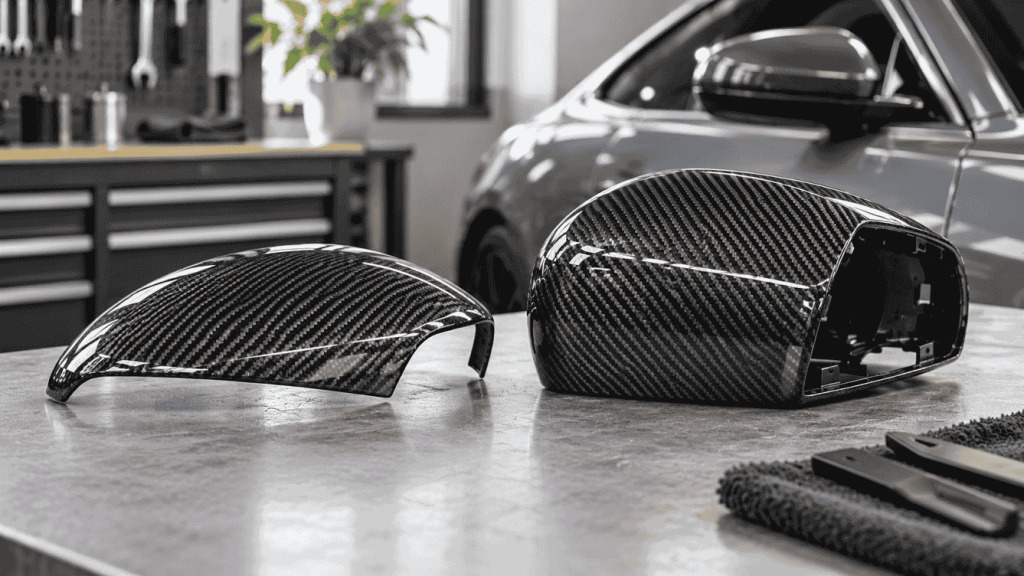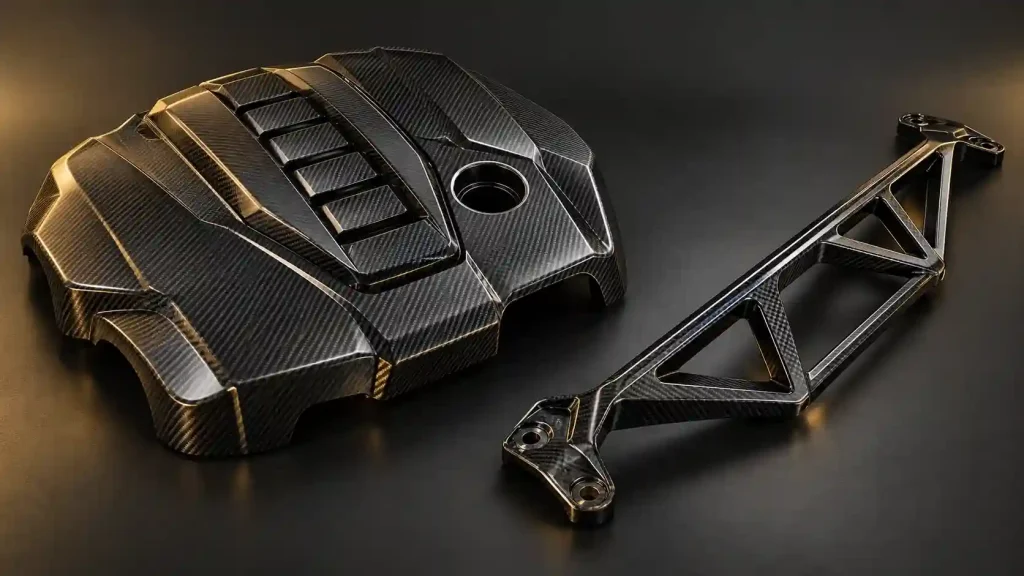
A front lip, side skirts and diffuser may each look excellent alone but look different when installed together. For a tuning shop, the expensive moment is when the customer notices the mismatch after every carton has been opened.
To coordinate carbon fiber weave and finish, compare the selected products under the same lighting, identify their construction and surface specifications, and agree which visual differences are acceptable before ordering. “Gloss carbon” is not a complete matching specification.
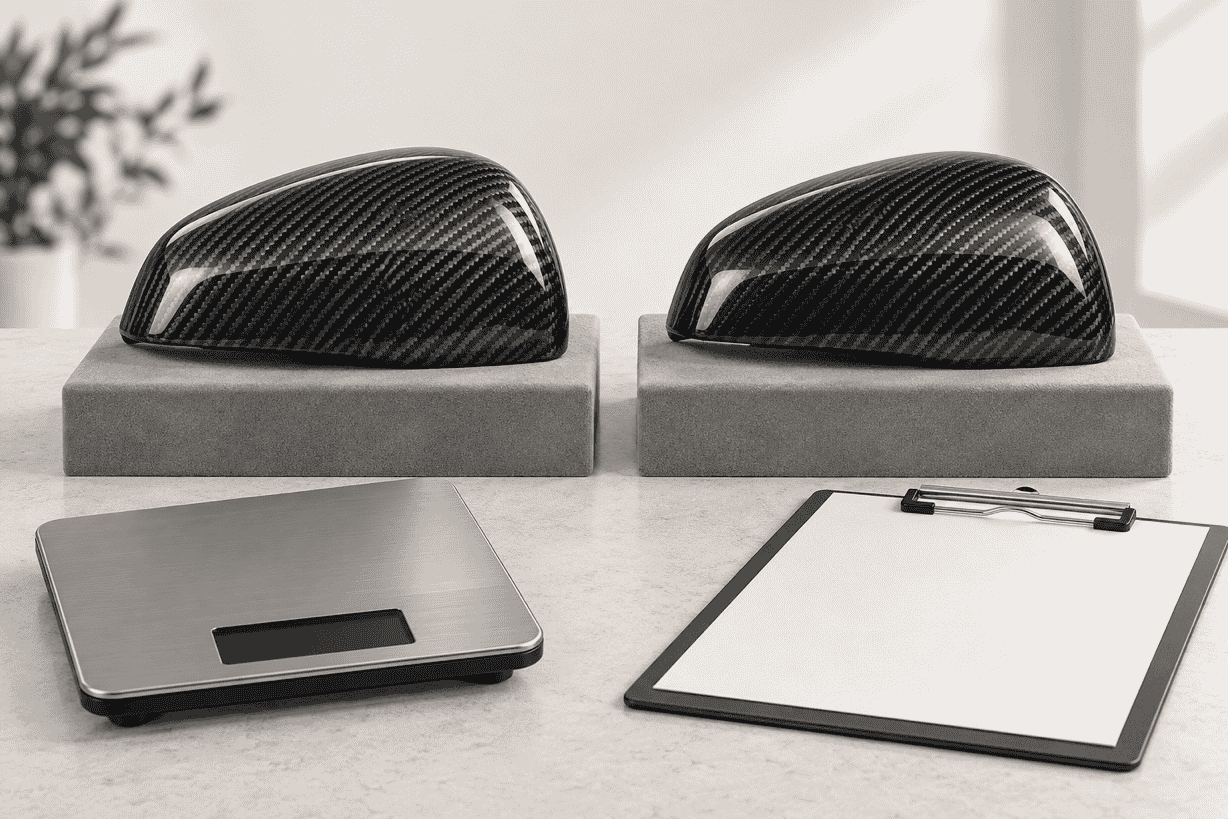
Concept illustration.
Separate three appearance questions
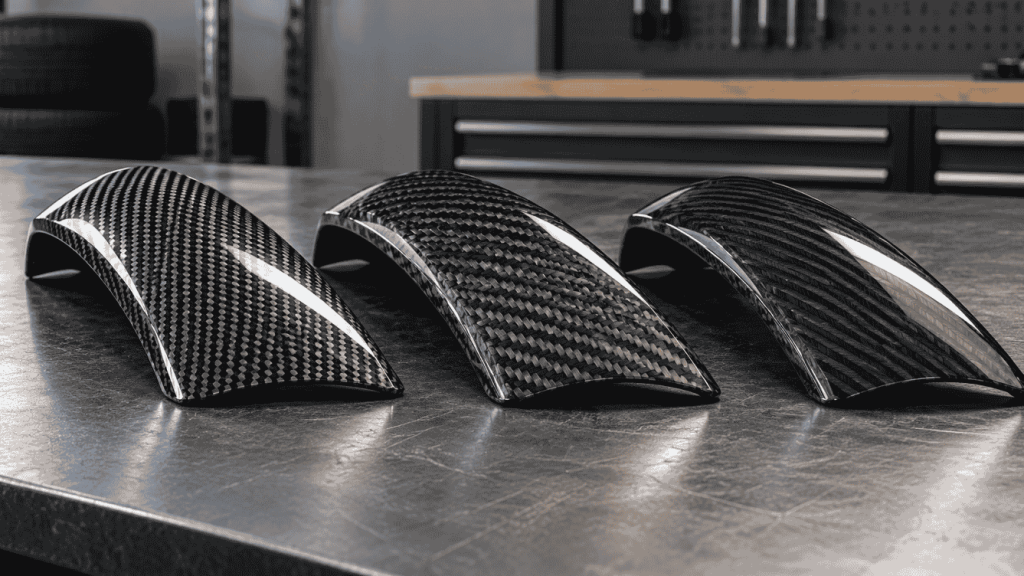
First, identify the visible reinforcement pattern. A woven appearance and a random chopped-fiber appearance are different design choices; neither can be treated as an interchangeable finish label.
Second, compare how that pattern runs across each component. A curved mirror cap and a long side skirt do not present the surface at the same angle. Pattern direction can appear different because of shape and layup, so inspect the actual parts rather than relying on matching product names.
Third, compare the coating and overall presentation. Gloss level, lighting, reflections and camera settings affect how black or bright a surface looks. Do not diagnose a mismatch from two unrelated website photographs alone.
Build one visual reference set
| Reference | What to record |
|---|---|
| Existing vehicle trim | Which pieces must be retained and matched |
| Proposed products | Exact reference and version for each item |
| Photography conditions | Similar light, distance and background where possible |
| Close-up views | Pattern, edges and transitions around curves |
| Customer decision | Accepted differences and unresolved questions |
If the customer already owns carbon trim, request both a whole-vehicle view and a close-up in neutral light. A heavily edited social-media image is useful for style direction but weak as a color or gloss standard.
For a high-value package, ask whether physical samples or side-by-side product photographs are available. A remote review can narrow the options; it cannot guarantee an exact visual match across different cameras and screens.
Do not confuse appearance with process
Two glossy parts can have different construction. Conversely, products made with similar processes can present their visible pattern differently. Use the dry versus wet carbon guide when explaining construction and price; keep that conversation separate from appearance approval.
Avoid telling customers that a pattern label guarantees a particular weight, strength or manufacturing route. Request specifications for the exact items when those properties affect the buying decision.
Put appearance approval into the quotation
Identify the reference images or sample used for the customer's decision. Describe the finish requested for each SKU, not simply “all matching carbon.” If one part has a different visible layout, highlight it before the order is approved.
For example, a shop might accept a different pattern direction on a strongly curved mirror cap while requiring the left and right side skirt pair to follow the agreed visual arrangement. That is a customer-specific approval example, not a universal manufacturing tolerance.
Use the G87 package quotation guide to tie appearance choices to the bill of materials. For later supply, the reorder consistency guide helps preserve the reference rather than starting from memory.
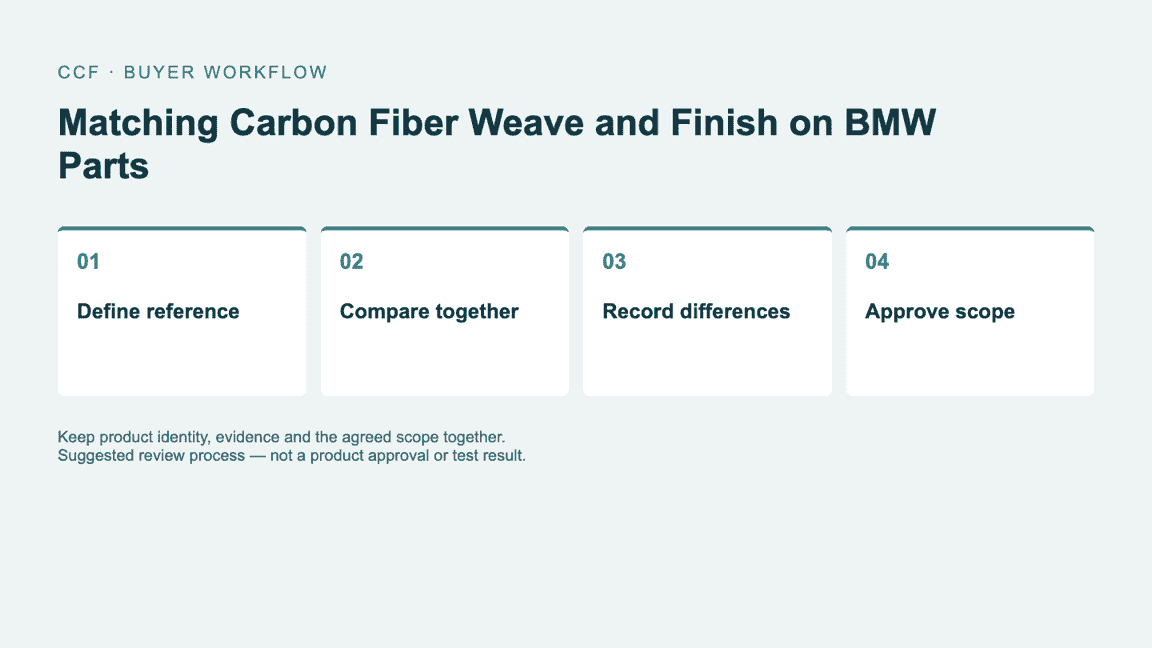
Suggested buyer workflow. Follow the product-specific specification and agreed order terms where applicable.
An appearance approval note
Use this record as a buyer working tool. Examples and sample labels below are illustrative, not CCF inspection, order or test records.
| Record | Example or required entry |
|---|---|
| Reference set | Identify each part, revision and the images or physical sample reviewed. |
| Viewing conditions | Compare the parts together under the agreed lighting; record any condition that obscures the surface. |
| Accepted variation | Describe the observed difference and whether the buyer accepts it; avoid a vague “all matching” statement. |
A buyer can accept a visible difference for one build without establishing a universal production tolerance. Carry the same reference into the order.
Questions buyers ask
Can the screen prove an exact match? No. Treat digital images as selection evidence with limits. Use physical references when the buyer requires a closer comparison.
Should every exterior component have identical pattern direction? Establish the customer's requirement against the actual shapes and available versions. Do not promise an arrangement the selected products do not provide.
For the related buying decisions, see How to Review a Carbon Fiber Sample Remotely Before Ordering and Carbon Fiber Overlays vs Replacement Parts: What Changes in a Customer Quote?.
Set the appearance standard before ordering
Send CCF the BMW product list and photographs of any existing carbon trim. Identify the pieces that must coordinate and request the available comparison material. Resolve the visual decision before it becomes an installation-day disagreement.
Send an Inquiry
Include the article title, selected parts, quantity and delivery country.
Customer reference: BMW Carbon Fiber Trim: Customer Feedback on Finish and Packaging. Read the actual feedback alongside the product-specific checks above.