When a carton arrives damaged, your customer wants an answer quickly. A single close-up of a mark on a part rarely explains which shipment it came from, how it was packed or whether the packaging was disturbed before the issue was recorded.
A useful carbon fiber damage report connects the order, carton, protective packaging and affected part in one clear evidence sequence. Report promptly under the applicable seller and carrier procedures, preserve the evidence and request written next steps before repair or return.
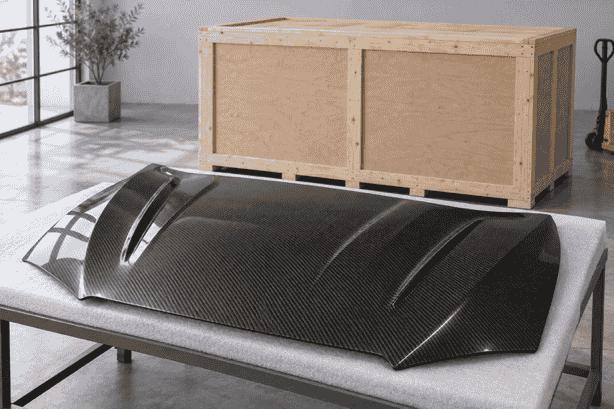
Concept illustration.
Start with the complete shipment
Record the order reference, delivery date, carton count and relevant tracking or transport reference. Photograph the outer carton from several sides, including visible damage and the label needed to identify the shipment. Keep personal address information out of any public post; send identifying records privately to the parties handling the claim.
If damage is visible at delivery, follow the carrier's process for recording it. Requirements and reporting periods vary. Do not assume that a supplier's warranty process automatically satisfies a carrier's claim conditions.
Show the packing sequence
As the carton is opened, record the part's position, internal supports, protective wrapping and any loose components. If a carton is already open, document its current condition honestly rather than restaging an unopened delivery.
| Evidence | What it helps establish |
|---|---|
| Order and product reference | Which supplied version is involved |
| Outer carton and label | Shipment identity and visible external condition |
| Internal packaging | How the part was supported on arrival |
| Whole affected part | Location of the issue within the component |
| Close-up with scale reference | Visible size and character of the affected area |
| Timeline and handling notes | When the issue was first noticed and what happened next |
A ruler beside the affected area can help communicate size, but do not press against a damaged surface or force the part into position to obtain a photograph.
Describe observations without guessing the cause
Write “a visible line near the mounting tab” or “the corner is chipped” before labeling the issue a manufacturing defect or transport failure. Include relevant observations about the carton and padding, and let the evidence review address cause and remedy.
Stop installation if the condition raises a question about suitability. Do not drill, trim, bond, polish or attempt repair while asking the supplier to assess the original condition. Retain packaging until you receive handling instructions. A part's appearance alone may not reveal the full extent of damage.
For a fitment issue without visible damage, follow the separate fitment troubleshooting guide. For preventing transport problems, review the large-part shipping checklist.
Request a specific next action
Ask who is reviewing the report, whether additional views are needed and what should happen to the product while the review is open. Record any authorized inspection, return or replacement arrangement in writing. A submitted report is not an automatic promise of reimbursement, free replacement or a particular outcome.
Keep your customer updated with confirmed information: the report has been sent, an additional view is required, or a remedy has been agreed. Avoid promising a replacement arrival date before one exists.
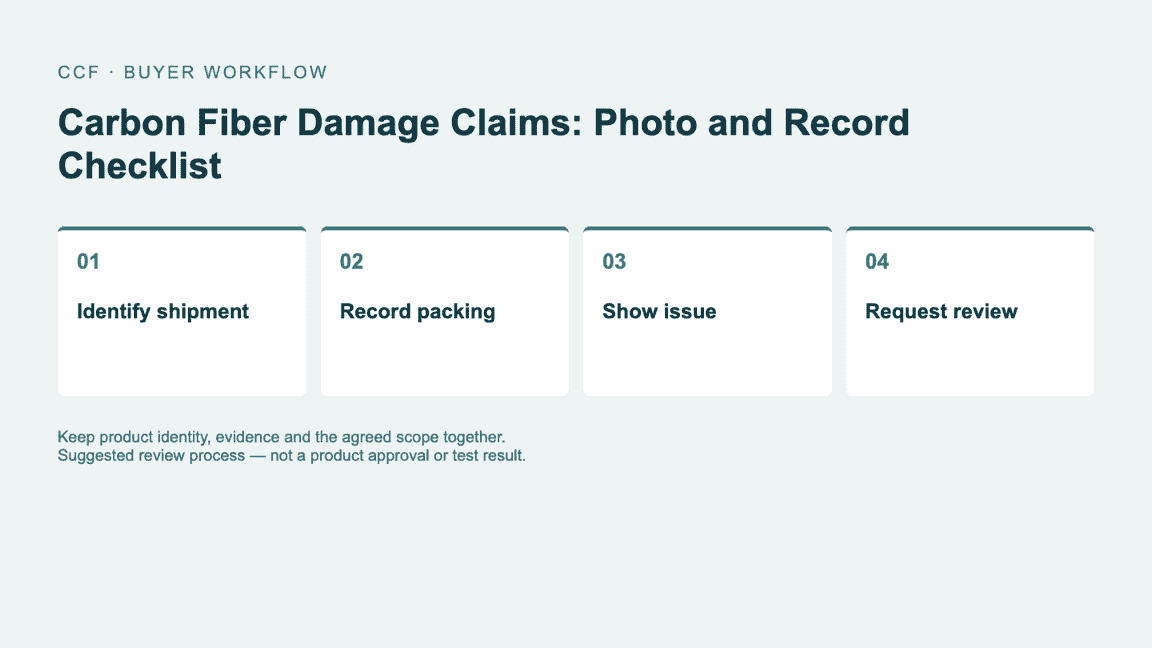
Suggested buyer workflow. Follow the product-specific specification and agreed order terms where applicable.
A claim pack completeness check
Use this record as a buyer working tool. Examples and sample labels below are illustrative, not CCF inspection, order or test records.
| Record | Example or required entry |
|---|---|
| Identity image | Shipment label and carton identifier readable; unrelated personal details handled appropriately. |
| Context images | Unopened carton where available, internal protection, whole part and close damage view. |
| Written request | Order reference, date received, observations and requested review; do not state an unverified cause as fact. |
Example: “The outer carton has a crushed corner and the part has a visible mark in the pictured area. Please review the attached sequence and advise the next step.” This describes evidence without deciding liability.
Questions buyers ask
Should I send only the damaged area? No. Include the whole part, shipment identity and packaging context so the close-up can be interpreted.
Can I discard the carton after taking photos? Preserve it while instructions are pending. The parties reviewing the issue may need more evidence or the original packaging.
For the related buying decisions, see Carbon Fiber Packing Lists: How Dealers Match Cartons to Customer Jobs and Approving Carbon Fiber Order Changes Before Production or Dispatch.
Submit a report that can be reviewed
Read CCF's current buyer help and after-sales information, then send the order reference, timeline and full photo sequence. A complete first report helps avoid repeated requests while your customer's job is waiting.
Send an Inquiry
Include the article title, selected parts, quantity and delivery country.