Evaluate a carbon fiber spoiler downforce claim by asking what was tested, at what speed, on which configuration and by which method. A large force number without those details is not a useful basis for advising a customer. Carbon construction and aggressive styling do not, by themselves, establish aerodynamic performance.
A tuning shop can still sell an appearance-led aero part honestly. The important boundary is between a visual upgrade and a quantified performance promise. Distributors should make that boundary clear before passing supplier copy to their dealers.
Ask for the context behind the headline
Identify whether the evidence concerns an isolated component or the complete vehicle. Record the exact geometry, mounting position and adjustment. A result for one wing angle or vehicle setup should not be treated as universal.
As an example of product-specific technical context, APR publishes information for its own GT-1000 wing. Another manufacturer’s data is not evidence for a visually similar CCF part. Use external information to understand the questions, not to borrow a performance number.
Use this evidence checklist
| Question | Useful answer | Insufficient answer |
|---|---|---|
| Which configuration? | Identified part, vehicle and setup | A generic wing photograph |
| What speed? | Speed and test conditions stated | A force number alone |
| What method? | Described simulation or physical test | “Tested for performance” |
| What is measured? | Defined force, sign convention and units | Unexplained “kg” headline |
| What comparison? | Baseline and changed configuration | Two unrelated vehicles |
| What limitations? | Scope, uncertainty and applicability | A universal guarantee |
Separate simulation, testing and installation evidence
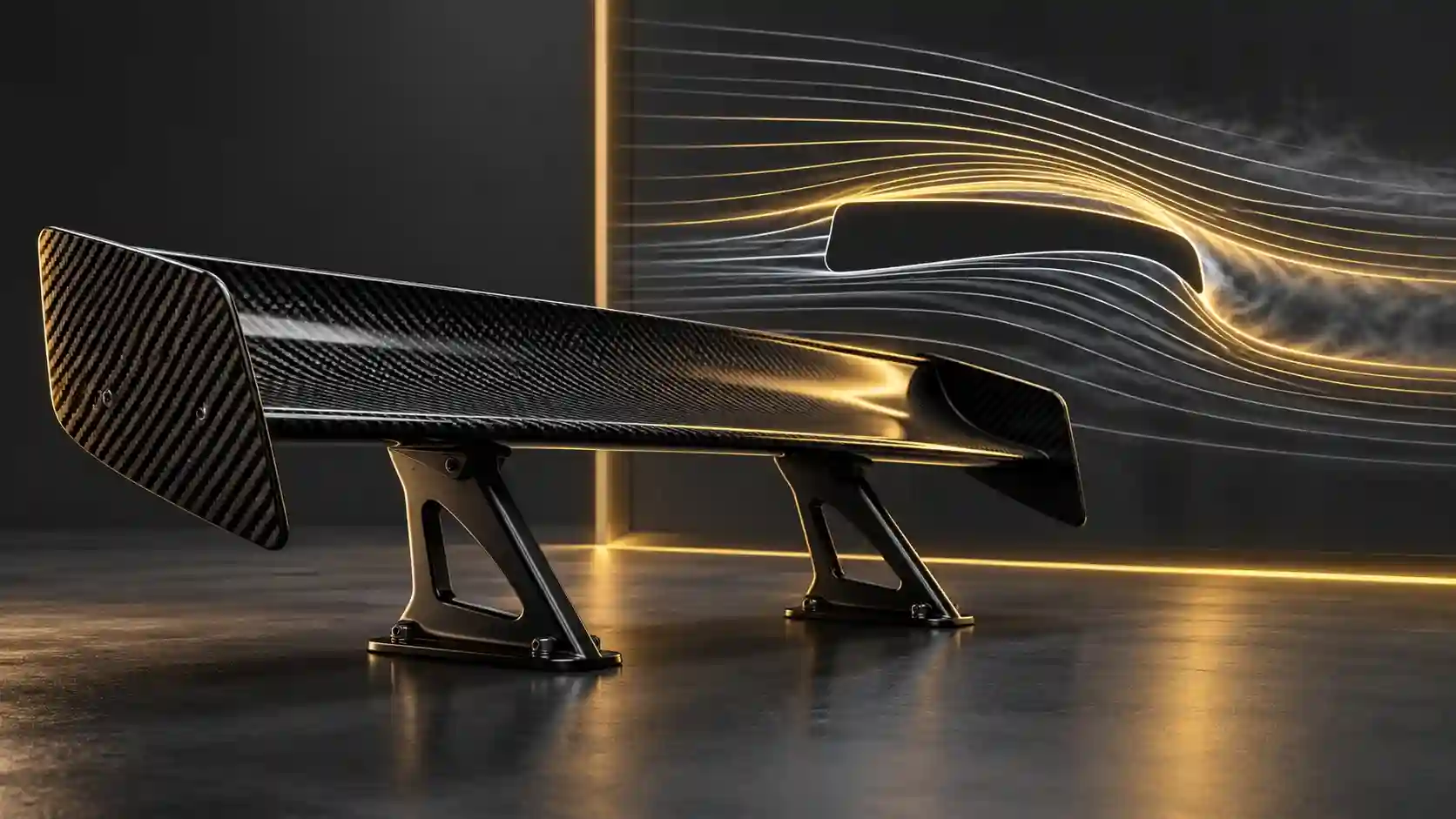
A computational image with colorful airflow can illustrate an analysis, but a screenshot alone does not explain the model, assumptions or validation. Ask for a report that identifies the geometry and conditions and explains what the result represents.
A physical test also needs context. Ask how the loads were measured, what was held constant and whether the result applies to the complete vehicle or only the component. Track photographs demonstrate presence at a track, not a measured aerodynamic improvement.
Installation evidence answers a different question: whether the part was fitted in a specified configuration. It does not automatically substantiate force, balance or lap-time claims. Keep the evidence types in separate fields in your product database.
Review the whole installation decision
For a customer who wants functional aero, involve an appropriately qualified specialist in reviewing the mounting system and vehicle setup. Ask whether the available evidence addresses the customer’s use case and whether additional engineering work is required.
Do not treat an aerodynamic claim as proof that every mounting surface or fastener arrangement is suitable. The attachment design and applicable installation instructions still matter. Avoid inventing load ratings or adapting a generic drill pattern to close an evidence gap.
Also distinguish a reduction in lift from net downforce. A favorable change relative to a baseline does not necessarily mean the final force acts downward. The report’s definitions should govern the wording you use.
Choose the right sales wording
If evidence is limited to appearance and fit, describe those attributes directly. If a quantified result is available, present the configuration and conditions alongside it. Do not remove qualifications when shortening copy for a product card or marketplace listing.
Before buying a range, agree which claims your sales team may repeat and where the supporting file is stored. A dealer should be able to trace a claim back to a product reference and report, rather than to a screenshot in a chat.
Missing performance data does not prove a part produces no aerodynamic effect. It means you should not promise a specific effect that has not been substantiated.
How to reject an incomplete aero claim
Use this record as a buyer working tool. Examples and sample labels below are illustrative, not CCF inspection, order or test records.
| Record | Example or required entry |
|---|---|
| Claim received | “Produces X downforce,” with no configuration or conditions. |
| Missing context | Speed, units, measured quantity, geometry, setup, method and limitations. |
| Permitted next step | Request the underlying evidence; describe appearance and documented application while the claim remains unsubstantiated. |
This is a fictional evidence-review scenario, not a CCF test. A polished airflow graphic cannot supply the missing measurement context.
For the connected decisions, use How to Tell Decorative Carbon Engine Covers from Structural Braces and How to Verify Carbon Fiber Weight-Saving Claims Before Advertising Them.
Buyer FAQ
Does a carbon rear wing always improve handling?
That conclusion cannot be made from material or appearance alone. The specific design, setup and supporting evidence need review.
Can I quote data from a similar design?
No. Similar styling does not establish identical geometry, installation or performance.
What should I request with a quotation?
Ask for the selected reference, mounting scope and any available product-specific aerodynamic evidence. State whether the customer prioritizes appearance or a documented performance objective.
Ask What Evidence Applies to Your Aero Choice
Send the selected reference and intended use. Request the available mounting information and any product-specific aerodynamic documentation.
Send an Inquiry
Include this article title, your product reference, vehicle details and the question you need resolved.