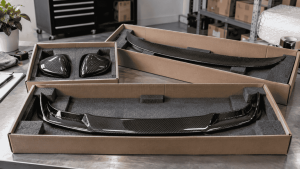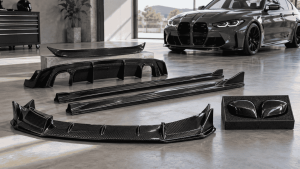
Plan a BMW F80 M3 or F82 M4 carbon fiber build by the actual car and the components the customer wants to change. Keep body style, installed equipment and individual product references visible in the proposal. A shared model-family label or complete-car photo is not a bill of materials or proof that every pictured part is included.
Plan an F80 M3 or F82 M4 carbon fiber build by identifying the actual vehicle, choosing the customer’s visual direction and recording one selected reference for each component. Shared catalog labels are useful starting points, but every selected item still needs its own application and supply confirmation. This guide is for shops preparing a customer proposal from catalog parts. It focuses on building an order that remains clear from the first conversation through delivery, rather than listing a universal “best five” upgrades.Inspect the existing build before adding to it
Ask whether the vehicle already has a lip, corner pieces, side extensions, diffuser or aftermarket exhaust. Obtain photographs of the current setup and identify anything the customer wants removed or retained. On a previously modified car, the visible bumper may not tell you how existing pieces are attached or what has been changed underneath. Record F80 M3 or F82 M4 explicitly. Do not automatically extend a two-model listing to another body style. Keep the model year and relevant modifications on the quote, even when a supplier groups several applications on one product page.Make the front-end decision first
Available reference choices include an MP-style front lip, a CS-style front lip and a V-style front lip. Use their actual images to discuss the visible edge, coverage and overall shape. Avoid ranking them for performance without relevant evidence. Give the customer comparable views of the shortlisted references. Ask which outline they prefer and whether driveway access or existing modifications affect the decision. A style choice should be followed by application checking; an attractive image does not resolve mounting or clearance questions.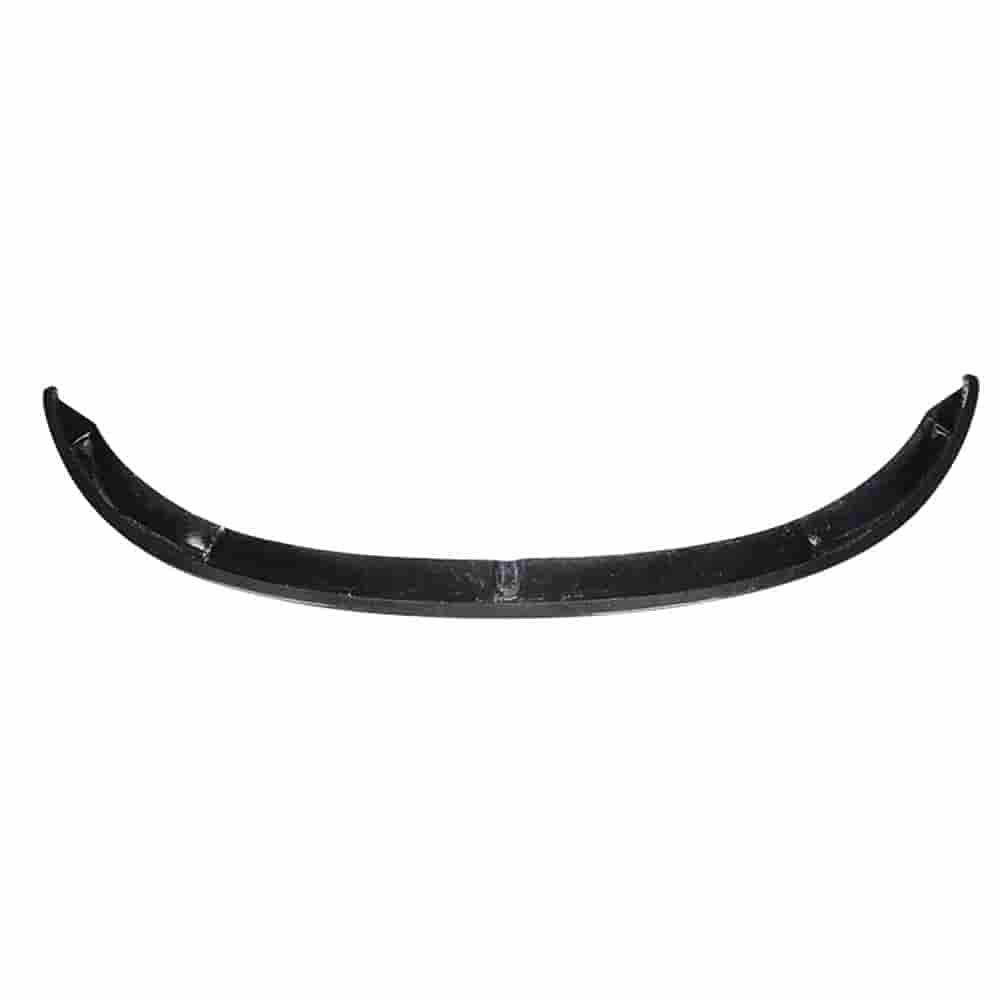
Do not accidentally double-order front components
A separate corner-splitter listing does not prove those pieces are included in, required by or compatible with every front lip. Confirm the supplied contents of the chosen reference before adding associated pieces to the customer’s bill.| Customer request | Shop action | Order record |
|---|---|---|
| “I want this front end.” | Identify each visible component | Named references, not only a build photo |
| “Keep my current corner pieces.” | Check the existing pieces against the proposed lip | Retained components and unresolved interfaces |
| “Add everything in the picture.” | Separate standard supply from optional items | Quantity and inclusion per line |