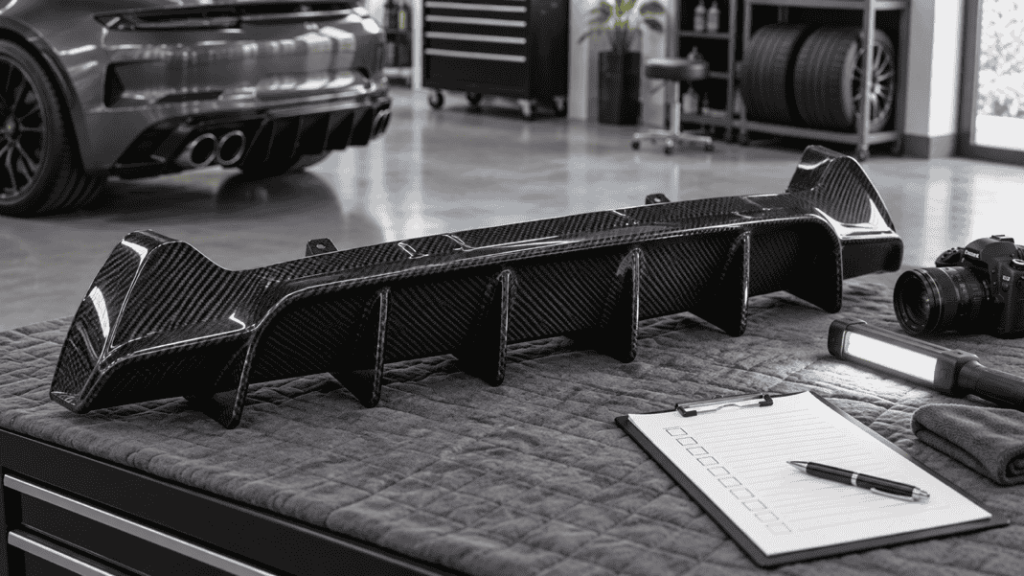
A tuning shop can add carbon fiber parts by starting with customers it already serves, then connecting a specific appearance goal to an identifiable product and a scoped installation offer. The opportunity is an additional relevant sale, not a reason to recommend a part to every customer. Begin with the vehicle platforms your team knows and customer requests you can document.
You already spend time earning trust, understanding a build and arranging workshop work. A suitable exterior component can extend that relationship. The commercial test is whether the additional sale contributes enough after product cost, handling, installation and support—not whether carbon fiber has an attractive retail price.
Find opportunities in existing conversations
Review recent estimates and completed jobs. Record customers who asked about exterior styling, matching finishes, replacing a damaged accessory or completing an unfinished build. Use information your business is entitled to use; do not treat every past customer as a marketing subscriber. Staff can also ask during an active booking: “Are you planning any exterior changes that we should consider alongside this work?”
Group the answers by chassis and requested part. Five requests for different vehicles are not the same purchasing signal as five requests for one identifiable application. A shortlist based on actual inquiries gives your supplier something more useful than “send your best sellers.”
Choose one offer your team can explain
| Customer situation | Useful next step | What not to assume |
|---|---|---|
| Wants a stronger front-end appearance | Show appropriate front-lip references and confirm bumper configuration | That the most aggressive style suits clearance or daily use |
| Already owns carbon exterior trim | Discuss finish and weave expectations using current images | That different suppliers or batches match exactly |
| Has a limited upgrade budget | Quote one defined change with installation separately visible | That a full kit is necessary to make a sale |
| Needs a replacement accessory | Identify the installed reference and compatible supply scope | That one section from another design can replace it |
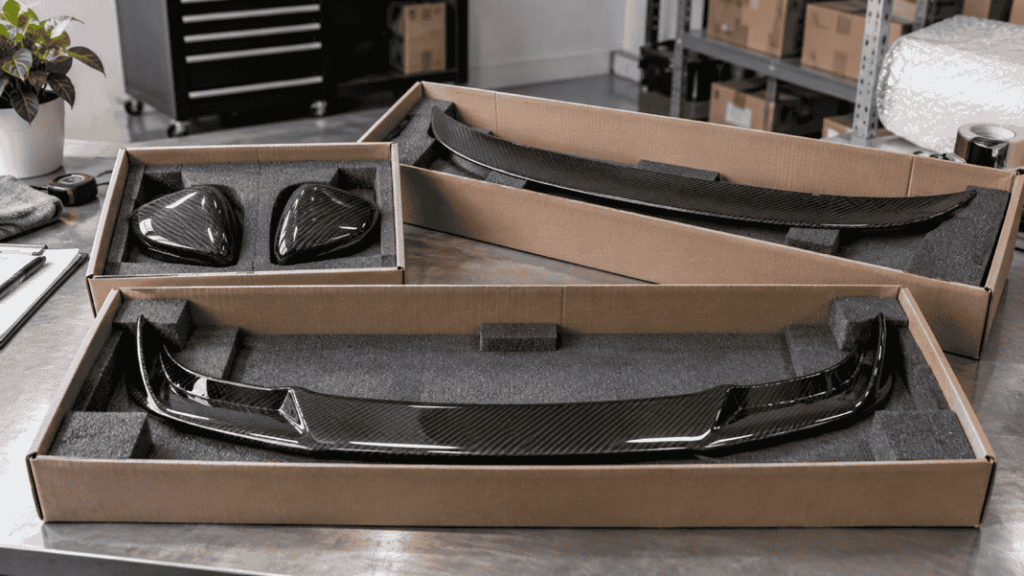
For a BMW-focused shop, the G87 M2 MP-style front lip is one reference to investigate. It is not a universal starter SKU or a claim of demand in your market. Use the BMW range-planning guide to connect references to your actual customer base.
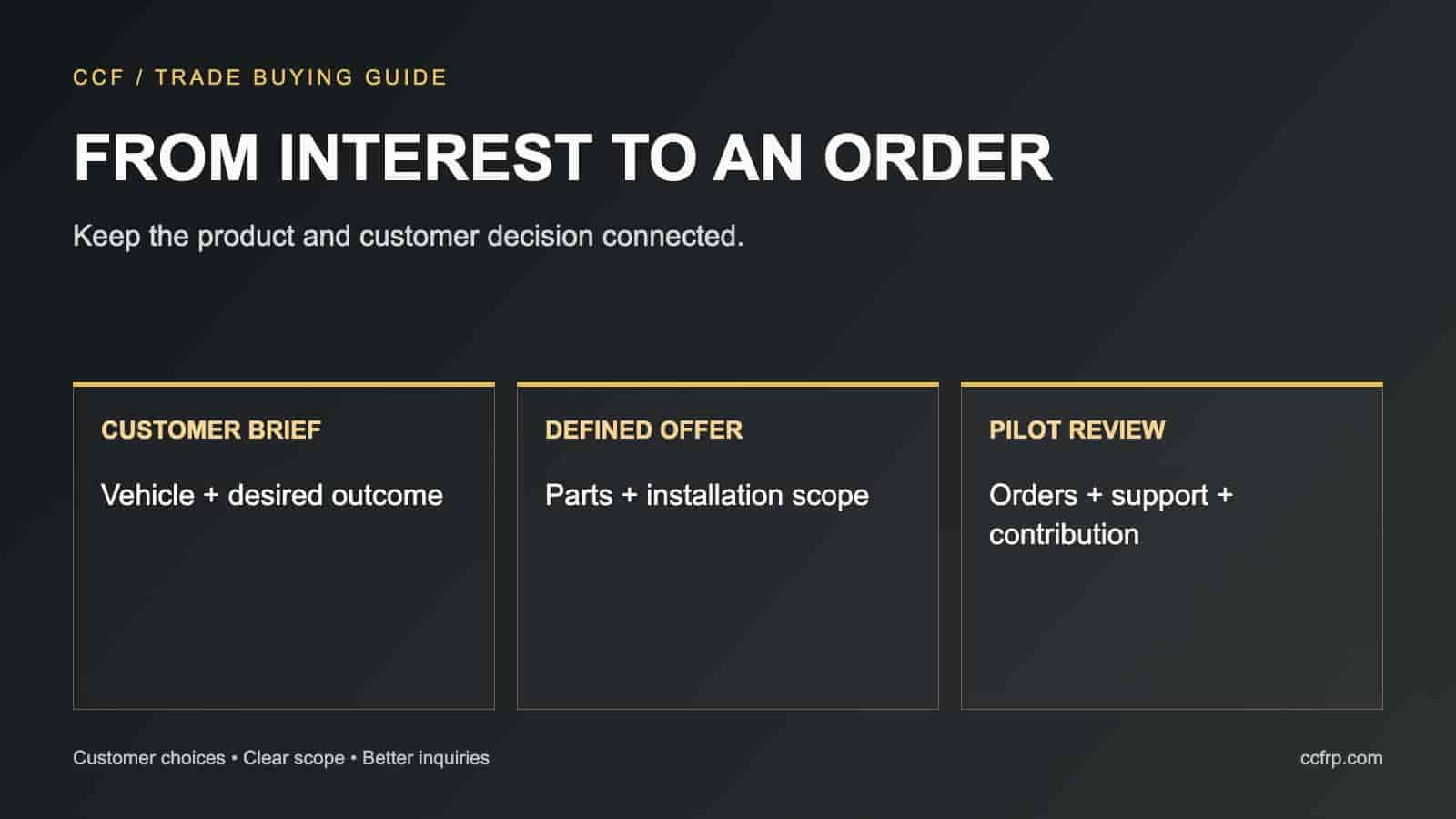
Separate a sales opportunity from an approved order
Prepare a short offer showing the exact part, vehicle application awaiting confirmation, finish, supplied contents and proposed installation scope. Explain which price is confirmed and which remains an estimate. Do not collect a commitment based on an image if you cannot identify the product behind it.
One useful conversation is: “We can investigate this front-lip reference for your car. Send the model year and bumper photos, and we will confirm the part and a separate installation estimate before you decide.” That gives the customer a clear next step without making fitment or delivery promises prematurely.
Measure the added contribution, not just order value
Consider a hypothetical add-on sold for $800 before sales tax. Its landed product cost is $400; incremental installation, consumables, payment and fulfillment costs total $180. The additional contribution is $220 before fixed overhead and other costs. These are teaching figures, not CCF prices, typical labor times or an expected return.
If you discount the same offer by $100 without changing costs, contribution falls to $120. If the work consumes scarce bay time, compare the return with the job it displaces. Use the contribution worksheet for costs and returns, and the bay-time comparison when workshop capacity is the constraint.
Run a focused pilot before buying a broad range
Use a defined review period and a small set of relevant references. Record qualified opportunities, complete quotes, accepted orders, reasons for decline and actual support time. A qualified opportunity should include the vehicle, requested change and a realistic decision window; a casual compliment about a display part is not an order signal.
Agree internally who updates the customer when availability or scope changes. At the review date, expand references that have repeat demand and manageable support. Keep uncertain items as quotation-led options. If interest does not turn into accepted scope, investigate the objection before adding inventory.
For multiple budget levels, use the existing upgrade-package framework. If customers stop replying after a quote, use the quote follow-up workflow rather than immediately cutting the price.
Frequently Asked Questions
Do I need to stock a full range first?
No. First establish a focused shortlist and confirm how selected orders can be supplied. Supplier availability and order terms still need checking.
Should every service booking receive a carbon fiber offer?
No. Offer relevant choices when the customer has a suitable need. Unrelated upselling can undermine the relationship you already have.
Build Your Shop’s Product Shortlist
Send CCF your main customer vehicles, requested parts and expected trial quantities. Start a wholesale discussion around demand you can explain—not a warehouse full of guesses.
Tell Us About Your Business
Include your market, customer vehicles, selected parts and trial quantities.