A carbon fiber distributor agreement should define the relationship beyond the ability to buy at wholesale terms. Discuss territory, channels, representation, support and how performance will be reviewed. Purchasing products does not automatically grant exclusivity or permission to make every supplier commitment on the manufacturer’s behalf.
Buying at a wholesale price and becoming a channel partner are different commercial decisions. A dealer may expect territory protection, marketing materials or lead referrals that have never been included in a normal parts order.
Before discussing a carbon fiber dealer arrangement, define the market, permitted sales channels, product scope, support expectations and the conditions for reviewing the relationship. Treat these as commercial questions to resolve in writing, not benefits automatically attached to the word “dealer.”
CCF provides a channel partnership inquiry route. Any specific rights or obligations need a project-specific agreement; this article is a discussion checklist, not a contract or statement that exclusivity is available.

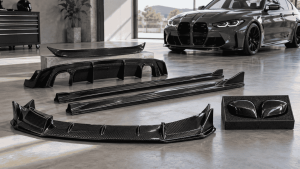
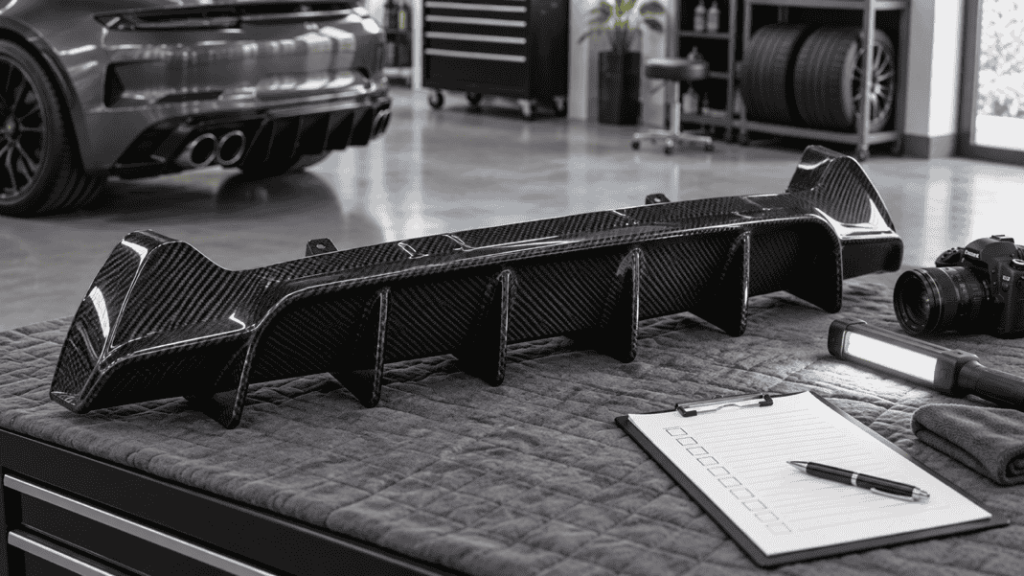
Concept illustration.
Present the business you can actually support
Describe your country or region, current sales channels, customer types and vehicle focus. Share realistic purchasing expectations and the services your team provides, such as local installation or product support. Distinguish current capabilities from future plans.
A focused proposal is easier to assess than a request to become the exclusive distributor for an entire country with no range, channel or service plan.
Clarify the boundaries
| Topic | Question to resolve |
|---|---|
| Territory | Which geographic area is being discussed? |
| Channels | Are your website, marketplaces, stores and subdealers covered? |
| Product scope | Does the arrangement cover all products or specified ranges? |
| Branding | What names, images and materials may be used? |
| Support | Who handles product questions, customer issues and local service? |
| Review | How will the parties review activity and agreed commitments? |
| Changes or exit | What happens to open orders, stock and supplied materials? |
If territory protection is discussed, ask what it actually covers and what exceptions apply. Do not announce exclusivity to your market while it remains an open proposal.
Keep service promises concrete
“Marketing support” could mean access to existing product photographs, help identifying selected applications or something more extensive. List the actual deliverables, permission to use them and how updates are communicated.
Likewise, “after-sales support” should identify the information a dealer must collect, the contact route and the applicable review process. It should not imply automatic reimbursement for every customer complaint or unlimited local labor costs.
Use the dealer product-data guide to specify documentation needs. The supplier selection guide for shops and dealers can help evaluate whether ordinary trial supply works before a broader commitment.
Agree how performance will be discussed
Define the relevant reporting period and the information that matters: paid orders, selected products, service capability and market activity. Forecasts should be identified as forecasts. Do not treat an optimistic first-year target as proven demand.
Record how changes to products, supply timing or commercial arrangements will be communicated. For legal terms, including territory restrictions and enforceability, obtain appropriate professional review for the relevant jurisdictions rather than relying on this purchasing checklist.
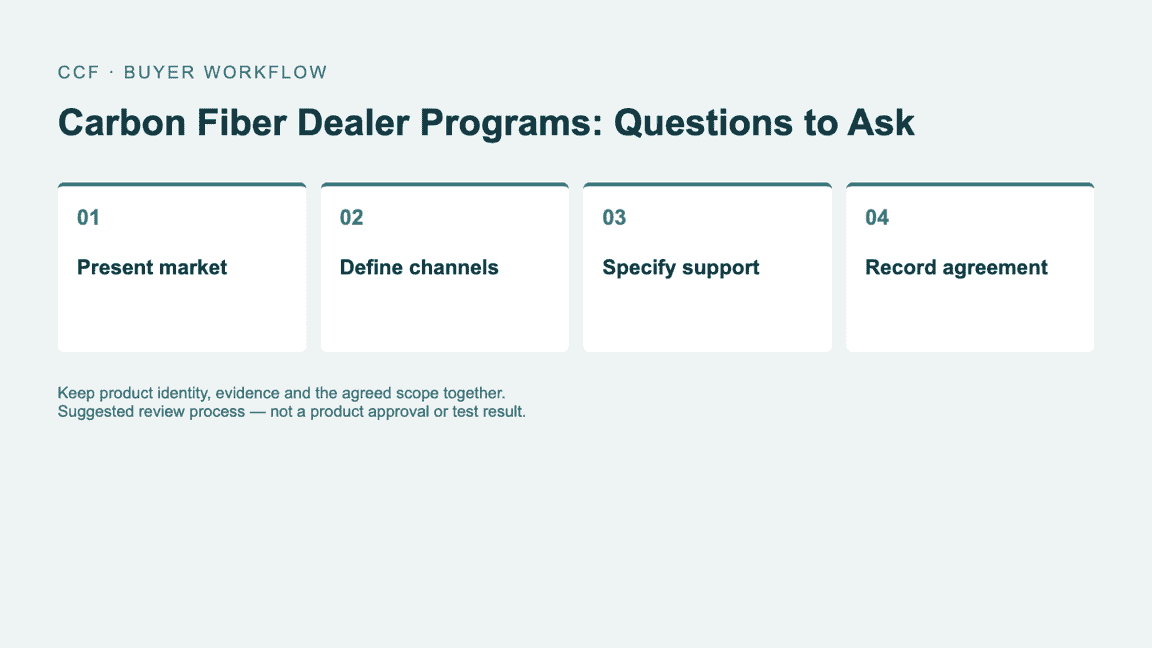
Suggested buyer workflow. Follow the product-specific specification and agreed order terms where applicable.
A commercial discussion register
Use this record as a buyer working tool. Examples and sample labels below are illustrative, not CCF inspection, order or test records.
| Record | Example or required entry |
|---|---|
| Requested benefit | Define the territory, channel or support being requested in plain terms. |
| Supplier response | Record agreed, declined or still under discussion; link to the applicable written document. |
| Review condition | Identify the agreed review date and responsibilities if the arrangement changes. |
This is a negotiation record, not a legal agreement. Do not advertise exclusivity or authorized-dealer status while that item remains under discussion.
Separate wholesale purchasing from a distributor agreement
| Decision | Buyer input | Confirm with the supplier |
|---|---|---|
| Market scope | Describe your territory, sales channels and customer base. | Ask which cooperation model can be considered. |
| Brand and information use | Identify the product data and marketing materials you need. | Agree permitted use and update responsibilities. |
| Ongoing responsibilities | Describe ordering, customer support and issue-handling expectations. | Record the negotiated terms rather than assuming they follow from dealer pricing. |
Do not advertise exclusive status before it has been separately agreed. A focused business proposal is more useful than a generic request to become the sole distributor.
CCF wholesale purchasing: Company; market; sales channels; relevant range; proposed cooperation.
Questions buyers ask
Does a wholesale order make us an authorized exclusive dealer? No such status should be inferred from an order. Any authorization or exclusivity must be expressly confirmed.
Should a new shop start with a channel agreement? A focused trial order may be a more practical first step when demand and support requirements are still being established. Discuss the model that matches the business you have today.
For the related buying decisions, see Before You List Carbon Fiber Parts Online: A Dealer Listing Checklist and Carbon Fiber Display Samples for Tuning Shops: Planning a Useful Showroom Set.
Prepare a commercially useful partner application
A clear application shows how you will reach customers and support the selected range. Business size alone does not explain whether a partnership will work.
- Market and sales channels: where and how you sell, with relevant shop or store information.
- Customer vehicles and requested parts: evidence of the applications you intend to serve.
- Operating responsibilities: who confirms fitment, handles installation questions and manages customer claims.
- Trial scope: initial references, estimated quantities and delivery destination.
- Commercial expectations: explain any territory, branding or stock support you want to discuss.
A practical sequence is to submit the brief, clarify supply scope, review an itemized proposal and document accepted terms before presenting yourself as an appointed partner. This is a preparation workflow, not automatic approval or a promise of exclusivity, rebates or protected territory.
If you already distribute locally, use the reseller-network guide to plan support for downstream shops. Use the trade-pricing framework to evaluate your own service costs. Discuss the resulting business brief through CCF’s channel-partner inquiry page.
Continue Your Purchasing Research
Bring a credible partnership proposal
Send CCF your market, channels, vehicle focus and purchasing plan. Identify the support and rights you want to discuss. Turn “dealer pricing” into a clearly scoped commercial conversation before investing in promises your agreement does not contain.
Send an Inquiry
Include the article title, selected parts, quantity and delivery country.