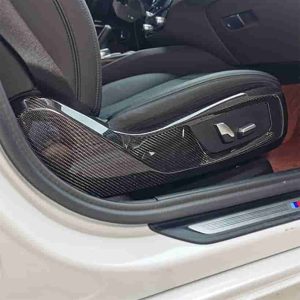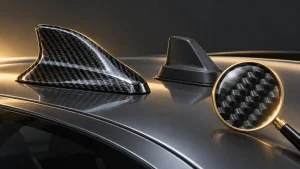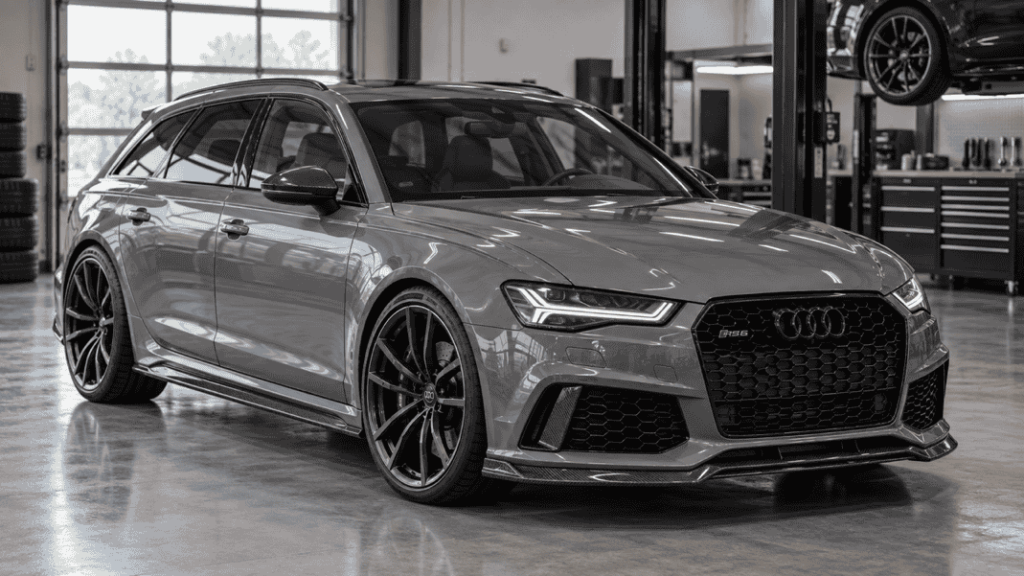
You have an idea for a custom carbon fiber hood, airbox, spoiler, or multi-piece assembly. Before a manufacturer can give you a meaningful quotation, however, they need to understand much more than what the part looks like. The quality of your initial technical package can determine whether a project moves smoothly into prototyping or becomes trapped in repeated questions, revisions, and unexpected tooling costs.
This guide explains which CAD files, measurements, vehicle details, material requirements, and commercial information are useful when requesting custom carbon fiber manufacturing. It is written for automotive aftermarket brands, product developers, and OEM/ODM buyers preparing their first—or next—request for quotation (RFQ).
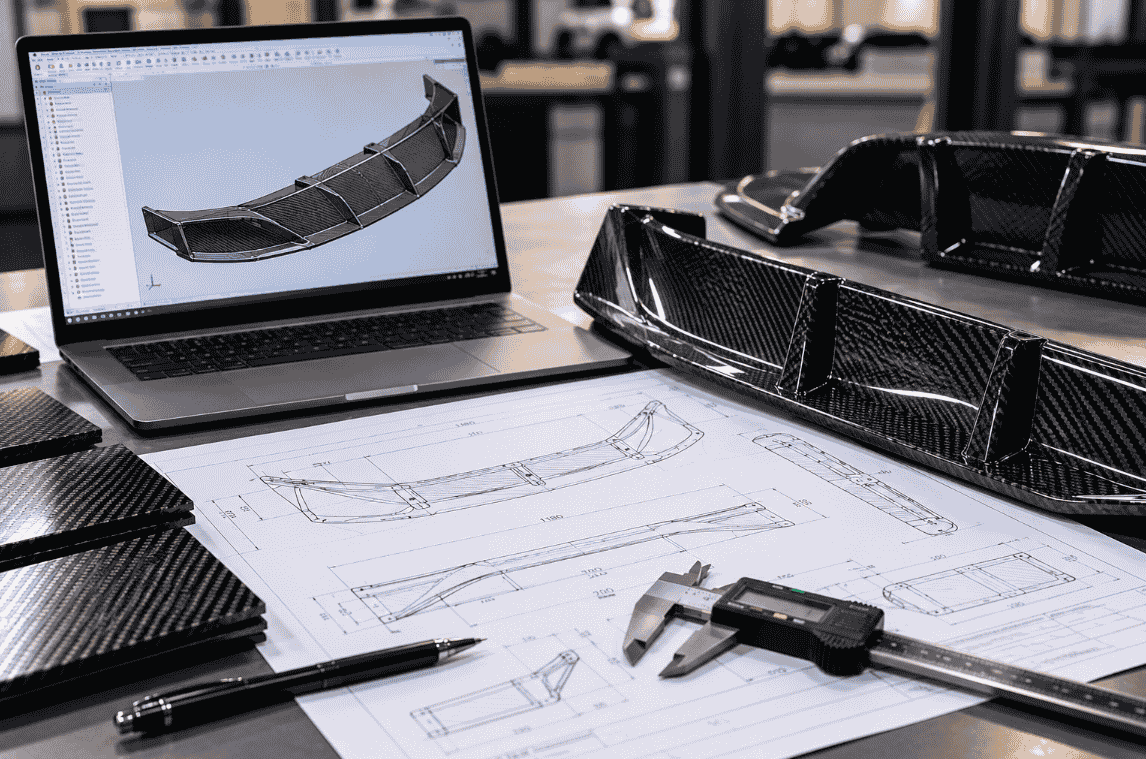
1. Which CAD Files Should You Send?
Different file types serve different purposes. A visually convincing 3D rendering may help communicate the concept, but it is not necessarily a reliable source for tool design or dimensional inspection. Whenever possible, provide a neutral 3D CAD file alongside a dimensioned 2D drawing.
| Format | Best use | Important limitation |
|---|---|---|
| STEP / STP (.step, .stp) | Exchange of 3D solid or surface geometry between CAD systems | Geometry alone may not communicate tolerances, material, laminate schedule, or inspection requirements |
| IGES (.igs, .iges) | Legacy exchange of curves and surfaces | Imported surfaces may require repair or stitching |
| Parasolid (.x_t, .x_b) | Precise geometry exchange where supported | Compatibility depends on the receiving CAD software |
| STL (.stl) | Mesh-based visualization, reference, and some rapid-prototyping workflows | Triangles are not equivalent to editable engineering surfaces |
| 2D PDF / DWG / DXF | Dimensions, datums, sections, tolerances, notes, and hole locations | Usually insufficient by itself for complex freeform geometry |
| Images / renders | Style, weave direction, finish, and installation context | Cannot establish exact scale or manufacturing tolerances |
What should a STEP file contain?
Prefer geometry at the intended nominal size, in a declared unit system (typically millimeters), with clear part orientation. Identify whether the file represents the finished part, a conceptual exterior surface, or the proposed tooling surface. If the design has multiple components, supply the individual parts and a complete assembly in their intended relative positions.
For an introduction to file-based manufacturing feasibility, see Can You Manufacture Carbon Fiber Parts from STEP Files?.
2. Which Measurements Matter Most?
Not every dimension has the same effect on the finished product. A cosmetic edge may allow more variation than a sealing surface, a mounting hole, or the clearance between a carbon fiber airbox and a nearby engine component. Buyers should identify the features that determine whether the part actually works and fits.
Specify functional dimensions
- Overall envelope: maximum length, width, height, and any installation-space limits.
- Mounting features: hole diameters, center-to-center distances, bracket positions, inserts, and fastening methods.
- Interfaces: flange faces, mating edges, duct openings, seal grooves, and attachment surfaces.
- Clearances: distance to moving, hot, electrical, or serviceable vehicle components.
- Nominal thickness: target wall thickness and any areas requiring reinforcement, subject to laminate design review.
- Reference datums: the surfaces or points from which critical dimensions should be measured.
Do not assign one tolerance to everything
Composite dimensional capability depends on part geometry, laminate design, tooling, cure process, trimming, and inspection method. An arbitrary blanket tolerance can make a quote misleading or the part unnecessarily expensive. Instead, identify critical-to-fit features and agree on realistic tolerances and measurement methods with the manufacturer before tooling is released.
3. Provide Vehicle and Installation Information
Automotive parts often vary across model years, trims, engine variants, and regional specifications. A statement such as “fits Mercedes S-Class” or “BMW M3 spoiler” may be too broad to establish compatibility.
Include the vehicle make, model, production year or year range, chassis code, trim, engine configuration where relevant, and any existing aftermarket modifications that affect installation. Provide photographs of the mounting area from multiple angles, ideally with a ruler or known reference dimension visible.
For parts near heat sources, moving assemblies, sensors, or air paths, indicate the operating environment and intended use. These conditions may affect resin selection, shielding, clearances, and validation needs. They should not be inferred from a vehicle name alone.
4. Define Material, Finish, and Performance Requirements
“Carbon fiber” describes a reinforcement family, not a complete product specification. Two visually similar parts may use different fibers, resin systems, manufacturing processes, laminate schedules, and surface finishes.
| Requirement | What to tell the supplier |
|---|---|
| Construction | Full carbon fiber composite, carbon-fiber-skinned substrate, or another specified construction |
| Fiber appearance | Preferred visible weave style, orientation, and reference images |
| Surface finish | Gloss, matte, paint-ready, or specified coating requirements |
| Functional loading | Expected mechanical loads, attachment conditions, and relevant test criteria |
| Temperature / environment | Operating temperature, UV exposure, moisture, chemical exposure, or under-hood use |
| Quality expectations | Visual acceptance criteria, dimensional checkpoints, and documentation needs |
If a part is structural, safety-critical, or performance-sensitive, the engineering requirements and validation plan should be established by appropriately qualified parties. A manufacturer should not be expected to infer performance requirements from a styling image.
5. For Multi-Part Products, Send the Entire Assembly
Some of the most expensive development errors occur when individually acceptable parts cannot be assembled together. This is especially relevant to airboxes, removable lids, duct systems, engine covers, and multi-piece exterior kits.
Send an assembly CAD model, an exploded view if available, and a list of all mating parts. Mark fasteners, gaskets, inserts, hinges, clips, brackets, and components supplied by third parties. Explain the intended assembly sequence, access for tools, serviceability, and which interfaces must remain interchangeable between production batches.
Identify who owns the overall assembly design and who will approve engineering changes. Manufacturing in stages can be practical, but the interface definition should be stable before independent tools are developed. For more on this issue, read our custom carbon fiber fitment and tolerance guide.
6. What If You Do Not Have a CAD File?
You can still begin an exploratory discussion with a manufacturer. Useful starting materials include a physical sample, annotated photographs, sketches with dimensions, a scan of an existing part, or a description of the intended application. However, these materials may not support an accurate production quote until a usable technical definition is created.
Ask the supplier what additional engineering work would be needed, who would perform it, and whether it is included in the quotation. Reverse engineering, scanning, design creation, and validation should be treated as separate work scopes unless explicitly agreed. Do not assume that sending a photograph automatically includes a complete design service.
7. What Information Makes a Quotation Actionable?
A useful RFQ covers both technical feasibility and commercial assumptions. A manufacturer needs to know not only what to build but also how many parts are expected, how quickly they are needed, and whether the project is a one-off prototype or the beginning of repeat production.
- Project stage: concept, CAD-ready, prototype revision, or production transfer.
- Quantity: number of prototypes, expected first order, and realistic forecast if available.
- Deliverables: parts only, tooling, inspection records, packaging, or other explicitly agreed services.
- Timeline: desired prototype date and target launch date, with flexibility noted.
- Destination: delivery country and any special packing or logistics constraints.
- Commercial scope: separate tooling and part costs, ownership of tools, revision charges, and acceptance milestones.
Ask suppliers to distinguish confirmed pricing from budgetary estimates, and to list exclusions and assumptions. A low quote that omits tooling changes, sample revisions, or inspection requirements may not be the lowest total project cost. See our carbon fiber prototyping cost guide for a more detailed breakdown.
8. Custom Carbon Fiber RFQ Checklist
Use the following list before submitting your project. It is acceptable to mark an item “not yet defined”—that is more useful than leaving the manufacturer to guess.
- Project name and brief description of intended function
- Vehicle make, model, year, chassis code, and trim if applicable
- STEP/STP files or other available 3D geometry
- 2D drawings with units, critical dimensions, and datums
- Complete assembly model and mating-part information
- Mounting points, clearance zones, and installation photographs
- Material construction, surface finish, and weave preferences
- Environmental, mechanical, and test requirements if relevant
- Prototype quantity, first-order quantity, and estimated future demand
- Target schedule, destination country, and packaging requirements
- Engineering owner, approval contact, and design revision identifier
- Requested quotation breakdown and explicit scope exclusions
Example RFQ message
Subject: RFQ – Custom Carbon Fiber Automotive Component
Hello, we are developing a custom carbon fiber component for [vehicle/application]. Attached are our available STEP files, drawings, installation references, and project requirements. We would like an initial feasibility review and a quotation showing tooling, prototype, and estimated production costs separately. Our planned prototype quantity is [X], and our initial production estimate is [Y]. Please advise which information is missing and which engineering or testing activities would require a separate scope.
9. Common Mistakes That Delay Custom Projects
- Sending only a rendering: a picture rarely defines the dimensions needed for tooling.
- Ignoring mating parts: standalone component models can hide assembly interference.
- Using inconsistent revisions: a drawing and STEP file from different revisions can lead to costly mistakes.
- Leaving materials unspecified: appearance alone does not establish the required laminate or performance.
- Assuming engineering is included: clarify responsibility for design, calculations, tests, and approvals.
- Requesting a firm quote too early: concept-stage estimates should be labeled provisional.
Frequently Asked Questions
Is a STEP file enough to manufacture a carbon fiber part?
It is a useful geometry input, but usually not a complete manufacturing specification. The supplier may also need drawings, tolerances, material requirements, assembly information, and confirmation of the intended manufacturing process.
Can I send an STL file instead of STEP?
STL can help communicate shape, but mesh geometry may require reconstruction or conversion for precise tooling and engineering modifications. Ask the supplier what file quality is acceptable.
Do I need exact dimensions before requesting a quote?
Not necessarily for an initial discussion or rough estimate. A dependable tooling or production quotation generally requires agreed geometry, critical dimensions, and a defined scope.
What if I only have a physical sample?
A physical sample may support a feasibility discussion or reverse-engineering scope. Scanning, CAD reconstruction, design rights, and engineering validation should be agreed separately.
Should I provide the full assembly or individual part files?
Both are helpful. Individual part files support manufacturing review, while the complete assembly shows interfaces, installation clearances, and component relationships.
Who decides the manufacturing tolerances?
Critical functional tolerances should come from design requirements and be reviewed against the chosen composite manufacturing process. The buyer and manufacturer should agree on acceptance criteria and inspection methods before tooling.
Can I request prototype and mass-production prices together?
Yes. Ask for separate estimates for tooling, prototypes, and production quantities, with assumptions clearly stated. Unit prices may change as the design, process, and volume are finalized.
Conclusion: Better Input Creates Better Manufacturing Decisions
A strong custom carbon fiber RFQ is not about sending the largest number of files. It is about giving the manufacturer a reliable definition of geometry, interfaces, functional requirements, appearance, quantities, and responsibilities. When information is missing, make that uncertainty visible and resolve it before irreversible tooling decisions.
Discuss a Custom Carbon Fiber Project with CCF
Preparing a new automotive carbon fiber component or multi-part product? Share your available CAD files, vehicle details, intended quantities, and manufacturing questions with CCF to discuss feasibility and the next steps. Engineering, testing, and other project-specific services should be confirmed as part of the agreed scope.
Related Reading
Editorial note: The guidance above is general educational information. Actual feasibility, tolerances, services, and costs depend on the project and supplier review.