CARBON PARTS WORKSHOP SERIES · 02
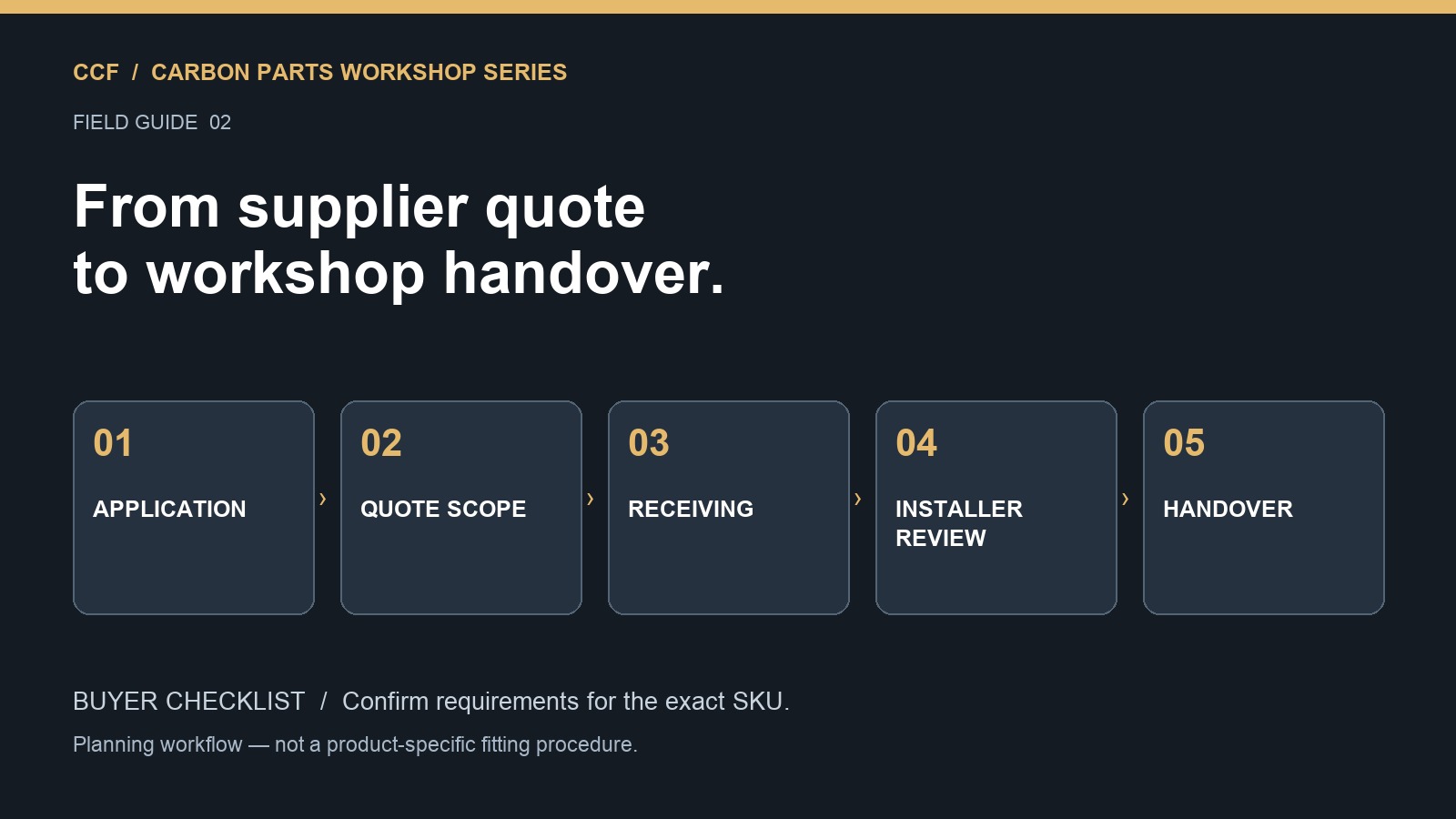
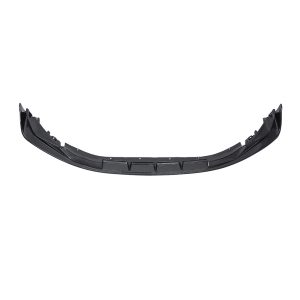
A GR Supra front lip order is ready for workshop handover when the chosen SKU, vehicle application, delivered contents and installation information agree. Confirming those details before reserving a firm installation slot helps a shop quote the actual work instead of pricing an assumed package.
This Carbon Parts Workshop Series article follows the order from enquiry to handover. It is for tuning shops and distributors managing customer builds, not a universal fitting tutorial. For a specific lip, use the instructions applicable to that product and vehicle.
Stage 1: capture the application precisely
Record the model year, sales market and relevant vehicle specification. Request photographs of the bumper’s front, lower edge and underside, plus any existing lip or previous modification. Tell the supplier if the bumper has been replaced or repaired. These details belong in the application enquiry even when the customer describes the car simply as an A90 Supra.
Separate the customer’s preferred appearance from the confirmed product. A photograph can communicate the desired style; it does not establish the attachment points or contents of the quoted set. Ask the supplier to reply with a SKU and the application it has confirmed, rather than only another photograph.
Why the current application table matters
TRD’s Japanese Supra application table distinguishes particular variants and production periods. Its front spoiler entry links to the MS341-14001 instructions. This illustrates why a document and a current application table should be reviewed together. A historic starting year on a PDF does not establish unrestricted coverage of later variants.
These references describe TRD’s Japanese-market accessory. They do not determine compatibility, hardware or labor for a CCF part. An aftermarket enquiry needs its own application confirmation. Keep that distinction clear when explaining the purchase to the customer.
Stage 2: turn the quotation into a package definition
Ask the supplier to list the pieces included in the price and to identify anything that must be obtained separately. Clarify whether the order is for a complete assembly, a replacement section or an overlay. If the customer expects to replace individual sections later, ask whether they are separately supplied and how revision matching is handled.
| Quote field | Useful answer |
|---|---|
| Product identification | SKU and revision, with the selected finish |
| Sales unit | One component or an identified set of pieces |
| Installation contents | Included hardware and materials, plus any separately required items |
| Application | The vehicle details used for confirmation and any exclusions |
| Documentation | Available instructions, mounting photographs and outstanding questions |
| Delivery scope | Quantity, destination and the shipping terms being quoted |
A useful photograph set includes the reverse side and mounting areas, not only the visible finish. If you are reviewing a sample remotely, follow the remote inspection approach so the supplier knows which views to provide.
Stage 3: have the installer review the work before a firm booking
Give the installer the product information while the order is still being clarified. Ask which details are needed to assess access, preparation, attachment and any product-specific materials. If the available instructions do not cover the selected SKU, resolve that point rather than substituting a guide for a similar-looking lip.
Separate a provisional appointment from a confirmed work scope. The customer can understand that the final labor estimate depends on receiving the agreed product and inspecting the vehicle. A clear explanation is more credible than a low fixed installation price that later grows because the original assumptions were incomplete.
Use the carbon parts installation quote guide to organize product cost, installation and conditional work. Do not treat a published time for a genuine accessory as the labor allowance for an unrelated aftermarket component.
Stage 4: receive the product against the agreement
Before assigning the job to a technician, match the delivered label and parts to the order record. Inspect the finish and visible mounting areas, count the supplied items and retain photographs of the package. This is a receiving check, not proof of fitment under operating conditions.
If the supplied contents differ, document the difference and ask for the next action. Avoid beginning an irreversible operation while a basic identity or attachment question remains open. The sample inspection checklist helps separate cosmetic observations from package discrepancies and application questions.
Stage 5: resolve discrepancies with evidence
For example, a shipment might contain the expected visible pieces but lack an item identified in the agreed list. Record the SKU, order reference, missing item and photographs. Ask whether the shipment is incomplete or the package has changed. Do not assume a technician should substitute an available fastener without product-specific confirmation.
This is a hypothetical receiving example, not a CCF customer case. The same discipline applies when the product meets a different bumper detail than expected: identify the exact mismatch and the current vehicle condition. Our fitment issue evidence guide describes how to make that request useful.
Stage 6: hand over the record with the vehicle
After installation under the applicable instructions, retain the product identification and document reference. Give the customer the relevant care or use information for the actual part. Where a product requires follow-up checks, explain the specified schedule rather than inventing a universal interval.
A distributor can use the same record to support downstream dealers. If a replacement section is requested later, the original SKU and revision are more useful than the phrase “the Supra lip we bought last time.”
Frequently asked questions
Can I order using only a reference image?
Use it to describe the desired appearance, then obtain the exact product and application details before approval.
Should I quote installation before the part arrives?
You can provide a conditional estimate based on a documented scope. Confirm the actual work after the agreed product and vehicle have been reviewed.
Does a TRD-style description imply TRD installation requirements?
No. Styling terminology does not establish matching materials, mounting geometry or hardware.
Start with a complete Supra enquiry
Send CCF the vehicle year and market, bumper photographs, preferred lip reference, quantity and destination. Include your workshop’s questions about the supplied package and available instructions. That gives the quotation a clear scope before you commit the customer’s installation slot.
Editorial reference check: 18 October 2026. Referenced manufacturer documents apply to their identified products. Confirm CCF SKU requirements separately.