An attractive prototype can create pressure to start production immediately. But an appearance approval, an installation check and a release of the final specification are different decisions. Combining them into “looks good, proceed” leaves too much room for misunderstanding.
Approve a carbon fiber prototype against an identified revision and an explicit review scope. Record accepted features, open issues and exactly which next stage is authorized. A sample approval should make the production target clearer, not erase unresolved requirements.
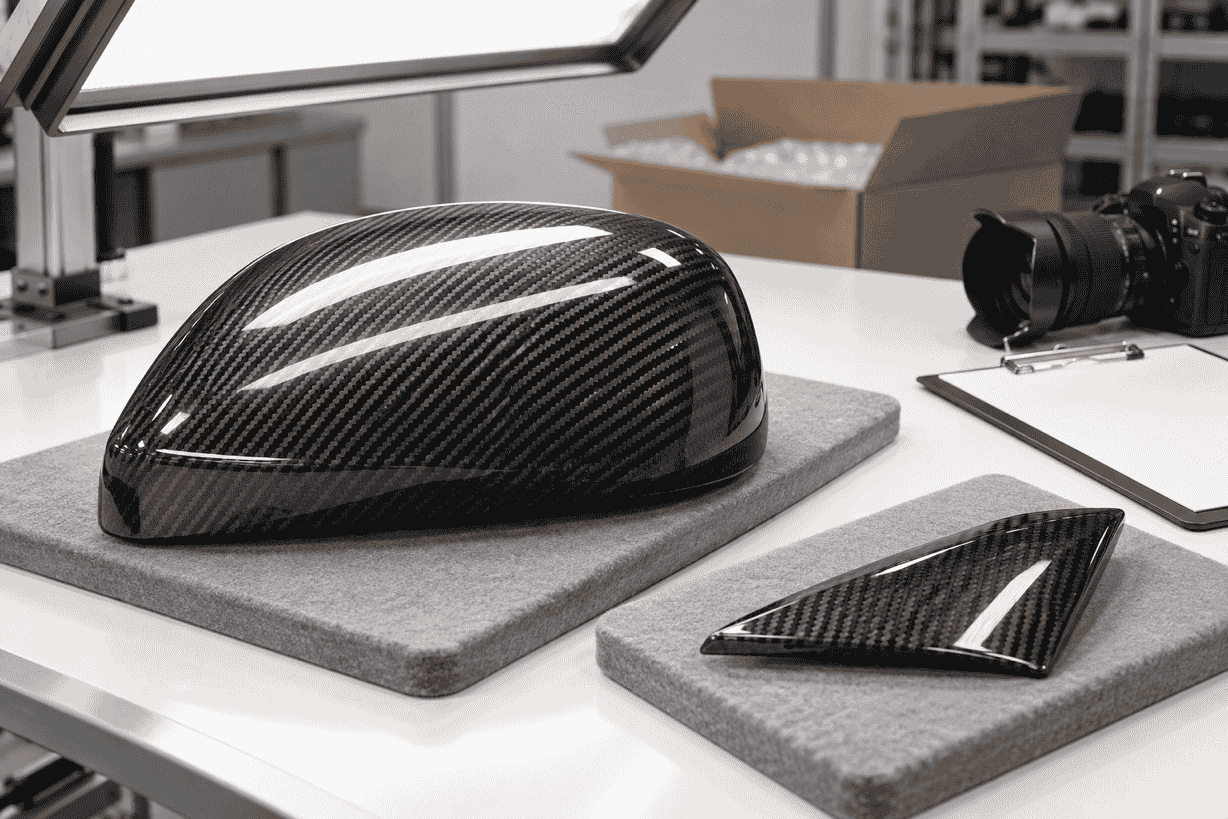
Concept illustration.
Identify the prototype and its purpose
Record the project, drawing or specification revision, sample identifier and date received. Ask whether the prototype represents final construction, finish and tooling or is intended to evaluate only selected features.
A styling model may be useful for appearance without representing the production structure. A first functional sample may still have unfinished surfaces. Assess it against its agreed purpose rather than either rejecting it for an excluded feature or approving something it does not demonstrate.
Review the requirements separately
| Review area | Evidence to retain | Approval question |
|---|---|---|
| Identity | Sample and document references | Is this the revision under review? |
| Geometry and interfaces | Agreed measurement or fitment records | Which requirements were checked? |
| Appearance | Controlled photos or reference sample | What finish and visible details are accepted? |
| Supplied items | Component and hardware list | Is the intended production scope complete? |
| Remaining issues | Numbered issue list | What must change before the next stage? |
If a requirement needs a test that has not been performed, keep it open. A photograph or a successful positioning exercise should not be rewritten as an unsupported load, durability or aerodynamic claim.
Record issues in a way engineering can act on
Give each issue a location, observation and requested outcome. “Poor fit” is less useful than a marked image showing the affected interface and the measurement method used. Avoid changing the prototype before documenting the condition and agreeing the next step.
Classify each item as accepted, requiring revision or requiring further evidence. If you agree to accept a deviation, state its scope and whether it applies only to the prototype or also to production. Do not let an informal exception silently become a general product specification.
Define what approval releases
An approval can release a revised prototype, tooling work or production against a defined specification. Name the stage and the applicable documents. Request acknowledgement that the supplier is using the same revision and outstanding-action list.
For a later change, reopen the affected approval rather than treating the earlier signature as covering new geometry or materials. Keep a retained reference or an agreed evidence record so future questions can be compared with what was actually approved.
The OEM/ODM guide explains the development sequence. For catalog sample purchasing rather than a new design, use the wholesale sample inspection guide; the approval purpose is different.
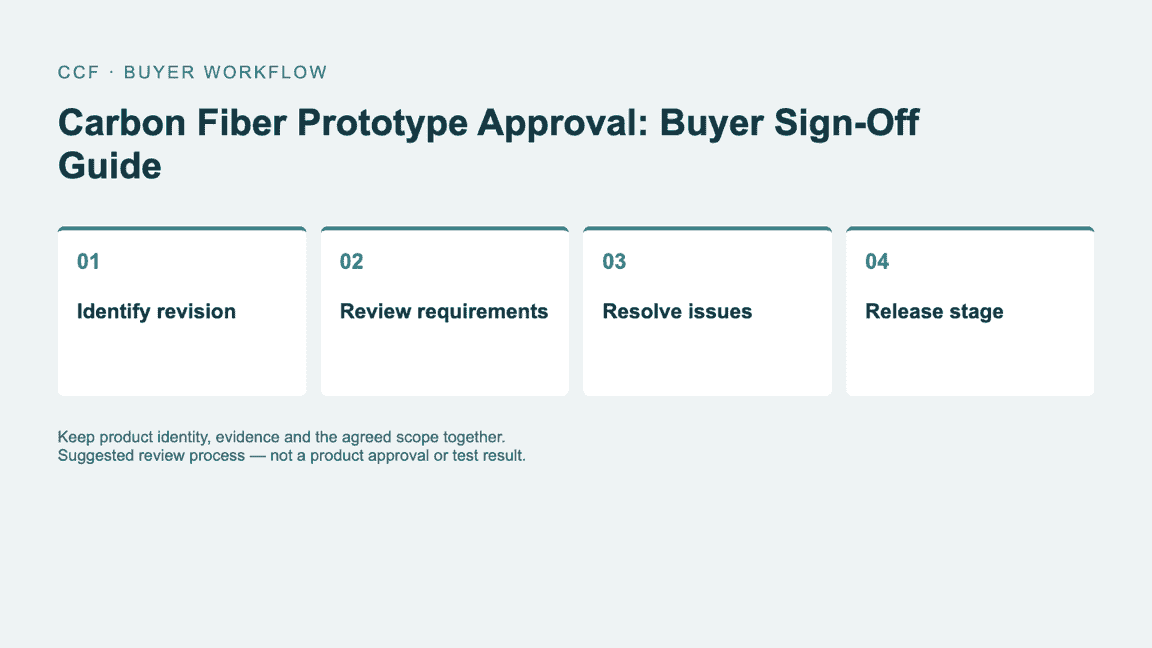
Suggested buyer workflow. Follow the product-specific specification and agreed order terms where applicable.
A sample sign-off that does not release too much
Illustrative approval record. Replace the entries with the actual project record before use.
| Record | Example or required entry |
|---|---|
| Sample and revision | Prototype A, revision 02; record actual project and sample identifiers. |
| Accepted scope | Visible styling surfaces reviewed against the agreed reference. |
| Open issue | One mounting interface has not been evaluated on the target vehicle. |
| Authorized next action | Revise and evaluate the mounting interface; no bulk-production release. |
| Closure record | Responsible reviewer, evidence required, next review date and superseded revision. |
Copy: “Appearance review is accepted within the recorded scope. The mounting issue remains open. This approval authorizes the stated next prototype activity only.” Add a separate explicit production release after all required approvals are complete; do not rely on a chat reaction or the words “looks good.”
Questions buyers ask
Does sample approval guarantee every production unit? It establishes the agreed reference and scope. Production verification and handling of deviations still need to be agreed.
Can approval be conditional? It can describe conditions if both parties explicitly agree what remains open and what work may proceed. Avoid vague conditional messages that leave release authority unclear.
For the related buying decisions, see Custom Carbon Fiber Parts: What to Send for an Initial Feasibility Review and Carbon Fiber Tooling Projects: What Buyers Should Clarify About Mold Ownership and Changes.
Make the next stage explicit
Send CCF your project reference, sample revision and review findings. Ask for a response to each open issue and a defined next-stage proposal before releasing production around an incomplete approval.
Send an Inquiry
Include the article title, selected parts, quantity and delivery country.