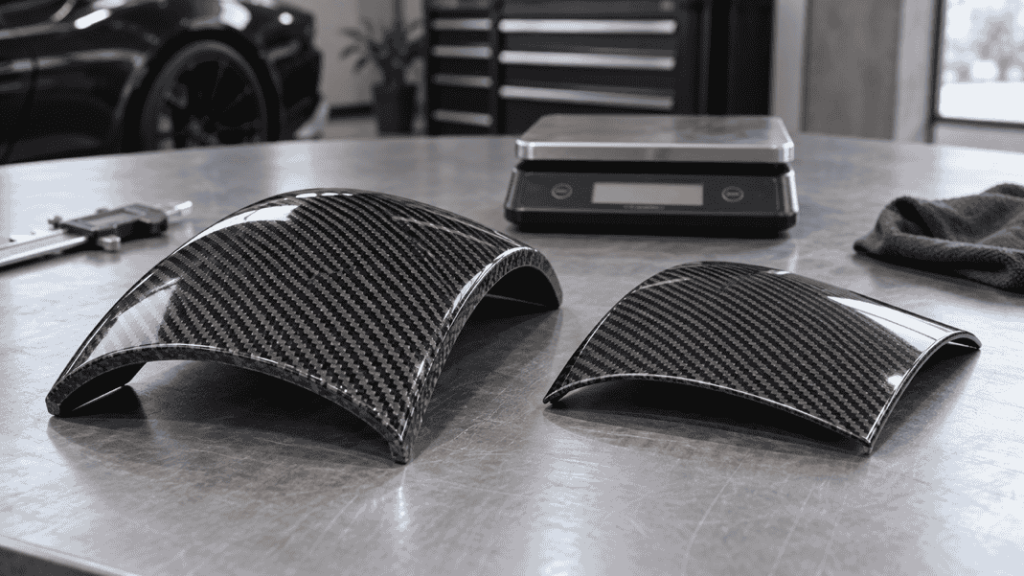
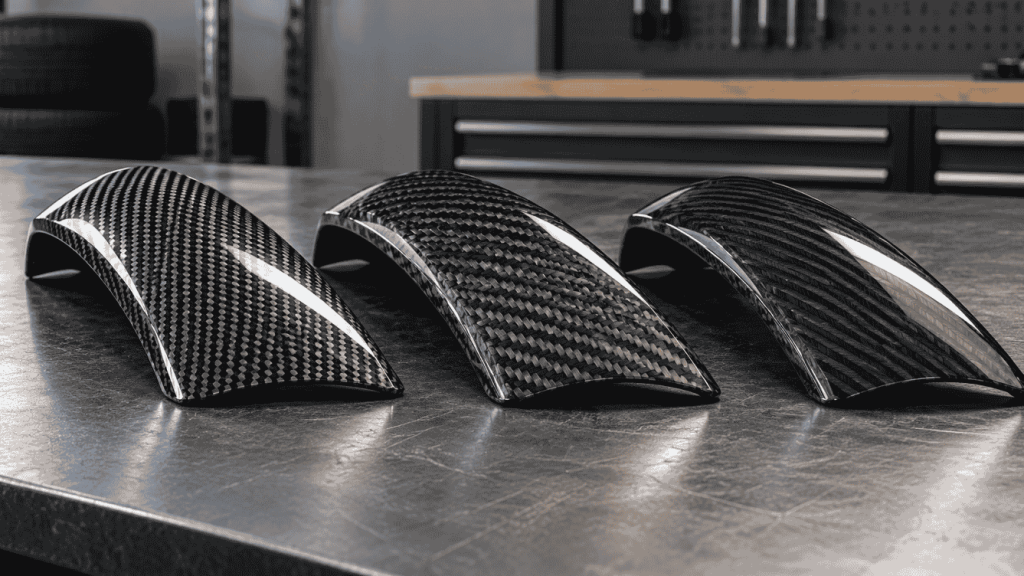
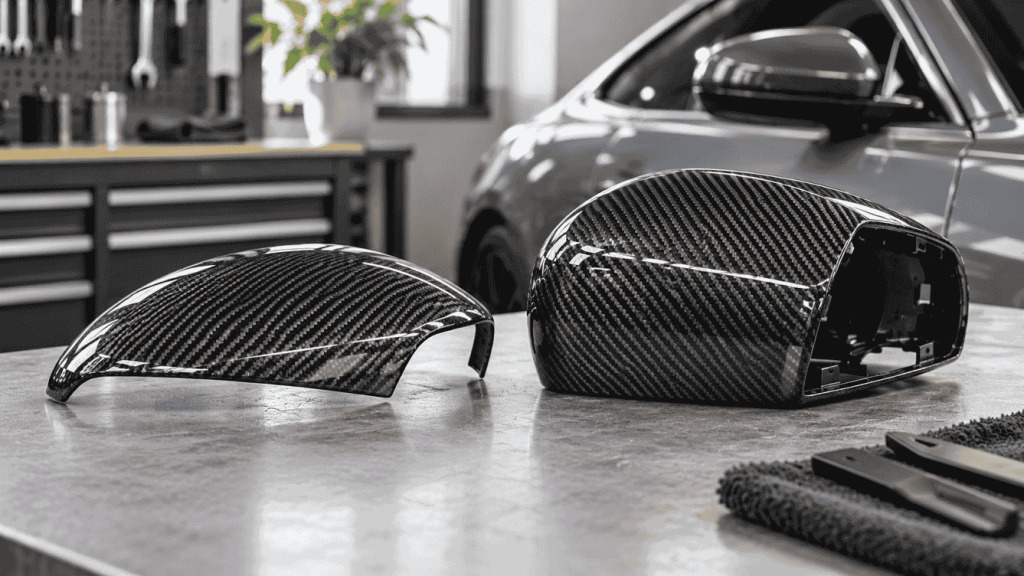
Choose forged-look or woven carbon for a private-label range by separating visual preference from construction, repeatability and product claims. A marbled surface and a regular weave create different brand identities, but neither appearance alone proves how the complete part was manufactured or how it performs.
For a distributor launching a range, the practical question is not which pattern wins universally. It is which option you can specify, approve, photograph and reorder consistently for the products your customers actually buy.
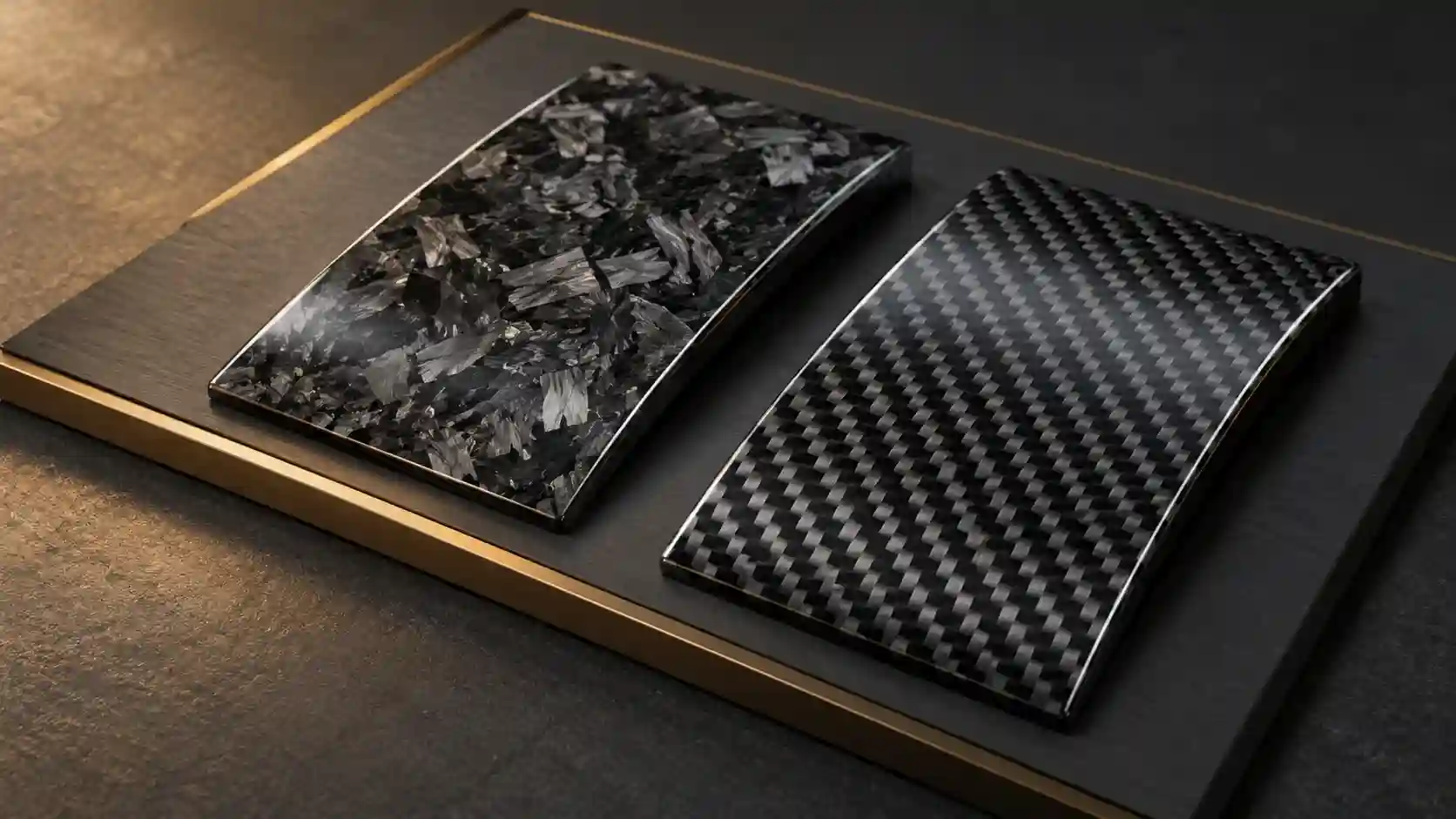
Understand what the names tell you—and what they do not
Woven carbon has a recognizable fabric pattern. Products marketed as forged carbon commonly show a chopped-fiber appearance, but a surface photograph does not establish the full manufacturing route. Ask whether the appearance represents the component’s reinforcement, a surface layer or another finish system.
Easy Composites describes one actual compression-moulding approach using chopped carbon fiber. That process reference does not prove every marbled automotive accessory uses the same method. Keep the supplier’s construction statement tied to the selected SKU.
Compare the range-management implications
| Decision | Woven appearance | Chopped or marbled appearance |
|---|---|---|
| Visual brief | Pattern scale, orientation and visible transitions | Distribution, contrast and overall visual character |
| Sample approval | Define acceptable pattern presentation | Define acceptable variation without promising identical markings |
| Product photography | Show the actual supplied configuration | Explain that individual pattern placement may vary where applicable |
| Construction claims | Confirm reinforcement and backing | Confirm reinforcement, backing and manufacturing description |
| Reorders | Control specification and revision | Control specification and approved appearance range |
Build a sample brief before requesting prices
Start with a narrow group of products, such as a mirror-cap and spoiler range for a defined application. State the intended finish, branding location, supplied contents and packaging requirements. Ask which options are actually available for each reference; do not assume one catalog photograph makes every finish available across the range.
Request representative photographs in consistent lighting and, where appropriate, physical samples. Approve the visual standard using both an overall view and close-ups of prominent transitions. Screens can help shortlist an option, but they should not be the only reference for a demanding appearance specification.
Record what variation is acceptable. A naturally irregular pattern cannot sensibly be approved as an exact repeat of every visible marking in one photograph. Agree the visual attributes that matter instead of using a vague instruction such as “same as sample.”
Keep performance and finish decisions separate
Do not advertise one appearance as stronger, lighter or more durable without relevant product evidence. The finished component’s design and construction matter, and a pattern choice is not a substitute for those specifications.
Likewise, ask separately about the surface coating, gloss level and available care information. “Forged” and “woven” do not answer every question about finish maintenance or outdoor appearance. If a customer requests a quantified durability claim, request the supporting test scope rather than adding a generic promise.
Launch a range you can maintain
- Shortlist applications based on actual customer demand.
- Confirm finish availability and construction for each SKU.
- Approve a sample and appearance boundaries.
- Create photography and listing copy that match the approved product.
- Record the specification for reorders and supplier changes.
For private label, clarify the ownership and usage scope of your branding artwork and any project-specific materials in the commercial discussion. Keep custom packaging and visual approvals separate from engineering claims so a branding decision does not accidentally authorize a construction change.
A smaller coherent launch is easier to explain and support than a large assortment with inconsistent descriptions. Add another finish when you can define its sample standard and reorder route, not simply because it looks different in an advertising image.
A visual sample approval boundary
Use this record as a buyer working tool. Examples and sample labels below are illustrative, not CCF inspection, order or test records.
| Record | Example or required entry |
|---|---|
| Woven option | Record actual pattern presentation and visible transitions on the selected sample. |
| Marbled option | Record acceptable visual distribution and variation without promising identical markings. |
| Both options | Confirm construction and available finish for each product reference separately. |
An approved appearance sample should travel with a written description of what it represents. It does not automatically establish the same construction or availability across the range.
For the connected decisions, use How to Compare Full-Carbon and Fiberglass-Backed Automotive Parts and Gloss or Matte Carbon Fiber: How to Choose for Customer Builds.
Buyer FAQ
Is forged carbon always stronger than woven carbon?
No universal ranking follows from those labels. Ask for evidence relevant to the actual component and intended use.
Will every marbled part look identical?
Do not promise identical pattern placement unless the supplier can substantiate that specification. Agree the acceptable appearance range.
Can CCF supply both finishes for every part?
Availability must be confirmed by product reference. Send the selected applications and desired appearance before planning the launch.
Build a Clear Private-Label Sample Brief
Send your target applications, quantities and preferred appearance. Confirm availability and the sample approval scope for each selected reference.
Send an Inquiry
Include this article title, your product reference, vehicle details and the question you need resolved.