Approve a logo on a carbon fiber part using authorized artwork, a defined placement and a representative sample of the proposed marking method. Packaging branding and product-body branding are separate decisions. Approval of a carton label does not approve a badge or mark on the finished component.
A private-label buyer needs to control appearance without accidentally changing fitment, finish or supplied contents. Make the branding brief specific enough that purchasing, production and the dealer all understand the same result.
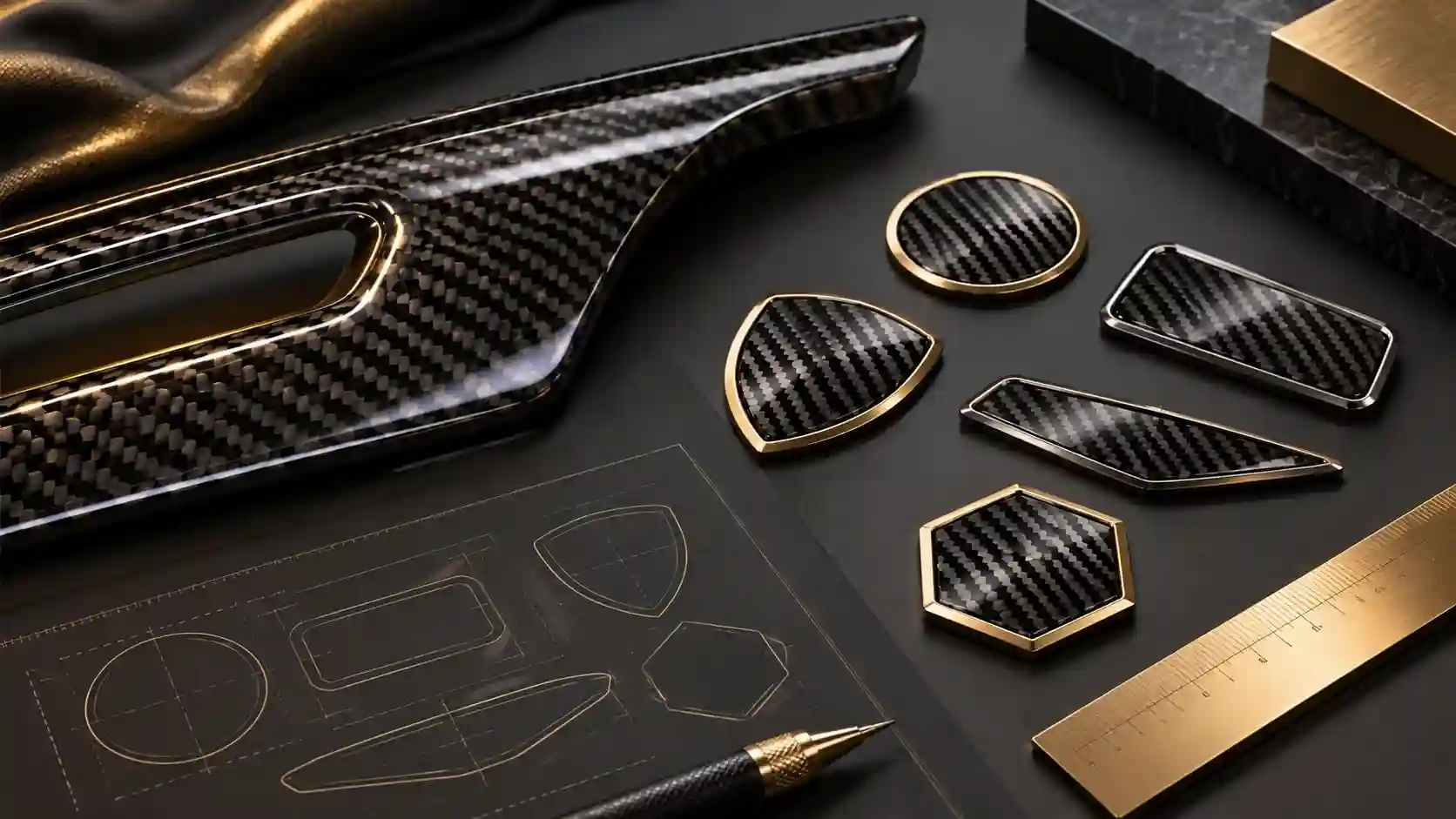
Confirm feasibility before designing the launch
Ask which marking approaches are feasible for the selected product and finish. Do not assume that every option shown on another component can be applied to yours. The available surface, curvature and project requirements may affect the proposal.
Provide artwork you are authorized to use and explain the intended application. Keep third-party vehicle marks or customer branding out of the brief unless the necessary rights and permissions have been established. This guide does not authorize any particular trademark use.
Create a product-body branding sheet
| Field | Approval detail |
|---|---|
| Artwork | Identified source file and revision |
| Location | View, orientation and agreed reference points |
| Size | Defined dimensions and applicable acceptance limits |
| Appearance | Color, surface character and contrast reference |
| Method | The proposed marking or badge approach |
| Sample | Representative substrate and finish |
| Supply scope | Factory applied or separately supplied, if offered |
Use annotated views rather than an instruction such as “put it near the corner.” The chosen reference should remain understandable when the part is viewed from another angle.
Review the mark on a representative surface
A flat digital mock-up helps discuss position, but it does not show the complete result on a curved carbon surface. Review a suitable physical sample or another agreed representative approval method before production.
Check visibility at ordinary viewing distances, contrast against the actual carbon pattern and the relationship to nearby edges. Avoid judging only a tightly cropped photograph that hides the surrounding part.
If the proposed method involves a separate badge or attachment material, include its application and service implications in the review. Do not invent adhesion or durability claims from the visual sample alone. Ask what evidence is available for the proposed construction and intended exposure.
Separate visual approval from functional approval
A buyer approving the color and placement has not necessarily approved a change to the component’s engineering or coating specification. If the branding method affects another requirement, route that change to the appropriate project owner.
Keep the approved sample and record what it represents. A branding sample may demonstrate appearance but not the final product’s complete geometry. State that limitation so a sales image does not become an unsupported promise about the finished assembly.
Confirm whether the product will arrive marked or whether the buyer must apply a supplied item. These are different commercial scopes and may create different installation or handling responsibilities.
Make production and reorders traceable
- Approve the artwork revision and application sheet together.
- Record the representative sample and any limitations.
- Identify who may authorize changes.
- Carry the approved reference into the purchase order.
- Review changes to artwork, finish or marking method before reordering.
Do not send an updated logo through chat without changing the controlled artwork reference. A filename such as “final-new” is difficult to distinguish after several rounds. Use a stable revision identifier and retire obsolete production files clearly.
For a range containing left and right parts, show both orientations if the mark’s position differs. Mirroring the component should not automatically mirror the logo unless that is the approved design.
A product-marking release note
Use this record as a buyer working tool. Examples and sample labels below are illustrative, not CCF inspection, order or test records.
| Record | Example or required entry |
|---|---|
| Artwork | Approved filename and revision, with authority to use the mark. |
| Placement | Annotated reference points, orientation and agreed dimensions. |
| Representative approval | Identify which sample and marking method were reviewed and any limits of the sample. |
Copy: “Release artwork revision ____ for location ____ using the approved method ____. Any change to artwork, finish or method requires review.” This does not approve unrelated engineering changes.
For the connected decisions, use Best Practices for Using Supplier Photos in Your Carbon Fiber Parts Store and How to Prepare 3D Scan Data for a Carbon Fiber Parts RFQ.
Buyer FAQ
Does private label always include a logo on the part?
No. Define product marking separately from packaging and documentation branding.
Can a digital mock-up approve everything?
It can support layout review, but the agreed sample and validation scope must address the actual method and finish.
What should I send to CCF?
Send authorized artwork, the selected product reference, intended location and quantity. Ask which methods and sample conditions can be evaluated.
Check Product-Body Branding Feasibility
Send authorized artwork, the product reference, proposed placement and quantity. Confirm available methods and sample conditions before finalizing the launch.
Send an Inquiry
Include this article title, your product reference, vehicle details and the question you need resolved.