Build carbon fiber upgrade packages by changing the component scope, not by inventing unsupported quality grades. Present a focused change, a coordinated group and an expanded option with the actual parts and fitting requirements visible. This lets the customer choose a budget without assuming every photographed component belongs to each offer.
This approach is useful when a tuning-shop customer likes a complete-car photo but has not decided how much of the pictured build they want. Three clear proposals can make the decision manageable without turning every inquiry into a full-kit sale.
Begin with the desired outcome and total spending boundary
Ask which visible change matters most. A customer focused on the front view may prefer one carefully selected component to several small additions elsewhere. Another may value a coordinated lower-body appearance. Start with those priorities, then identify suitable candidate products.
Also clarify whether the stated budget is for goods alone or the completed job. Packing, delivery, installation and finishing are separate scope questions. If those amounts are not available, do not present a parts-only number as the final build price.
A three-option example for a lower-exterior project
The following is an illustrative proposal structure. It is not a prevalidated CCF kit, a price list or a claim that every component can be combined without further review.
| Proposal | Example selected scope | Explicit exclusions or options |
|---|---|---|
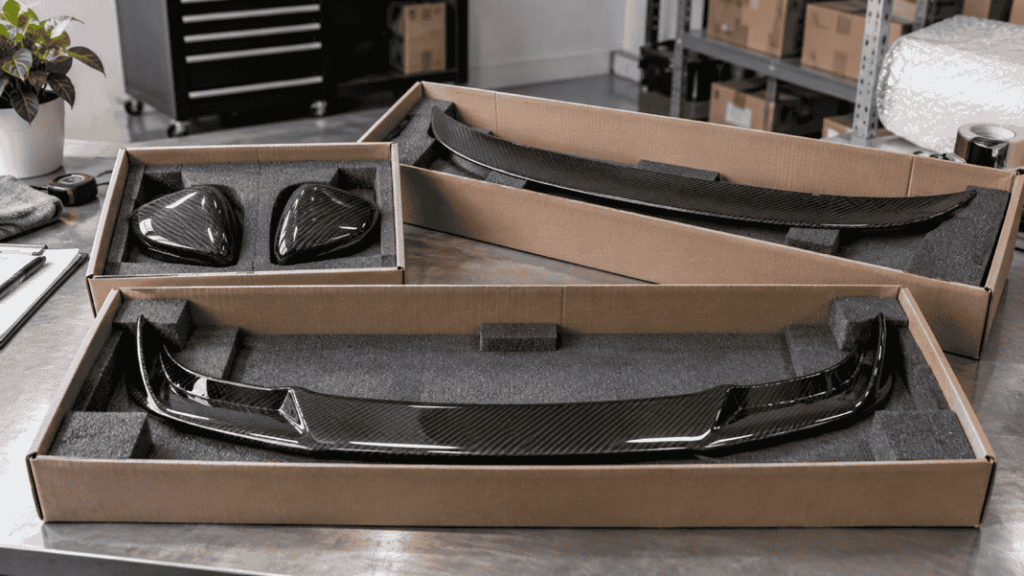
| Focused change | One selected front-lip reference. | Side skirts and rear diffuser excluded; other work itemized separately. |
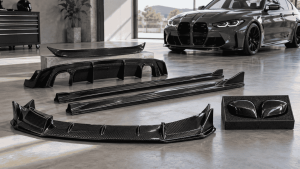
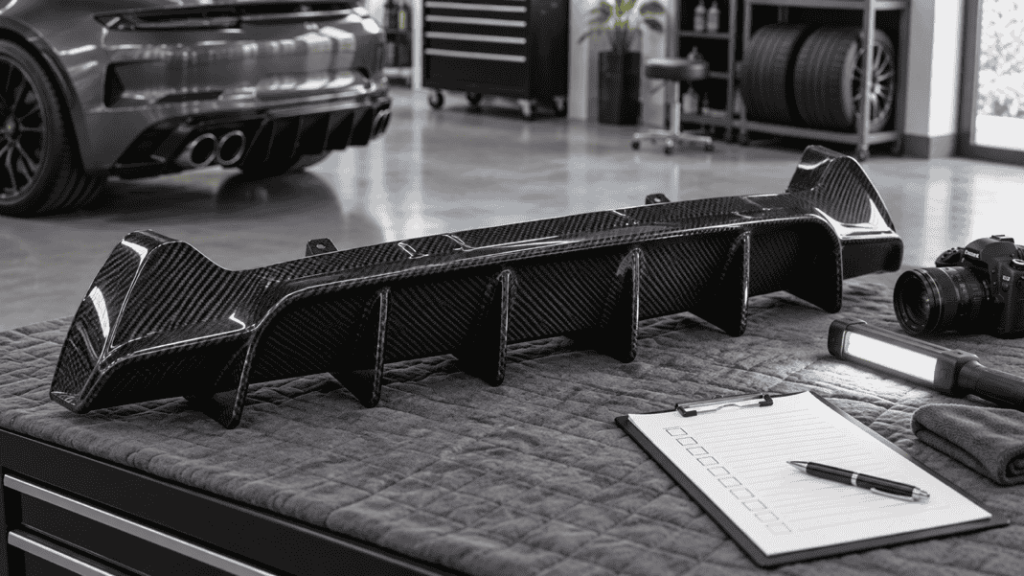
| Coordinated lower exterior | Selected front lip, side skirts and rear diffuser. | Hood, mirror trim and rear wing excluded. |
| Expanded appearance | Coordinated lower exterior plus one specifically chosen visual addition. | No undefined full-car package; name the additional piece and its own requirements. |
For a BMW G80/G82 inquiry, use the actual front-lip reference, side-skirt reference and rear-diffuser reference as candidate lines. Each still needs the appropriate vehicle and contents review. Listing them together here does not establish a matched or tested assembly.
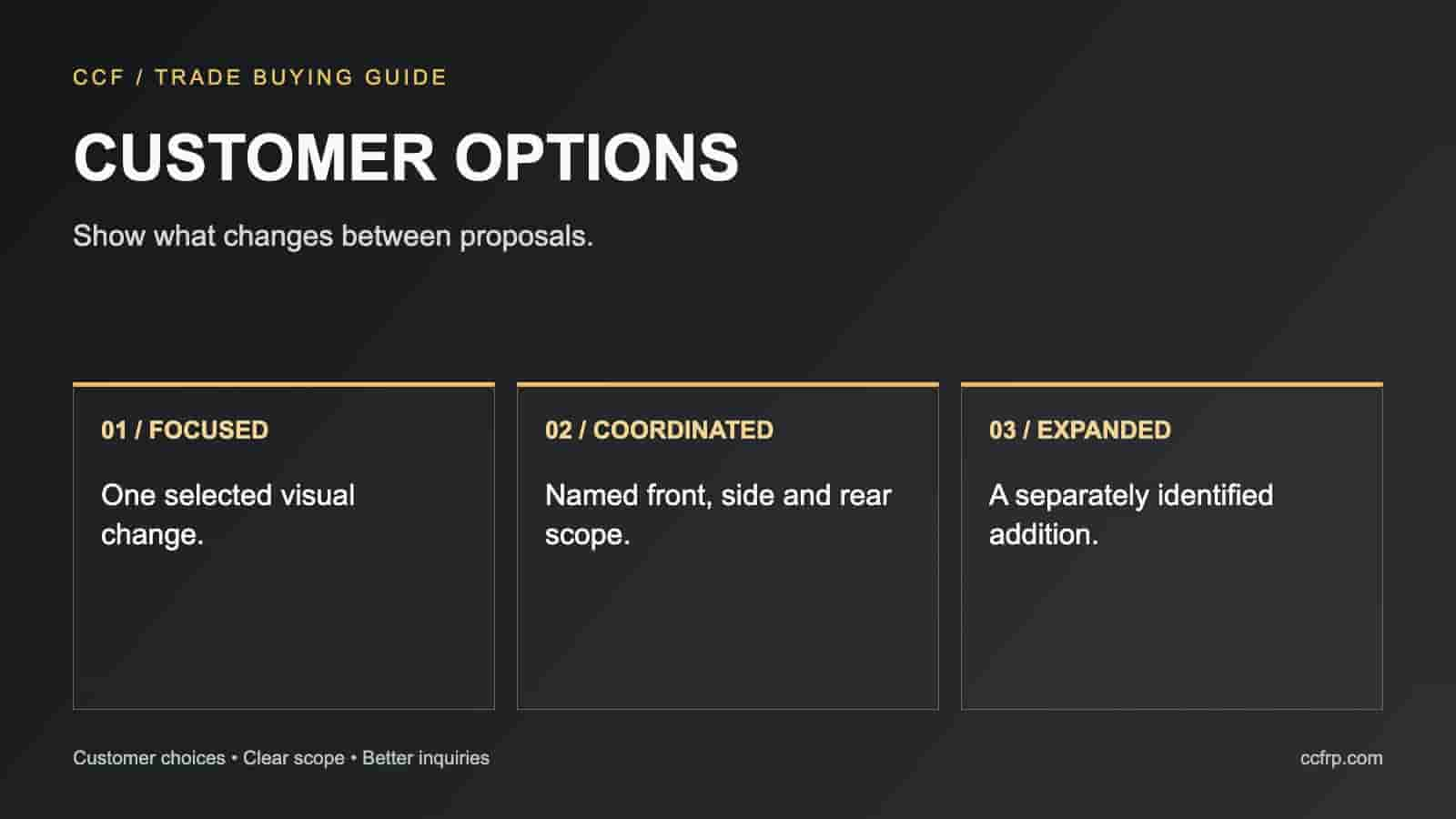
Make the step between proposals visible
Show which components are retained from the previous option and which are added. A customer should not have to compare two full-car photos and guess why one proposal costs more. Where the front-lip choice also changes, mark that as a substitution rather than presenting the second proposal as merely the first plus skirts.
A concise explanation might be: “Option two keeps the same proposed front lip and adds the listed side skirts and rear diffuser. Option three adds the separately identified rear styling piece. The included goods and workshop scope are shown below each option.”
Avoid naming the tiers low quality, premium and race grade unless those differences are actually documented. In this method, the tiers describe how much of the car changes, not an unsupported ranking of material or performance.
Price the whole accepted scope
| Quote line | Record for every proposal | Common source of misunderstanding |
|---|---|---|
| Goods | Exact references, quantity and unit for each. | One piece, a pair and a set treated as the same quantity. |
| Selected finish | The stated finish and any accepted additional work. | A complete-car photo treated as a finish-match commitment. |
| Packing and delivery | What is included in the offered delivery scope. | A later shipment assumed to be covered by the first price. |
| Workshop work | Your actual proposed operations and their scope. | A supplier’s goods price presented as an installed total. |
| Optional additions | Separate lines outside the accepted package. | An unselected accessory perceived as a missing item. |
| Unresolved items | Named open questions requiring resolution. | Unknown costs silently entered as zero. |
Keep quoted numbers attached to their actual references and current scope. If an essential item remains unpriced, show the proposal as incomplete rather than using a fabricated allowance to make it look final.
Handle a smaller budget by changing scope clearly
If the customer cannot proceed with the coordinated proposal, return to the prioritized visual goal. Remove an optional component, select a different documented reference or separate the project into stages after reviewing dependencies. Do not quietly substitute a different structure or finish while keeping the original product description.
A staged purchase can be practical, but it is not automatically cheaper. Later freight, repeated workshop work or changes in the available reference can alter the overall scope. Explain those open points before promising a saving.
Give the customer one acceptance record
After a proposal is selected, record its name, component references, quantities, included work and exclusions together. Attach the approved product images. Remove the unselected proposal images from the accepted order summary, or clearly identify them as alternatives not ordered.
For example, if the customer chooses the focused front-lip option, the accepted summary should not be dominated by a photograph of the coordinated full lower exterior. The image and written contents should lead to the same expectation.
When an item changes, revise the relevant line and customer approval record. This is simpler than explaining after delivery why a different piece was substituted under an unchanged package name.
Buyer questions
Must a shop always offer three packages?
No. Two well-defined options are better than a third option with unclear supply. Three is a useful presentation format only when the differences are real and relevant.
Should the largest package get an assumed wholesale discount?
No. Request the actual commercial terms for the selected quantities. Do not build a customer promise around a discount that has not been offered.
What makes the middle option useful?
It should address a distinct customer goal, such as a coordinated lower exterior, rather than exist only to make another option appear attractive.
Related scope and ordering resources
Continue Your Purchasing Research
Get itemized prices for your proposed packages
Send CCF your selected references grouped by customer option, with quantities and destination. Request a line-by-line offer so your shop can explain each proposal and quote the chosen scope accurately.
Send an Inquiry
Include this article title, selected references, quantity and delivery country.