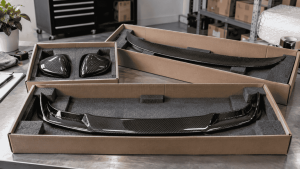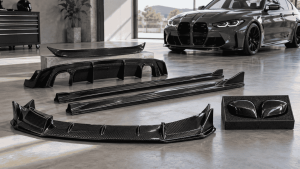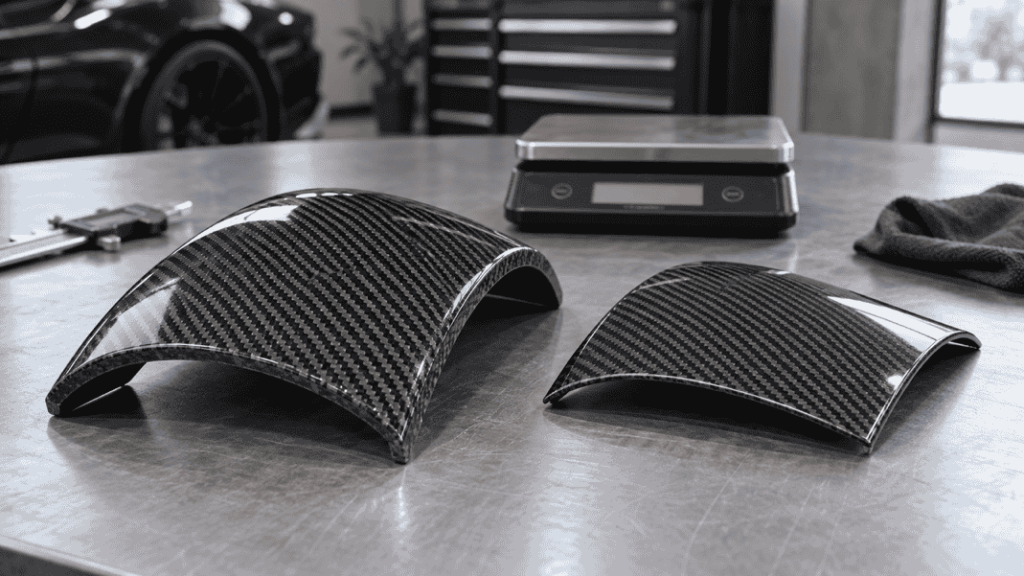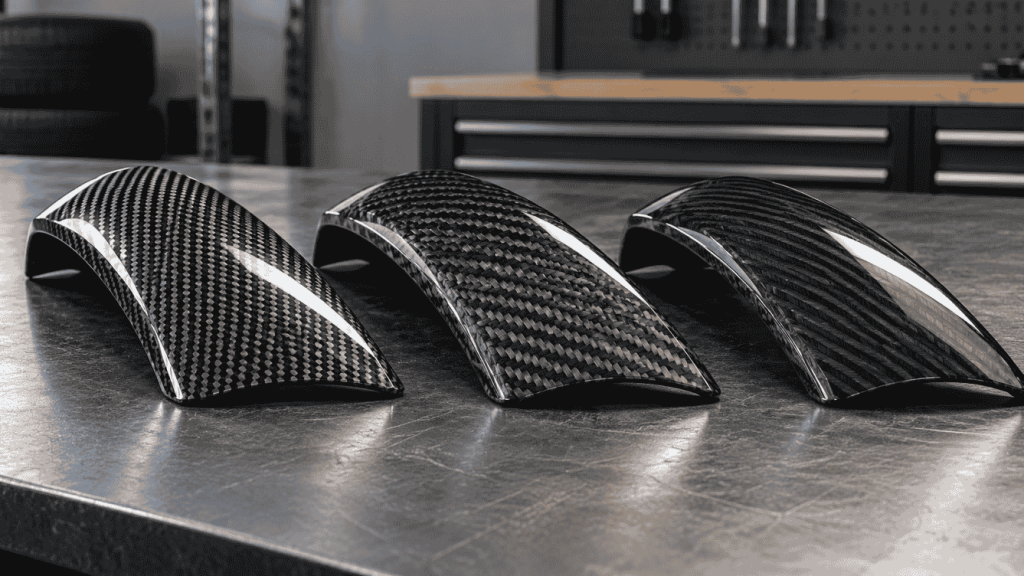
Exposed carbon leaves the pattern visible in the specified areas; partial paint covers selected zones while other areas remain visible. This is a coverage decision, separate from gloss/matte appearance and the part’s underlying construction. Mark the actual part before requesting a finish quote.
A useful brief identifies the product, painted and exposed zones, boundary/edge returns, color reference, work owner and approval version. Custom finishing availability must be confirmed for the selected reference.
What must the marked image show?
Label the view and installed orientation, distinguish painted and visible-carbon zones, and show where each boundary starts, ends and continues around an edge. Identify the underside separately where relevant.
Then approve color and sheen through the agreed review method. An accepted color sample does not approve the boundary, and a marked style picture does not establish that factory finishing is available.
Make three choices separately
| Choice | What it defines | What it does not define |
|---|---|---|
| Coverage | Painted zones and visible-carbon zones. | Gloss level or complete construction. |
| Surface appearance | Requested gloss/matte presentation and approved color reference. | Which edge or underside is painted. |
| Supply and work scope | Who supplies the part and who accepts the finishing work. | That a standard product listing includes custom paint. |
Use the construction guide for material statements and the gloss/matte guide for surface preference. Keeping carbon visible does not establish full-carbon construction.
Mark the actual part, including its edge returns
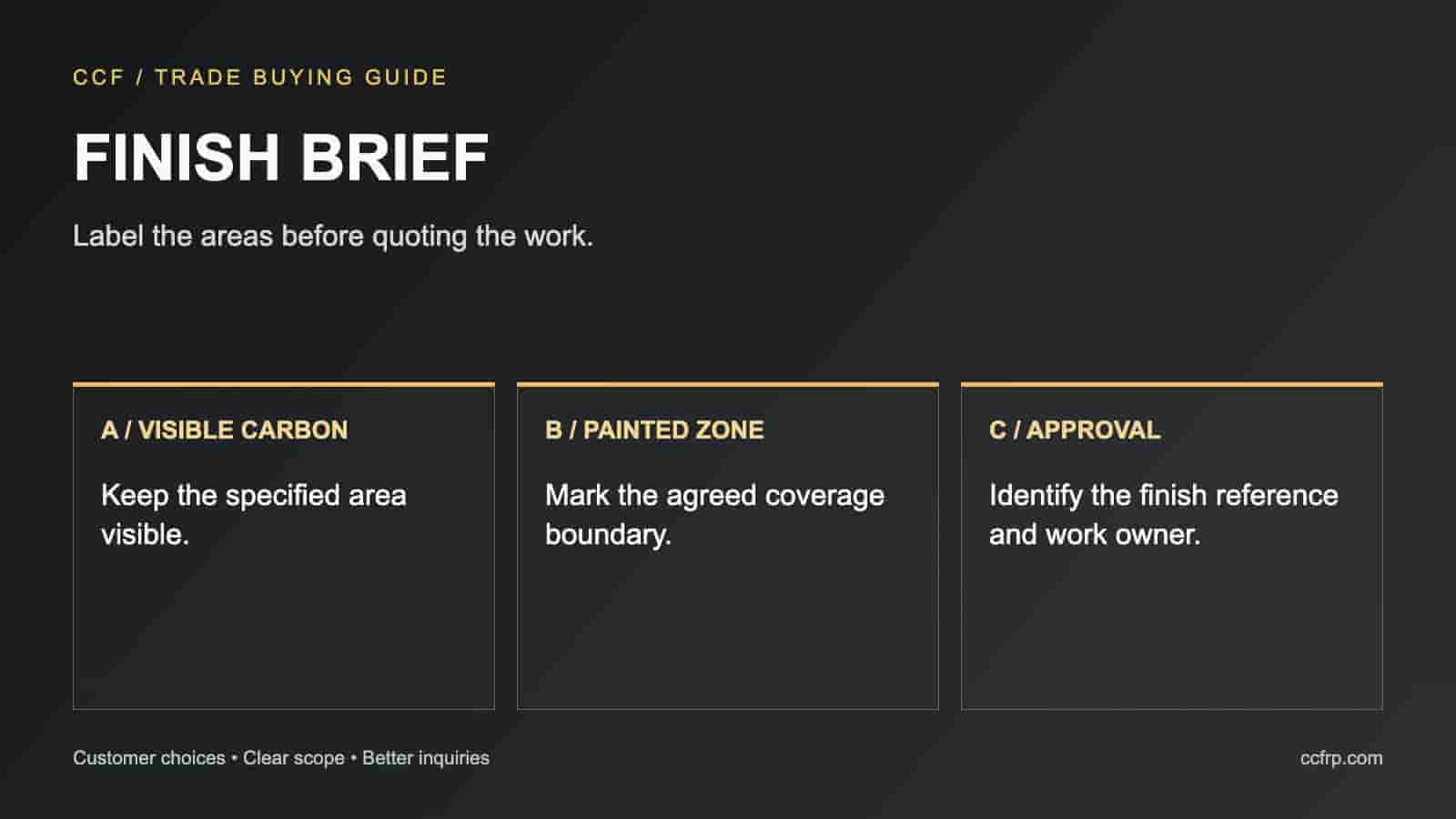
Use photographs or a suitable drawing of the selected reference, with orientation and view identified. Assign zone codes such as A for visible carbon and B for a proposed painted region. Mark boundary start/end points and how the line follows a feature. Identify any underside or edge-return decision separately.
These codes are a proposed working method, not a CCF production specification. If the selected views cannot show a boundary clearly, obtain the additional view rather than asking a painter to infer it. Use a new revision when the map changes.
Decide who can supply the requested result
| Quotation question | Proposed factory finishing | Local finishing |
|---|---|---|
| Availability | Supplier accepts the scheme for the exact reference before it is offered. | Named local provider accepts the actual supplied part and work scope. |
| Inputs | Product reference, coverage map and agreed appearance references. | The same brief plus relevant supplied-condition information. |
| Approval | Agreed sample/review point and version before the accepted production stage. | Agreed review with the local provider before irreversible work. |
| Price and timing | Confirmed finishing scope, approval dependencies and delivery terms. | Part supply, local finishing and associated workshop work itemized separately. |
The finishing provider determines compatibility and the applicable preparation/process. Do not take a general painting article as authorization to use a solvent, bake temperature or sanding method on an unidentified surface. Resolve product application and any required trial-fit sequence before irreversible finishing.
Approve color and boundary as separate items
A body-color identifier can be useful, but agree the actual matching and approval method with the finishing provider. A screen image does not guarantee an exact color result. Likewise, approval of a color sample does not approve the position of a painted boundary.
Illustrative example: a customer requests an exposed center and painted perimeter on a large panel. The map must show whether the painted region continues around the returns. The color reference and surface appearance then receive their own approval. This example is not a CCF project or confirmation that the scheme is available for a listed hood.
Copy this finish approval record
| Approval item | Record |
|---|---|
| Product | Reference, revision, application and required supplied condition. |
| Coverage | Map file/version, zone codes, views and boundary references. |
| Appearance | Color/sample reference and gloss/matte scope by zone. |
| Feasibility and owner | Named provider’s accepted work scope and unresolved questions. |
| Review stage | What will be reviewed, by whom and before which operation. |
| Disposition | Accepted / revised brief requested / pending, with date and version. |
Keep approval narrow: if color is accepted while the edge boundary remains unresolved, do not mark the whole finish approved. Link this record to the sample review where applicable.
Make changes visible before more work
For a customer change, identify the old/new map versions, affected zones and requested appearance. Ask the responsible provider to confirm feasibility, price and timing effects before the revised work begins. Keep a customer preference change separate from a result that differs from the accepted brief.
At completion, compare the result against the accepted map and review method. Record observations rather than judging from unrelated photographs. If a later film application is planned, carry the finish information into the PPF review and update the customer care handover.
Request a Product and Partial-Finish Scope Review
Send the selected product, marked coverage map/version, color and sheen references, preferred factory or local finishing route, quantity and destination. Ask for feasibility, approval stages and separately identified costs.
Send Your Product Requirements
Include your company, selected product or project reference and the question to resolve.