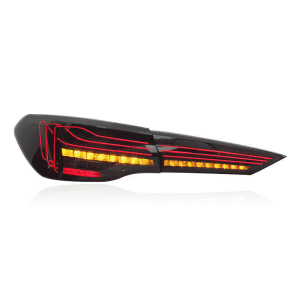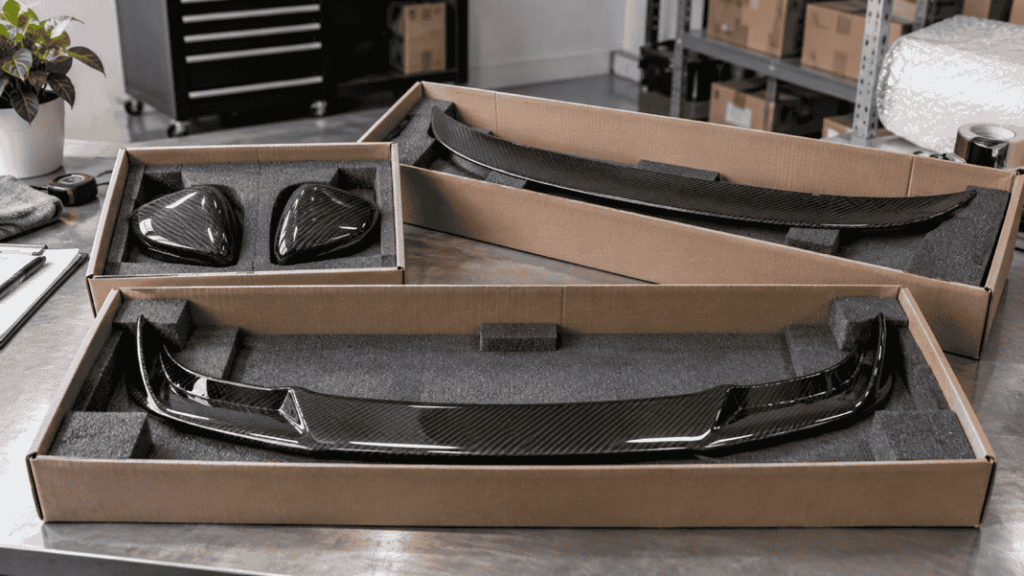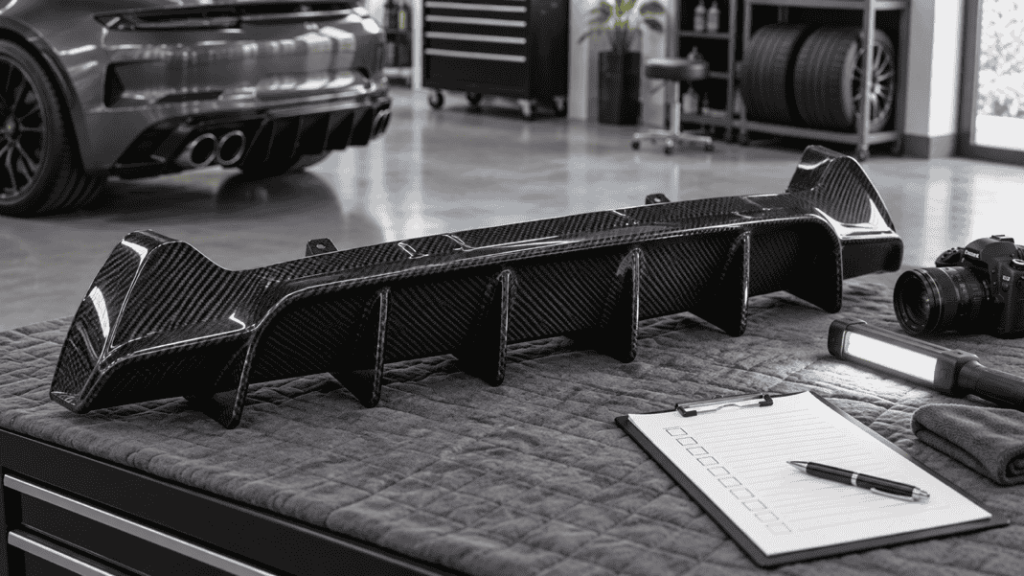
A specialist car dealer can offer carbon fiber upgrades before vehicle delivery by treating them as a separate, customer-approved scope. Identify the parts, installation responsibility and effect on the handover schedule before accepting the job. A visual proposal should not become a delivery commitment while product or fitment questions remain unresolved.
This approach can suit a dealer that already discusses appearance preferences with buyers and has a competent installation arrangement. It is less suitable when the vehicle must be delivered immediately or the product application cannot be confirmed in time. Keep the car sale and optional upgrade scope understandable.
Ask about the customer’s intended use
A buyer who wants a subtle exterior change may not want the same part as someone building a more aggressive display car. Discuss preferred appearance, clearance concerns and any existing modifications. Do not assume the most expensive package is the best match or that a customer wants permanent changes before taking delivery.
Offer the conversation at a sensible point in the sales process. A brief question—“Would you like us to investigate any exterior options before handover?”—gives the buyer a choice. Avoid making the optional work sound like a requirement for the vehicle purchase.
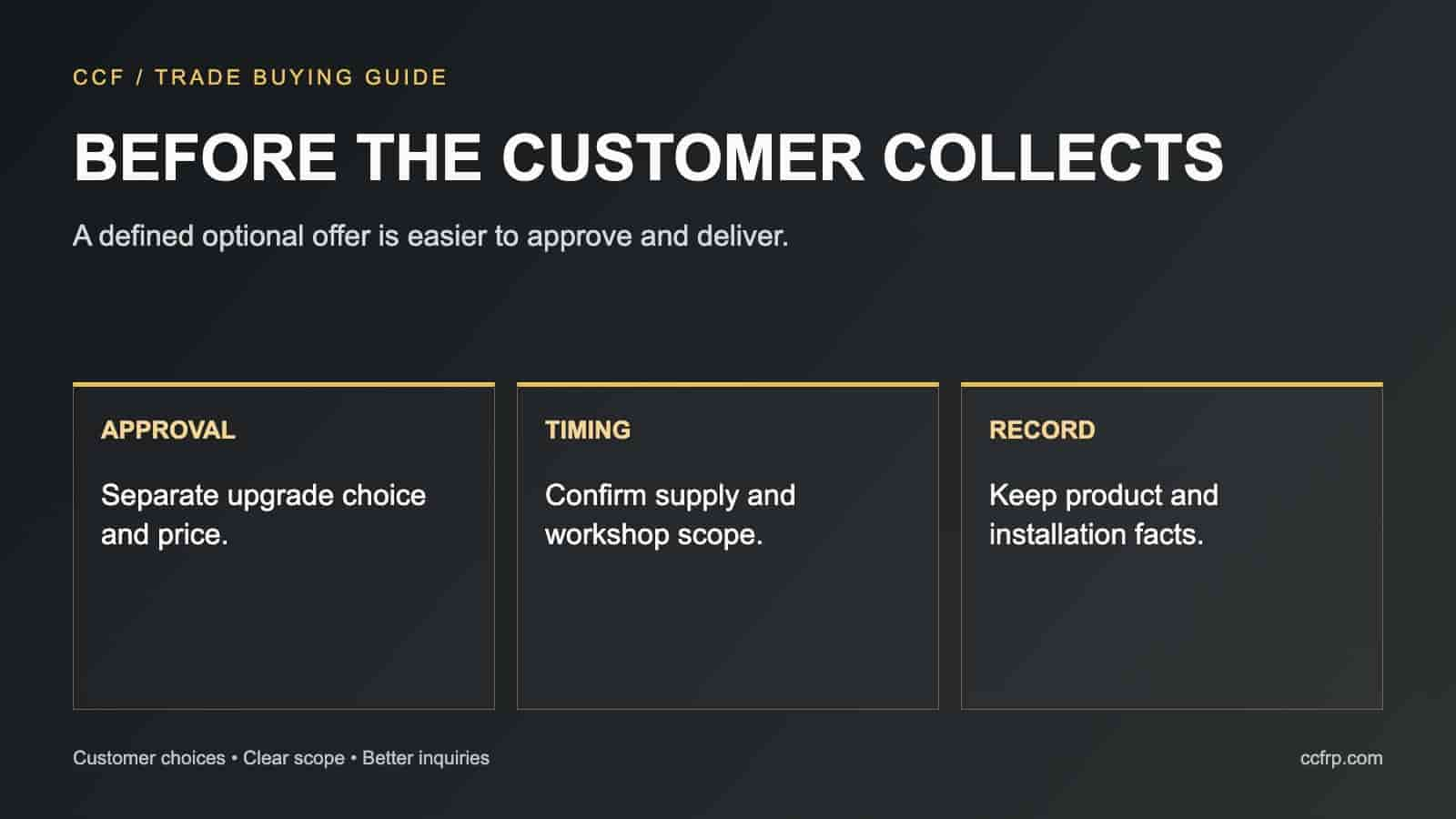
Quote the car and upgrade scope separately
| Record | What to identify |
|---|---|
| Vehicle | Exact vehicle and relevant existing configuration |
| Parts | References, finish, sales units and supplied contents |
| Installation | Responsible business, accepted work and exclusions |
| Timing | Confirmed milestones and effect on handover |
| Support | Who handles product and installation questions |
| Approval | Customer acceptance of the defined optional work |
A styling image is useful for discussing appearance, but it is not an order specification. Keep the parts list explicit. For a more complex vehicle, use the Urus package-scope guide as an example of separating components rather than quoting a complete-car photograph.
Resolve questions before committing the delivery date
Confirm product availability and installation capacity independently. An estimated supplier dispatch is not the date the completed car will be ready. Allow for receiving inspection, clarification and the installer’s required process. If a part is not ready, agree whether the customer prefers a later appointment, an alternative or a revised scope under the applicable terms.
Do not improvise advice about vehicle warranty, road approval, insurance or finance conditions. Check the applicable requirements and the customer’s arrangements before representing a modification as acceptable. Different products, vehicles and markets can raise different questions.
Calculate the upgrade as a separate business decision
In a hypothetical example, optional upgrade net sales are $1,500. Landed parts cost $850, subcontract installation costs $300 and incremental handling and payment costs total $80. Contribution is $270 before fixed overhead and other costs. This is an invented example, not a vehicle-value uplift or a CCF quote.
Include additional costs if the upgrade delays handover or creates other variable obligations. If a partner invoices the customer directly, do not count that partner’s full sales value as your own revenue. Use the contribution method for a consistent comparison.
Make the handover easy to understand
Retain pre-installation and completion records, the supplied reference and customer approval. Give the customer the relevant care information and the correct contact for a concern. Explain the distinction between the product supplier’s terms, the installer’s work and your own customer commitment.
The installation handover guide can support the record. The warranty comparison helps identify questions to resolve; neither establishes a universal promise for the modified vehicle.
Start with a repeatable offer, then review it
Begin with applications your dealership regularly handles and an installation partner that accepts the work. Track customer interest, accepted upgrades, actual contribution, delays and support issues. A profitable-looking one-off package is not proof that the same offer should be applied to every vehicle.
For larger visual changes, use budget-based choices to keep optional scope clear. Your advantage is a coordinated customer experience backed by accurate information. Bring the actual vehicle and selected parts to the supplier discussion so the offer can move beyond a generic accessory upsell.
Frequently Asked Questions
Can I advertise an increase in resale value?
Not without appropriate evidence for the claim. This guide concerns an optional sale and service, not an investment return on the vehicle.
Should the upgrade delay vehicle handover automatically?
No. Discuss the actual timing and alternatives with the customer, and record what is agreed.
Continue Your Purchasing Research
Quote the Upgrade for a Real Customer Vehicle
Send CCF the vehicle configuration, chosen component references, quantities and destination. Request a wholesale parts offer that your dealership can combine with its own installation and handover plan.
Tell Us About Your Business
Include your market, customer vehicles, selected parts and trial quantities.