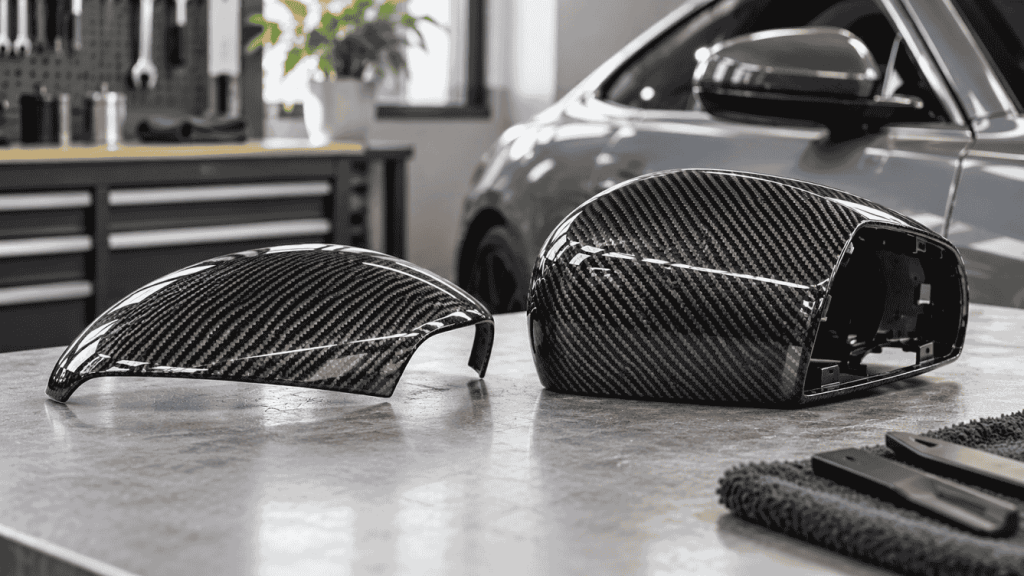
Epoxy versus polyester is a resin-system comparison, not a complete verdict on an automotive carbon fiber part. Ask which layer and resin system the supplier is describing, how the part is constructed and what evidence supports the intended use. A material label alone does not establish finish life, fitment or finished-part strength.
Choosing between epoxy and polyester carbon fiber parts requires more than a resin-family label. Ask which system is specified, how it is processed, what finish is used and what evidence applies to the finished product. Neither word alone establishes a universal service temperature, lifespan or installation requirement.
For a shop or distributor, the practical objective is to buy a part suitable for the intended location and avoid making claims that the specification cannot support. A resin discussion should end with usable product information, not a generic ranking copied into a catalog.
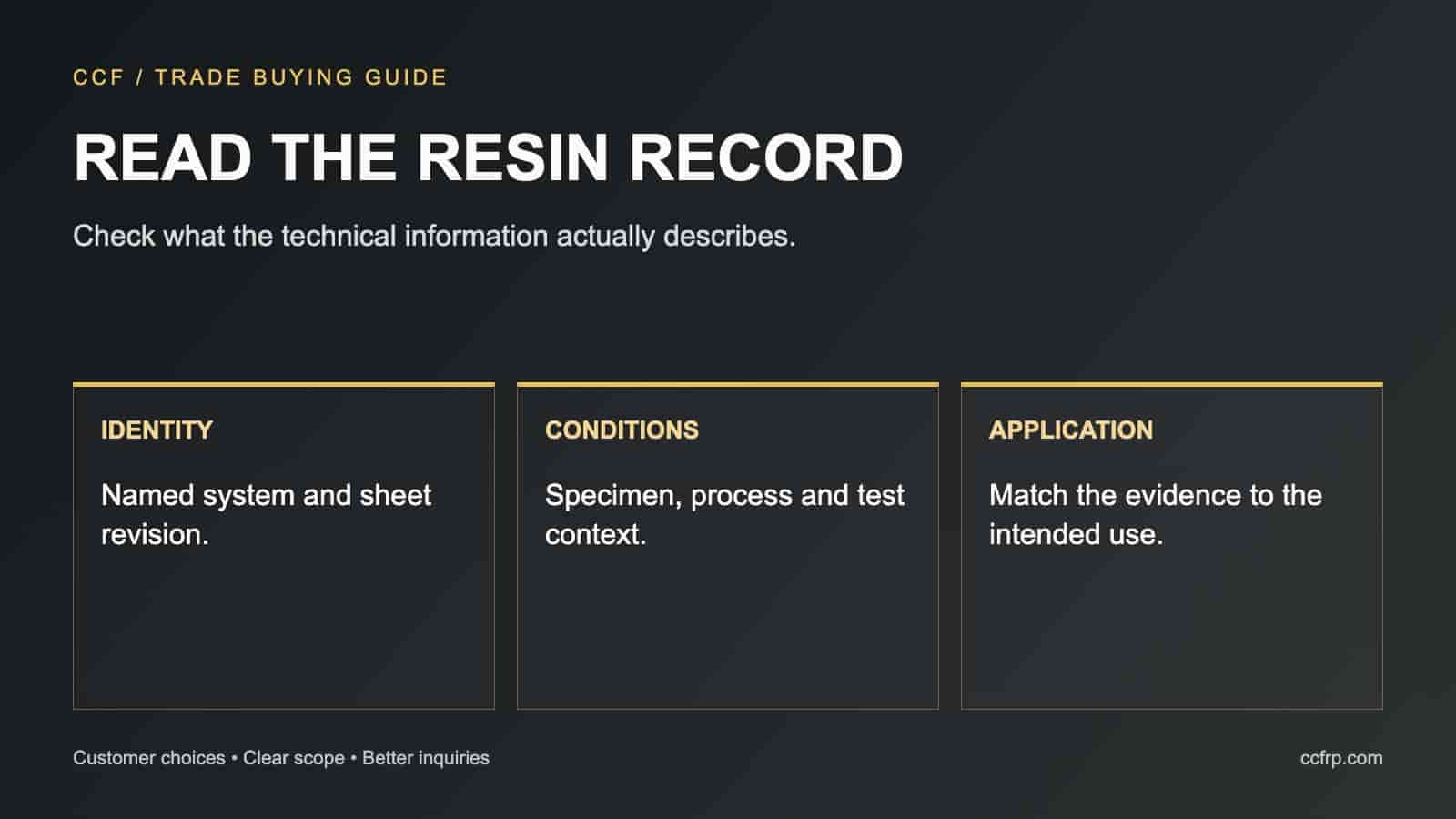
First identify which layer the answer describes
A supplier may be talking about the laminating resin, a surface coating or an adhesive used at an assembly joint. Those are different roles. Ask “Which part of the construction does this answer refer to?” before comparing two quotations.
A genuine carbon face layer also does not establish the resin system underneath it. Keep the construction and labeling description separate from the resin question, then connect the confirmed answers to the selected SKU.
Ask the factory for a relevant resin specification
| Ask for | Why it matters to the buyer | Useful follow-up |
|---|---|---|
| System identity or an agreed specification | “Epoxy” and “polyester” cover different formulations | Which technical information can be supplied? |
| Relevant processing conditions | Published values depend on the specified process | Do the supplied-part conditions match the cited data? |
| Finish system | The visible coating has its own compatibility requirements | What refinishing or care guidance applies? |
| Application conditions | Engine-bay and exterior trim locations pose different questions | What product-specific limitations are documented? |
| Repair and bonding guidance | A repair product must suit the actual surfaces and use | Who approves the method for this part? |
What technical references can—and cannot—tell you
Easy Composites describes its IP2 polyester infusion resin as compatible with carbon reinforcement, while recommending epoxy more generally for higher mechanical-performance applications. That product information shows why “polyester cannot be used with carbon” is too absolute. It does not establish the performance of an unidentified automotive part.
The same supplier sells a specific polyester gelcoat designed to work with epoxy laminating processes. WEST SYSTEM also discusses preparation and compatibility when applying finishes over epoxy. Together, these examples support checking the exact system and sequence rather than assuming every epoxy/polyester combination always works or always fails.
Ask the manufacturer for the relevant current data and application guidance. Do not transfer a temperature, cure schedule or bond-strength value from a convenient internet sheet to a different production system.
Read a data sheet against your actual question
If a supplier shares a technical sheet, mark the product name, revision, test specimen and conditions behind the cited value. Then ask whether those conditions apply to the quoted part. A value measured on a specified material specimen is not automatically an operating limit for the complete assembly.
For heat exposure, use the engine-bay requirements checklist to define location and exposure. Avoid a single “heatproof” label. For visible exterior parts, confirm the finish and care instructions separately instead of assuming resin chemistry guarantees color stability.
Handle an incomplete supplier answer
Suppose the reply is simply “epoxy, high quality.” Respond with a focused request: identify the quoted SKU, the scope of the resin statement, available application limitations and the finish guidance. If the exact commercial formula is confidential, ask what product-level specification or evidence can be shared.
Record unresolved points as open. If the intended application depends on a property that cannot be confirmed, do not promise that property to your customer. Choose a supported alternative or obtain additional assessment. For cosmetic selection, avoid demanding unrelated test data that will not change the buying decision.
Keep the approved specification consistent across bulk orders
Ask the manufacturer whether the confirmed resin and finish description applies to the production version being quoted. For an OEM project, agree how proposed material changes will be reviewed. For catalog wholesale orders, request confirmation of relevant changes before reusing an old technical description. Do not promise identical chemistry across a supplier’s entire range based on one sample.
Questions buyers ask
Should I always buy epoxy?
A family name is insufficient to select a finished part. Define the application and compare supported product specifications.
Can I choose a repair resin from the original resin name alone?
No. Surface condition, coating, joint and intended use also matter. Obtain product-specific repair advice before proceeding.
Can a supplier’s raw-material sheet replace a finished-part test?
It answers a different question. Keep the material data and any finished-part evidence identified separately.
Technical references
IP2 polyester infusion resin; GC50 epoxy-compatible gelcoat; WEST SYSTEM finish-coating guidance. These are system-specific references, not specifications for CCF products.
Source automotive carbon fiber parts from CCF
CCF manufactures automotive carbon fiber parts for tuning shops, distributors and aftermarket brands. Use CCF wholesale inquiries for selected catalog parts. If resin or finish requirements are part of a new design, include them in your OEM/ODM project brief.
Continue Your Purchasing Research
Request Wholesale Product Specifications
Send the product reference, application, finish and order quantity. Ask CCF what resin and finish information is available before approving material claims or a wholesale purchase.
Send an Inquiry
Include your company, product reference, quantity, destination and wholesale or OEM requirements.