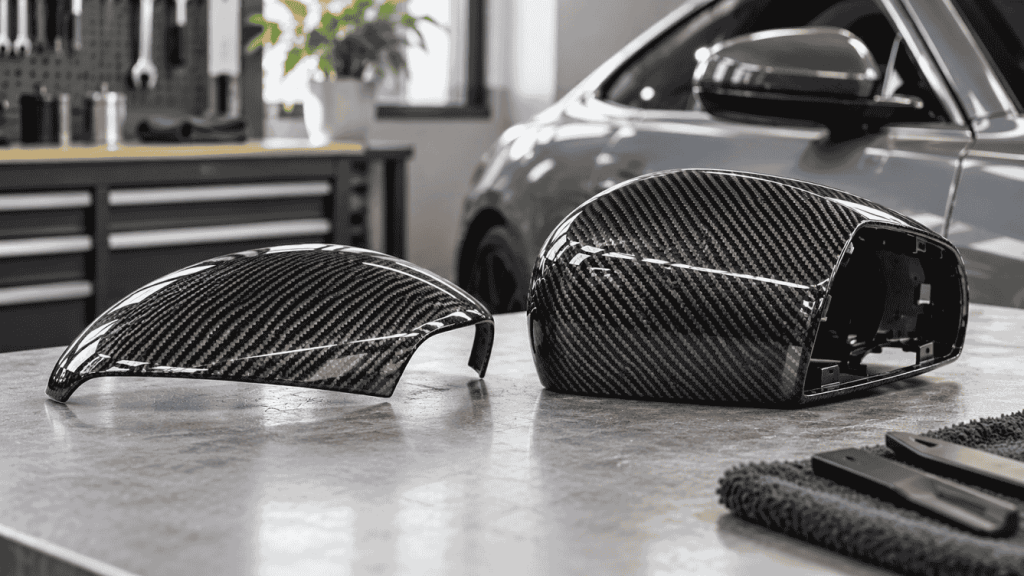
Dealers and private-label brands need product descriptions that remain accurate when catalog parts arrive from the manufacturer. Before placing a wholesale order, confirm which construction and material statements can be used in your own listings, packaging and sales proposals.
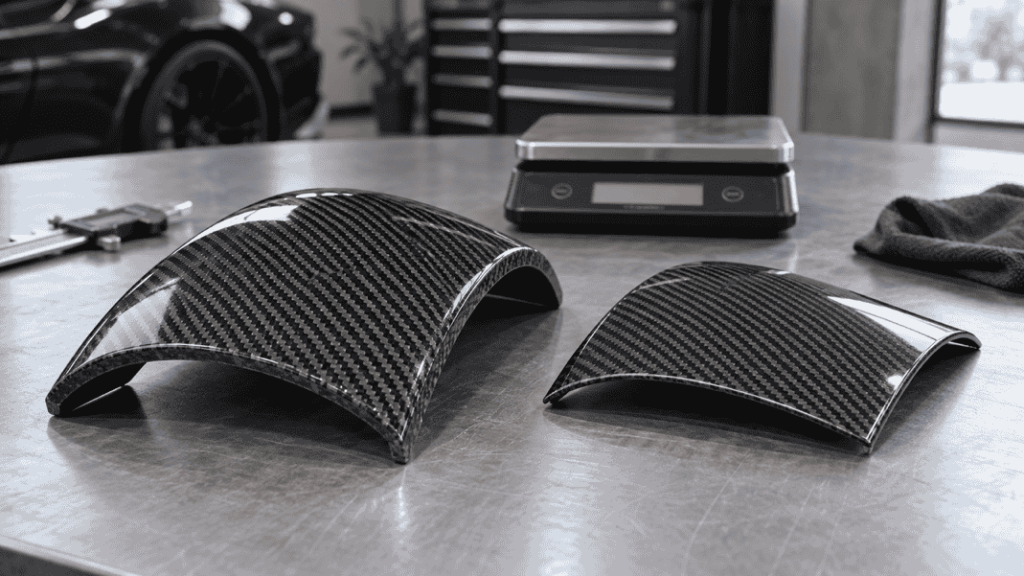
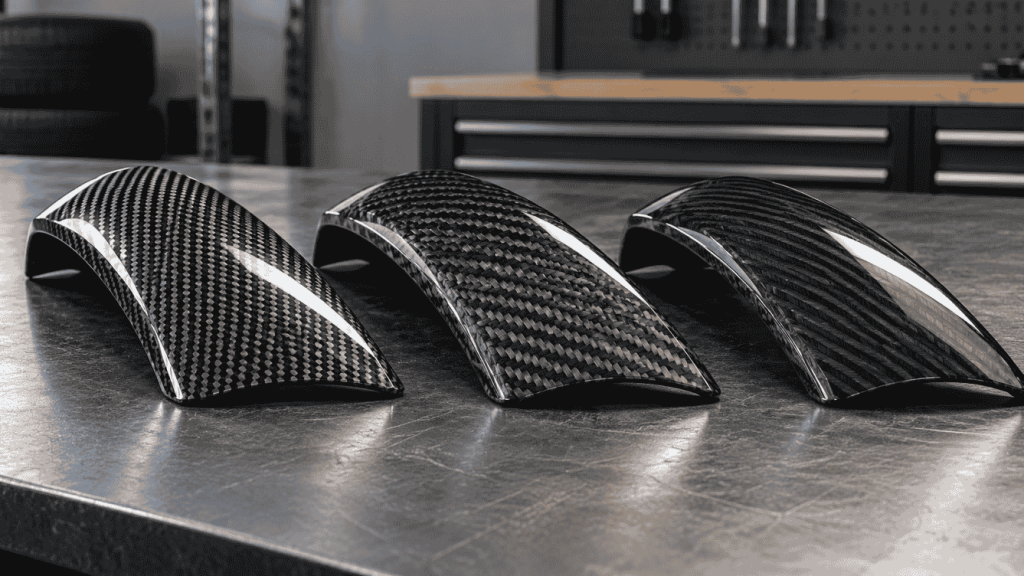
“Real carbon fiber” and “carbon-look” describe different things, but a genuine carbon surface does not explain the entire part. A dealer should identify whether the visible finish imitates carbon, contains a genuine carbon layer over another substrate, or belongs to a documented carbon laminate construction. Then describe only the scope the supplier can support.
This guide is about customer-facing labels. For the underlying construction comparison, see full-carbon versus fiberglass-backed parts. Clear labeling helps customers choose the right product without treating every mixed-material construction as fake.
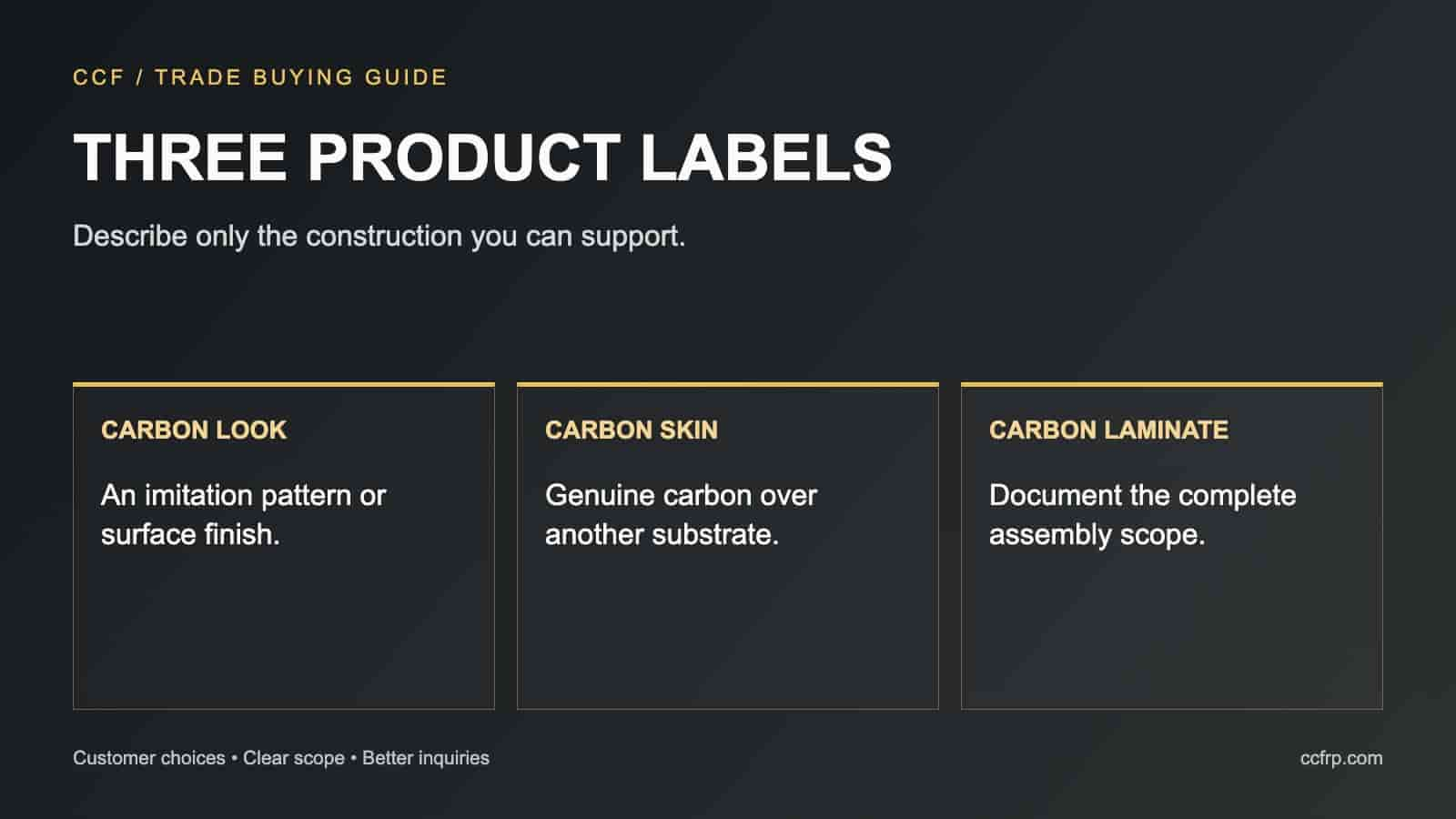
Separate the three questions customers combine
First, what creates the visible pattern? Second, what materials form the assembly? Third, what benefit has actually been verified? A photograph can help answer the appearance question. It does not establish the complete layup or prove a performance benefit.
Also separate construction from installation type. A genuine carbon overlay may be designed to attach over an existing part. A replacement may use several materials. “Overlay,” “replacement” and “full carbon” should not be used as synonyms.
Use precise wording for the evidence available
| Confirmed information | Possible wording | Wording to avoid without more evidence |
|---|---|---|
| Printed or film-based carbon pattern on a named substrate | Carbon-look finish on the specified substrate | Genuine carbon fiber construction |
| Genuine carbon face layer over a documented different substrate | Genuine carbon fiber surface with the named backing | All-carbon assembly or unsupported weight reduction |
| Supplier documents a carbon-fiber laminate | Carbon-fiber laminate, with assembly details stated separately | Every fitting and component is carbon |
| Construction unresolved | Keep the construction claim pending internally | Guessing from the pattern or price |
These are wording patterns, not ready-made claims for every CCF product. Fill in a material only when it has been confirmed. Avoid publishing a vague “premium composite” label as a substitute for a missing answer if the material is central to the purchase.
Improve a listing without adding hype
Consider the illustrative phrase “100% real carbon, ultra-light, perfect fit.” It combines three claims but tells the buyer little about the supplied assembly. A more useful description identifies the supported visible material, confirmed backing, finish, sales unit and application. Any weight or fitment statement needs its own evidence.
For example, if the supplier confirms a genuine woven carbon surface with fiberglass backing, state that combination plainly. Do not downgrade it to “fake carbon,” and do not promote it as an all-carbon structure. Explain the confirmed finish and how the piece mounts instead of inventing a structural advantage.
When a numerical weight claim is available, identify the measured configuration and comparison basis. When it is not available, leave the number out. See the fiber-grade verification checklist before adding T700 or another designation to the same listing.
Build a manufacturer-to-dealer label approval workflow
- Assign the listing to one supplier reference and revision.
- Collect the construction statement, relevant photographs and supplied-content definition.
- Draft separate appearance, construction, fitment and performance statements.
- Mark each statement as supported, awaiting confirmation or removed.
- Ask the supplier to review the material wording, then retain the approved version.
- Recheck affected wording when the supplier substitutes or revises the product.
A practical approval record can contain the SKU, proposed sentence, evidence reference, reviewer and date. It does not need a complicated software system. The important point is that someone can retrieve the basis for a claim after the original employee has left the conversation.
Do not turn authenticity checks into product damage
Burning, cutting or attacking a finished surface is not a sensible routine incoming-inspection method. A tap sound, surface appearance or simple electrical check alone is also insufficient to identify the complete construction. Start with the supplier’s specification and appropriate records. If independent material identification is necessary, agree the sampling method and qualified testing scope before altering a saleable part.
Use the dealer listing checklist to review images, quantity and inquiry destinations alongside material wording. Accuracy in one sentence does not rescue a page displaying photographs of a different version.
Approve the private-label wording before printing
Send your manufacturer the proposed product description and packaging wording together. Identify the SKU and clarify whether the project changes only branding or also the product specification. Keep translation, retailer copy and carton labels aligned with the approved material description. If a wholesale supplier offers a substitute, recheck the wording before applying the original label to the new item.
Questions buyers ask
Is a carbon skin fake?
Not if it genuinely contains the carbon layer described. The label should also explain the supported backing or construction scope.
Does visible weave prove the whole part is carbon?
No. A visible surface does not establish the unseen assembly.
Should I delete every claim while waiting for records?
Remove or withhold the unverified claim. Keep independently confirmed product information, and resolve material questions before accepting an order that depends on them.
Source automotive carbon fiber parts from CCF
CCF manufactures automotive carbon fiber parts for tuning shops, distributors and aftermarket brands. Discuss branding and development scope through CCF OEM/ODM project inquiries; confirm catalog references through CCF wholesale supply.
Discuss Your Private-Label Requirements
Send the selected product, draft material wording, branding requirements and expected quantity. Ask CCF to review the available product information and clarify the proposed private-label scope.
Send an Inquiry
Include your company, product reference, quantity, destination and wholesale or OEM requirements.