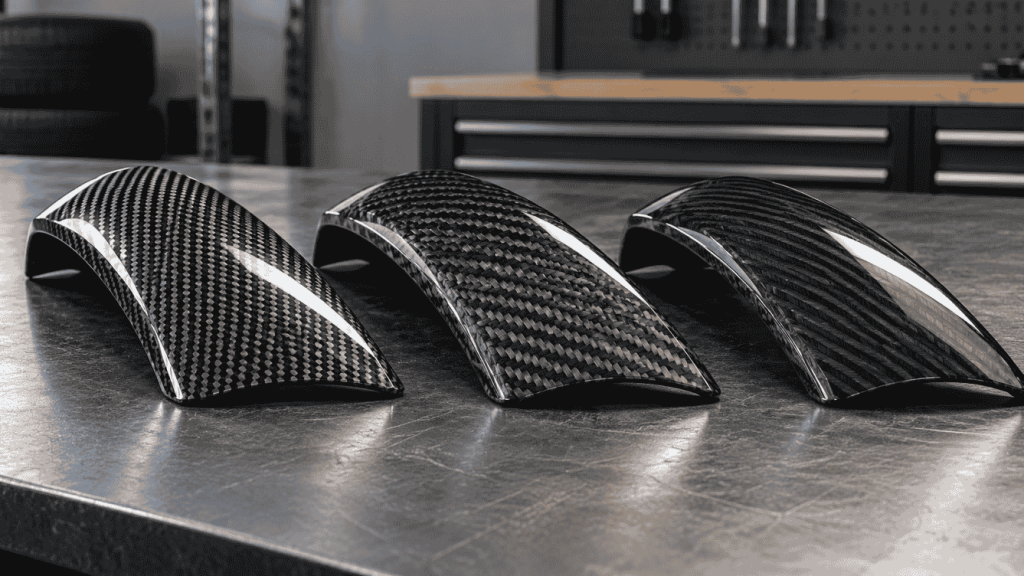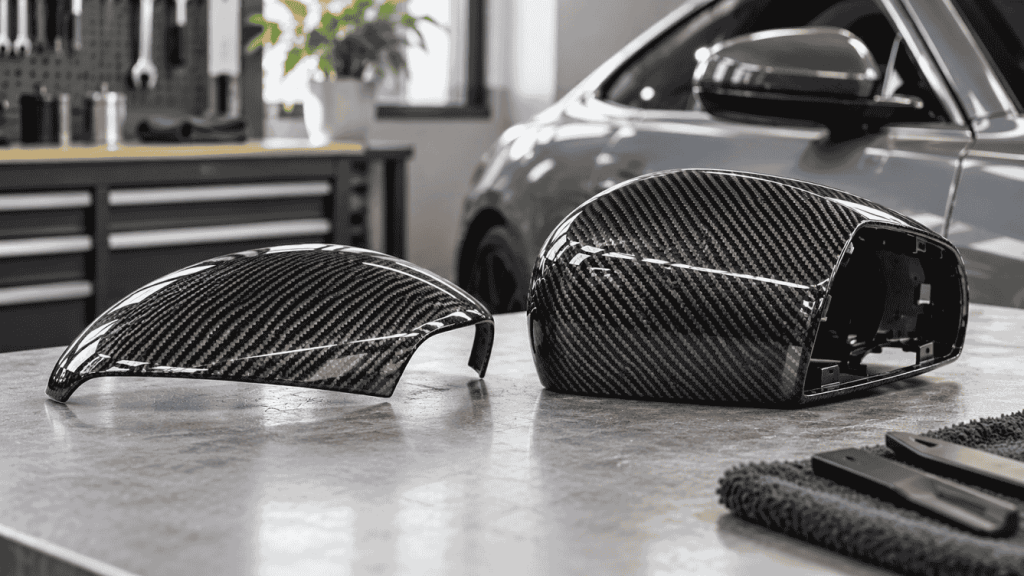
T300, T700 and T800 claims are useful to buyers only when the exact fiber designation can be connected to the selected part. A higher-number label is not proof of a stronger or better-fitting finished component. Separate fiber data, laminate design and finished-part validation when comparing an automotive carbon fiber specification.
A T700 or T800 label does not, by itself, tell a buyer how a finished automotive part will perform. Verify the exact fiber designation, the evidence connecting it to the selected product, and the construction of the complete part. Raw-fiber data cannot establish the stiffness, weight, fitment or durability of a hood or front lip.
For distributors, this is also a listing problem. A material claim copied into a catalog may later become a customer expectation. Confirm the claim before using it to justify a price premium or describe a performance advantage.
Check the full designation, not just the number
Toray’s official data-sheet library lists distinct designations such as T700S, T700G, T800H and T800S. Do not silently remove the suffix or treat all references containing “700” or “800” as interchangeable. Ask for the manufacturer, exact designation and relevant data-sheet revision. Toray notes that typical data-sheet values guide material selection; they are not guaranteed values for every delivered item.
That is a narrow material-source check, not proof that a seller uses that material. A publicly available sheet can explain a fiber but cannot connect it to your order. The connection requires supplier records appropriate to the agreed claim.
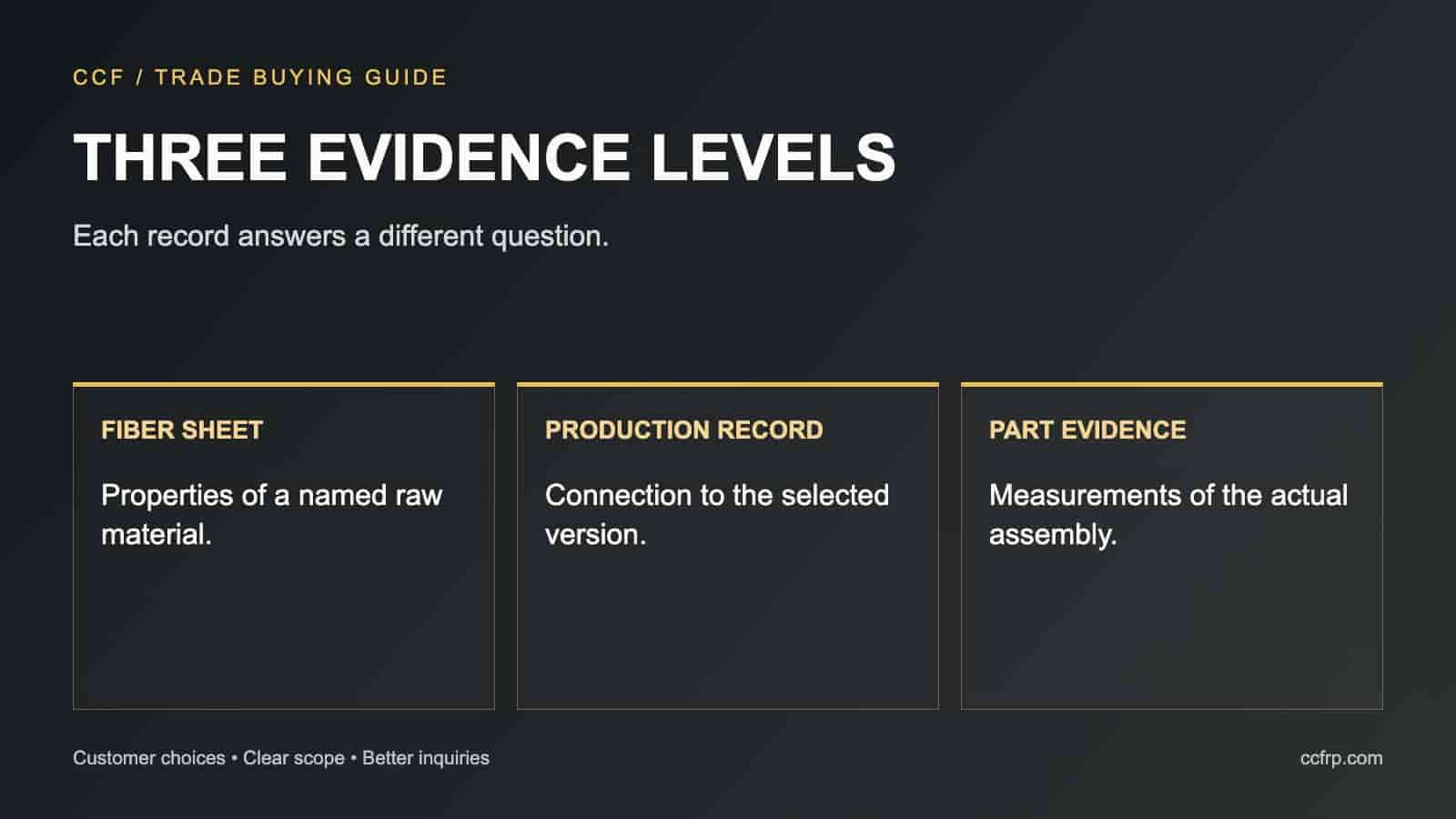
Keep three evidence levels separate
| Evidence level | Question it can address | What it does not establish alone |
|---|---|---|
| Fiber data sheet | What properties are reported for the named raw material? | Properties of your completed product |
| Material and production records | What material is documented for the relevant production scope? | Validated vehicle fitment or service life |
| Finished-part evidence | What was measured or verified on the specified assembly? | Identical performance for a different construction or revision |
For example, the T700S sheet presents fiber properties separately from composite properties and identifies conditions for the composite data. This is why a fiber tensile value should not be pasted into a hood listing as “hood strength.” The tested material and the retail assembly are different objects.
Five questions to send your carbon fiber parts manufacturer
- What exact designation is claimed for this SKU, and which portion of the construction uses it?
- Does the claim apply to the visible layer, the reinforcement throughout, or another defined scope?
- What record can connect the material description to the offered production version?
- Which details are available to the buyer, and which are proprietary?
- What finished-part measurements or application evidence are available separately?
A supplier may reasonably protect a proprietary layup schedule. In that case, agree a narrower description it can support rather than demanding the entire manufacturing recipe or accepting an unsupported broad statement. Record what remains unverified before approving your product listing.
Compare the purchasing objective before choosing a grade
A shop replacing a cosmetic trim piece and a brand specifying a new hood do not necessarily need the same evidence. Start with the application and the promised customer benefit. If the benefit is appearance, agree the visible finish and inspection reference. If the benefit is lower assembly weight, obtain a comparable assembly measurement. If a structural claim is proposed, obtain relevant engineering evidence rather than ranking grades by their names.
The hood weighing guide explains why measurement scope matters. For quotation decisions, use the hood cost breakdown to keep material wording separate from hardware and finish inclusions.
Write a defensible dealer description
Suppose a supplier documents a named fiber only in the visible face layer. A listing that says the whole assembly is made entirely from that grade goes beyond the evidence. Identify the supported scope instead. If the designation remains unverified, omit the grade from public copy and retain the request in the procurement file.
Use the product labeling guide to separate appearance and construction statements. Keep the approved wording tied to the SKU and revision so another product does not inherit the claim through a copied template.
Put material requirements into the OEM brief
If a particular grade is necessary for your OEM project, identify the exact designation and the reason for requesting it. Ask the manufacturer to review availability, suitability and acceptable evidence before quoting production. Record whether alternatives require your approval. A private-label catalog purchase does not automatically include a custom layup or a dedicated material specification.
Questions buyers ask
Is T800 automatically the best automotive choice?
No universal ranking follows from the name. The application, resin, construction, processing and complete-part evidence remain relevant.
Can a weave photograph prove the grade?
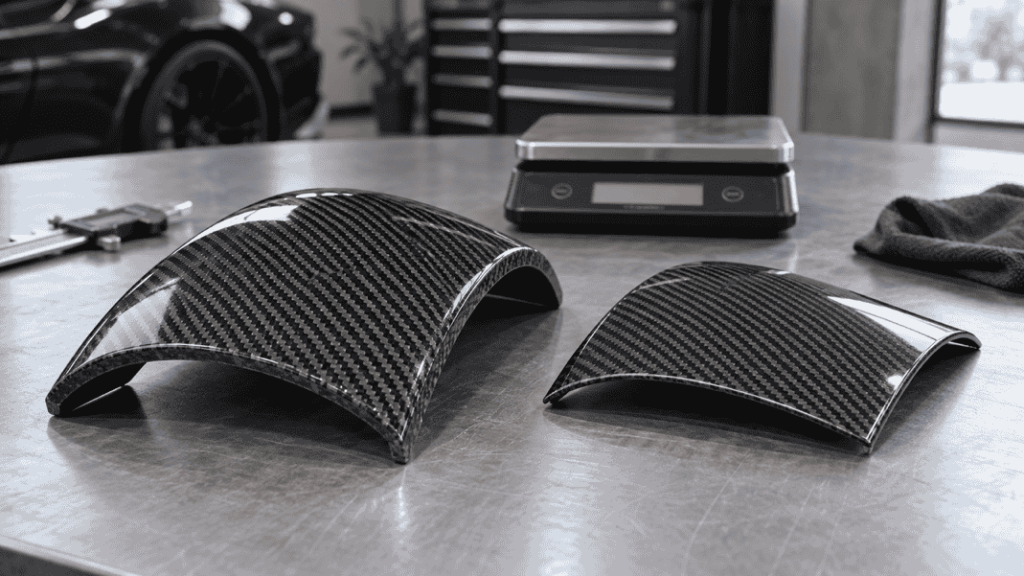
No. Use photographs for appearance and product identity; request records for a specific material designation.
Does CCF use one grade for every product?
This guide makes no catalog-wide grade claim. Ask which specifications and supporting information are available for your selected reference.
Material references
Toray official material data-sheet library and T700S technical data sheet. These explain material data, not CCF product certification.
Source automotive carbon fiber parts from CCF
CCF manufactures automotive carbon fiber parts for tuning shops, distributors and aftermarket brands. For a new specification, use CCF OEM/ODM project review. For existing products, ask about the available SKU information through wholesale sourcing.
Continue Your Purchasing Research
Discuss Your OEM Material Requirements
Send the target part, vehicle, intended application and any required material designation. Ask CCF which specifications and supporting records can be provided for the proposed project.
Send an Inquiry
Include your company, product reference, quantity, destination and wholesale or OEM requirements.