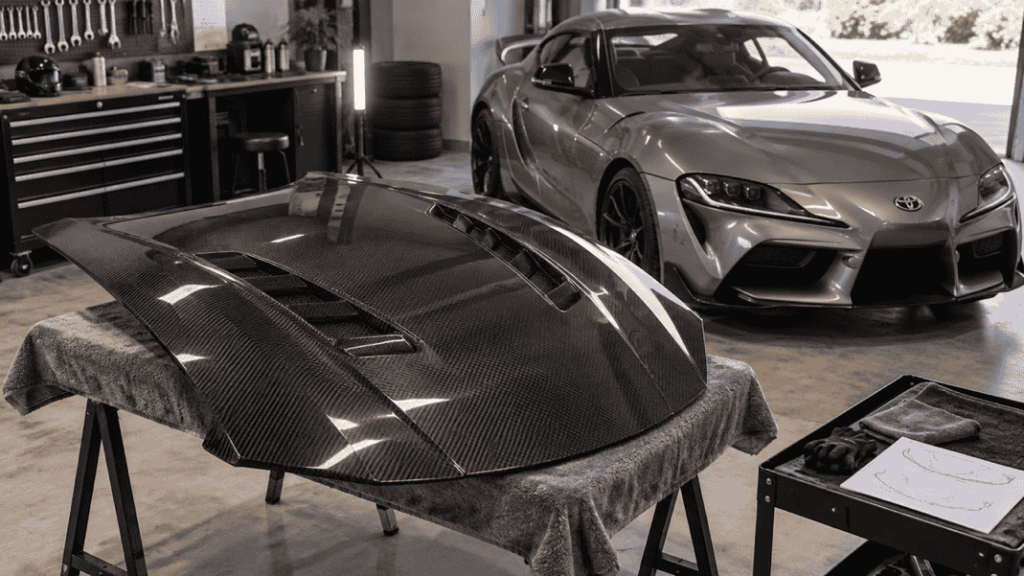
Assess yellowing or cloudiness by documenting the surface, its history and the affected area before attempting a repair. A photograph can help describe a symptom, but it cannot reliably determine whether the cause is contamination, a finish issue, an added treatment or a deeper problem. For a workshop, the first task is to preserve useful evidence.
Start with a condition report, not a diagnosis
Record the part reference, vehicle, installation date and when the change was first noticed. Ask whether the appearance changed suddenly or gradually, whether it is localized and whether any work or cleaning preceded it. Use neutral wording: “pale area near the vent” is more useful than “bad resin” when the cause has not been assessed.
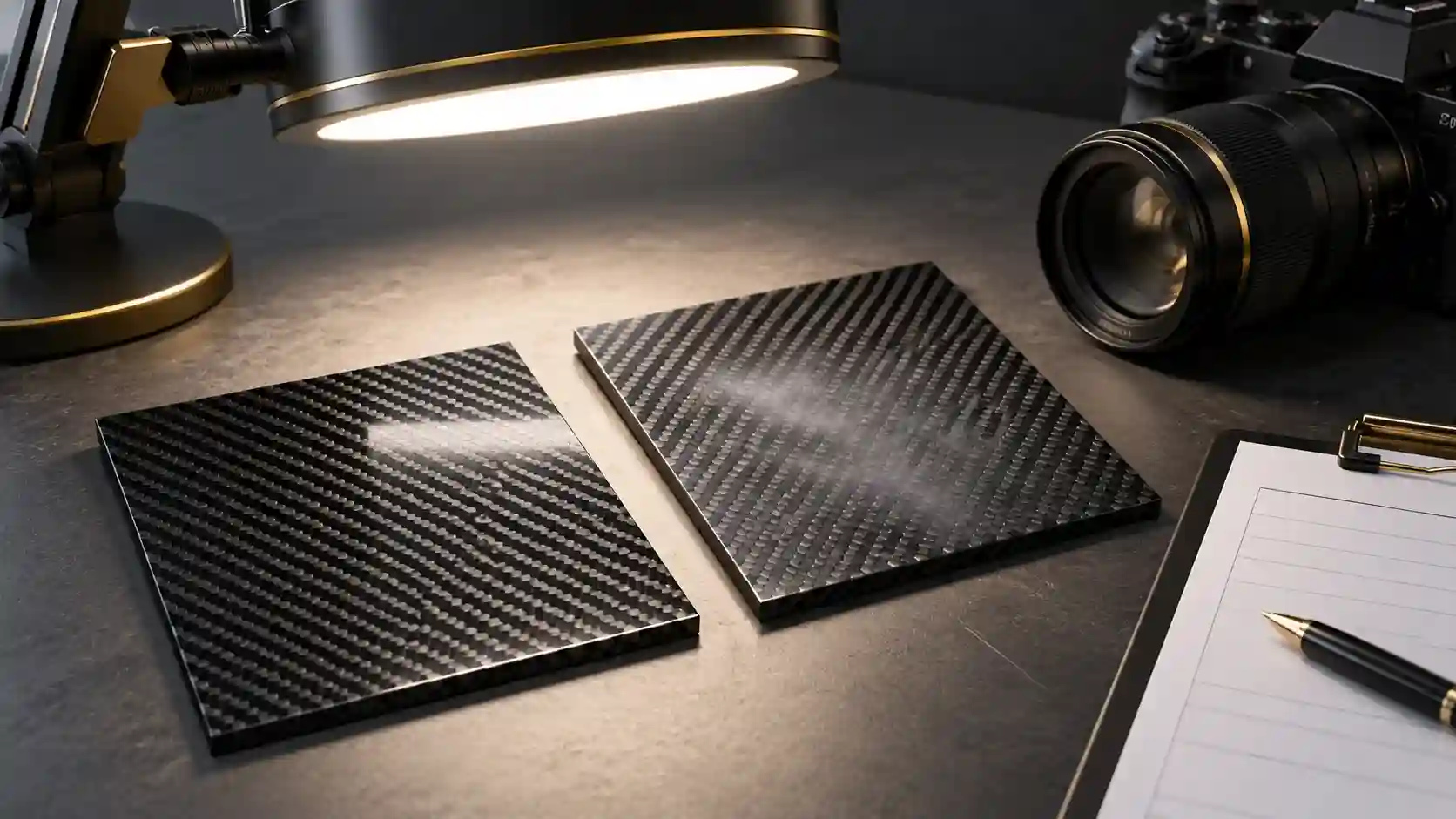
Photograph the full part, the affected area and an adjacent area under similar lighting. Keep original files. Reflections, exposure and white balance can alter the appearance of a dark glossy surface, so do not rely on one edited close-up.
Use this evidence checklist
| Observation | Useful follow-up | Do not assume |
|---|---|---|
| Yellow or brown appearance | Record location, progression and exposure history | That the carbon reinforcement itself is the cause |
| Cloudy or hazy appearance | Show it from several angles and identify added films or treatments | That polishing is appropriate |
| Marks around an edge or opening | Show the surrounding part and attachment area | That a surface-only treatment will resolve it |
| Cracks, movement or loose attachment | Escalate the part’s condition and function to a qualified reviewer | That the concern is merely cosmetic |
Map the layers and previous work
Ask which finish was supplied and whether the part has subsequently been repainted, polished, coated or covered with film. Record the products and providers where known. The same visual description can refer to different surface systems, so a reviewer needs that history before suggesting an intervention.
A coating supplier’s diagnostic resources can help organize the discussion. Axalta’s paint-defect reference, for example, distinguishes observed defects and possible causes. It is a coatings resource, not a diagnosis of a particular carbon component or permission to follow a generic repair procedure.
Avoid changing the evidence prematurely
Do not begin with aggressive polishing, sanding, heat or an unapproved chemical test. Such work can change the condition being reviewed and complicate the support decision. If an assessment requires cleaning or a test, agree the exact scope and who is qualified to carry it out.
Likewise, do not add film or a coating simply to make the symptom less visible. Document and address the underlying concern first. A temporary improvement in appearance does not establish that the cause has been resolved.
Decide who needs to review the issue
The parts supplier can identify the supplied specification and support route. A refinisher or film installer may need to assess work performed after delivery. If there is cracking, movement or concern about a component’s function, seek a qualified product or installation assessment before treating it as a cosmetic job.
Give each reviewer the same factual record. It should include order identity, photographs, relevant history and any action already taken. Ask for a defined next step: more information, an in-person inspection or an approved remedy. Do not promise replacement to the customer before eligibility and scope are established.
Keep the customer update practical
A useful update might be: “We have recorded the affected area and the finish history. The supplier is reviewing the images. We will confirm the next action before any refinishing or replacement work.” This explains progress without blaming a party or naming an unverified cause.
If your shop is quoting a paid cosmetic service, separate that offer from any open supplier claim. Make clear what is being assessed, what the proposed work includes and which questions remain unresolved. Do not let a commercial shortcut replace a technical decision.
Build prevention into later orders
Keep the supplied finish information and the customer’s handover record with the job. For exposed or engine-area parts, ask about the intended use and the relevant product limits before purchasing. Those questions improve future selection; they do not prove what caused an existing symptom.
Workshop questions
Does yellowing mean the part is fake carbon?
No such conclusion follows from appearance alone. Construction and surface condition are separate questions requiring appropriate evidence.
Can a photo confirm that only the clear coat is affected?
No. It can support triage, but a qualified inspection may be required to establish the extent and suitable next action.
Should I immediately buy a replacement?
First identify the product and obtain an assessment. If replacement is selected, confirm the version and installation scope rather than ordering solely from the old exterior photograph.
A finish-change observation record
Use this record as a buyer working tool. Examples and sample labels below are illustrative, not CCF inspection, order or test records.
| Record | Example or required entry |
|---|---|
| Appearance | Describe yellowing, haze or another visible symptom without assigning a cause. |
| Conditions | Record lighting, whether the surface is clean and dry, and when the change was first noticed. |
| History | List known coatings, cleaners, repair or exposure events; distinguish known facts from recollection. |
Use consistent overall and close views. “Possible clear-coat issue” is a question for assessment, not a diagnosis established by a phone image.
For the connected decisions, use How to Create a Carbon Fiber Aftercare Guide for Your Customers and How to Compare Carbon Fiber Parts Warranties Before Buying for Resale.
Send a Useful Condition Report
Include the order reference, product, overall and close-up photos, and known finish history. Ask for an assessment before making changes to the part.
Send an Inquiry
Include this article title, your product reference, vehicle details and the question you need resolved.