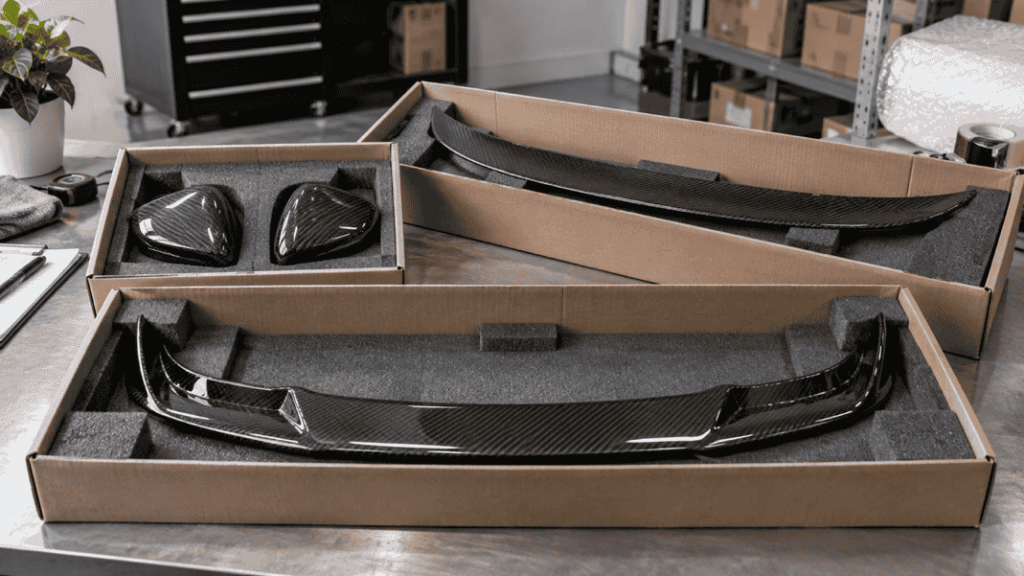
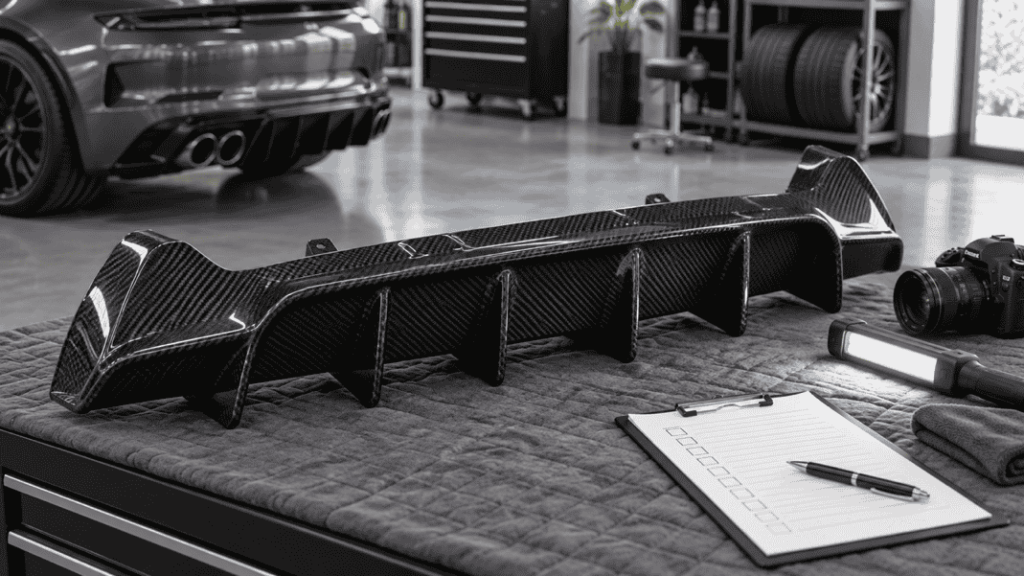
Do not return a carbon fiber part to saleable stock simply because it came back in its original box. First confirm identity, document condition and decide an authorized disposition. For distributors and online sellers, the key control is a separate returns status that prevents an unresolved item from being picked for the next buyer.
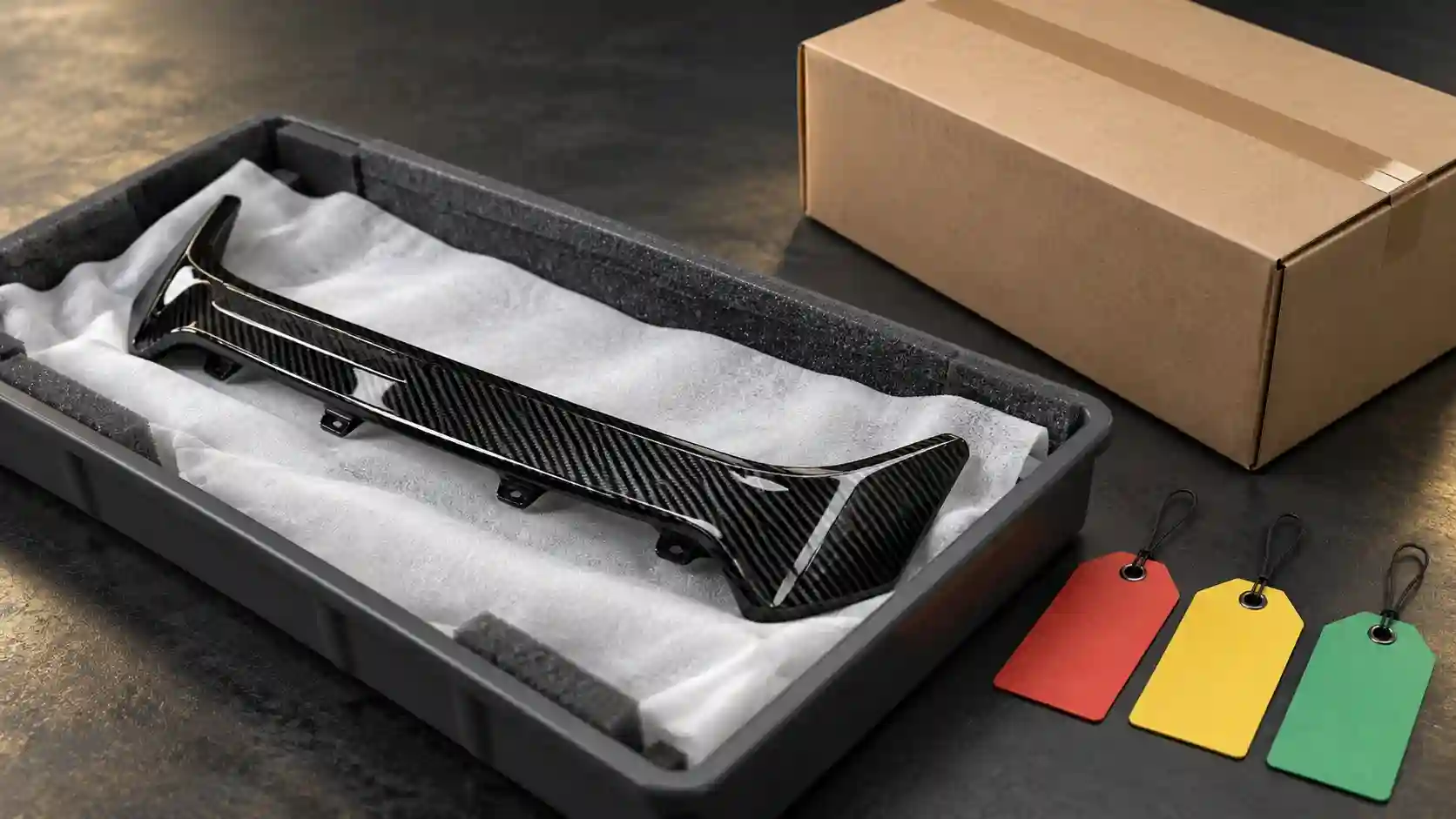
Separate customer service from inventory release
A refund discussion and a restocking decision answer different questions. Your customer-service team may need to review an order while the warehouse determines what arrived back. Neither process should automatically change the item’s stock status.
Create a return reference linked to the original sale, product version and expected contents. Record the stated reason without treating it as a proven cause. “Customer reports fitment concern” is a useful starting description; “factory defect” may require further assessment.
Use a receiving area for returns
Keep returned goods apart from new arrivals and approved inventory. Photograph the package before opening and the contents as received. Retain the packaging if there is a damage question. Count separate pieces and hardware against the original supply record, not against an attractive listing image.
| Check | Record | Hold if |
|---|---|---|
| Identity | SKU, version, labels and order reference | The returned item cannot be matched to the sale |
| Completeness | Parts, brackets and supplied accessories | A component is missing or cannot be identified |
| Surface condition | Overall views, close-ups and packaging contact marks | There are unexplained marks or a finish concern |
| Installation history | Visible adhesive, altered holes or other reported work | Use or modification requires assessment |
| Disposition approval | Named reviewer, date and next action | No authorized decision has been recorded |
Do not improve the appearance before recording it
Cleaning, removing adhesive or refinishing can change evidence about the returned condition. Record first and agree any further work with the responsible reviewer. If technical assessment is necessary, the receiving team should not improvise a repair to make the item look saleable.
Handle unidentified residues or damaged attachments as reasons to pause, not as instructions to apply a stronger solvent or new fasteners. Product-specific guidance should determine what inspection or remedial work is appropriate.
Choose a disposition your team can explain
- Hold for information: identity, condition or return eligibility is unresolved.
- Technical review: a qualified person needs to assess damage, modification or suitability.
- Approved stock release: the authorized process has confirmed the item’s condition and appropriate sales status.
- Return to supplier or other disposition: follow the confirmed instructions and retain the record.
These are suggested operational states. They do not establish a legal return policy, a quality grade or permission to resell an item as new. Any resale description must accurately reflect its condition and the requirements applicable to your business.
Keep pairs and kits traceable
A returned pair can contain one original part and one replacement, or one piece may be absent. Do not create a new pair from two unrelated returns without a reviewed match. The components may differ in version, finish or supplied hardware even when their general shape looks similar.
If an accessory is missing, identify the approved replacement before closing the return record. A generic bolt or an unverified adhesive strip is not automatically equivalent to the original fitting arrangement. Record any authorized change to the contents.
Coordinate with the supplier before shipping goods back
CCF’s return and refund policy asks buyers to contact CCF before returning or disposing of a disputed product. A warehouse receipt or a customer complaint is not, by itself, confirmation of a covered supplier claim.
Send the original order reference, the reported issue and the receiving evidence. Ask for the next step and keep supplier instructions in the same record. If the matter concerns your customer’s change of mind or an ordering error, distinguish that from a confirmed manufacturing issue.
Measure the reason, not only the number of returns
Use a small set of factual reason categories: wrong version ordered, incomplete contents, transit concern, reported fitment issue and other review required. After the investigation, update the record with the confirmed outcome. This can show whether the useful improvement is better listing data, packing, picking or technical information.
For example, repeated left/right confusion should trigger a labeling review rather than a broad conclusion that the supplier’s products are defective. Use the evidence to fix the specific process.
Worked return-disposition example
Use this record as a buyer working tool. Examples and sample labels below are illustrative, not CCF inspection, order or test records.
| Record | Example or required entry |
|---|---|
| Arrival | Returned mirror-cap pair enters hold status, not saleable stock. |
| Review | Reference, both pieces, contents and condition are checked against the order record. |
| Disposition | Authorized reviewer records saleable, further assessment or another permitted route. |
A returned item that looks clean can still have missing contents or uncertain history. Keep the disposition and supporting record traceable; never let an automatic refund workflow automatically restock the part.
For the connected decisions, use Best Practices for Storing Carbon Fiber Body Parts in a Parts Warehouse and How to Compare Carbon Fiber Parts Warranties Before Buying for Resale.
Distributor questions
Can an opened box go straight back into stock?
No automatic release is appropriate. Identity, contents, condition and the permitted sales status need review.
Can I reuse returned packaging?
Only when it remains suitable for the item and intended handling. Preserve relevant claim evidence before making that decision.
What should I agree before buying for resale?
Clarify the supplier’s current support route and your own return-handling responsibilities, especially when goods go directly to an end customer.
Clarify the Return Route Before Ordering
Send your intended product range and sales model. Discuss the current support route and the records required if a supplied item needs review.
Send an Inquiry
Include this article title, your product reference, vehicle details and the question you need resolved.