CARBON PARTS WORKSHOP SERIES · 07
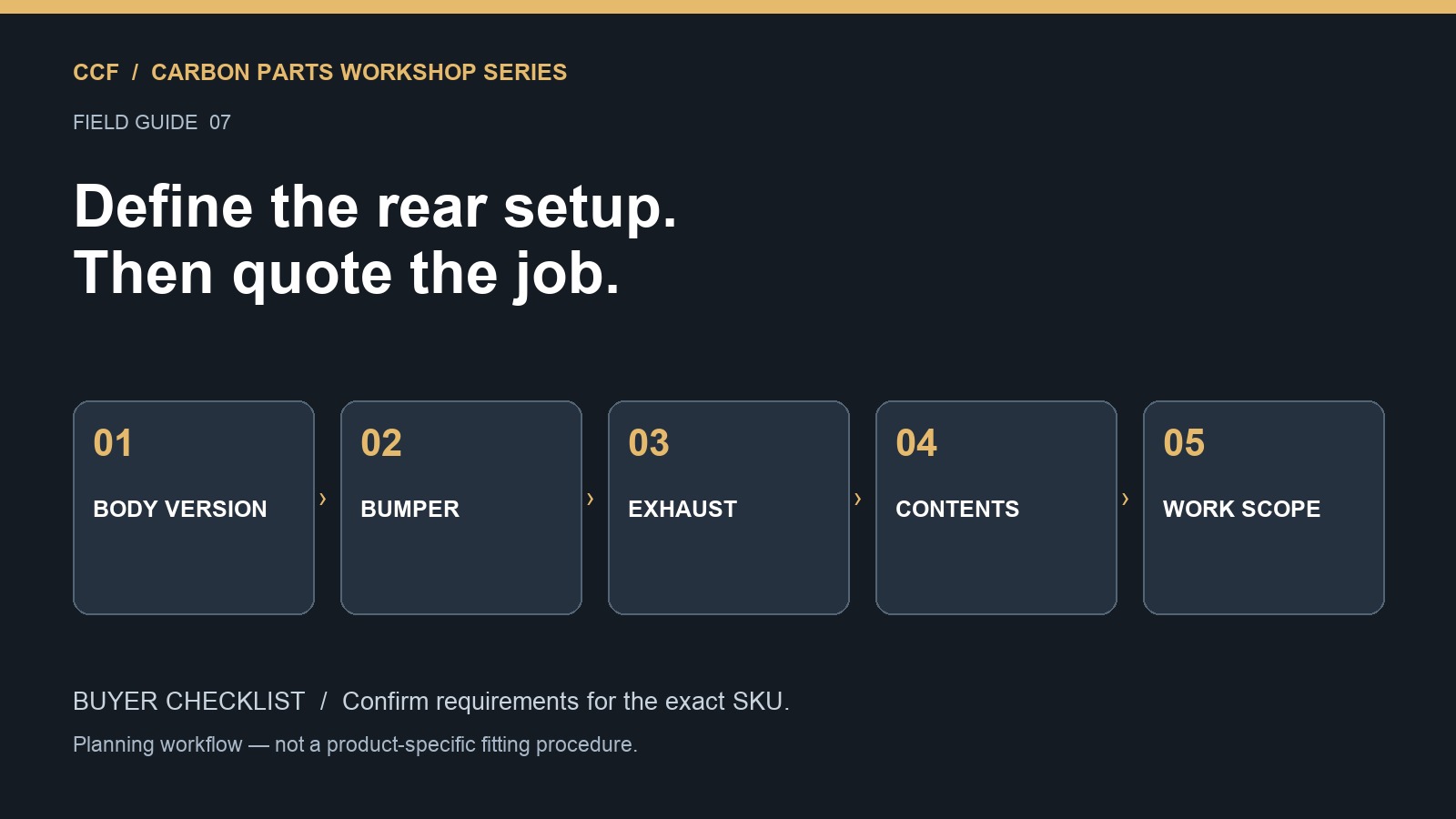
Before approving a BMW G14/G15 carbon diffuser order, establish the exact bumper and exhaust configuration, the supplied package and the work required for that product. A generation code and a rear-view photograph are not enough to establish a complete installation scope.
This Carbon Parts Workshop Series guide helps tuning shops and trade buyers ask the right questions before quoting a customer. It does not confirm availability of a particular CCF SKU or provide a fitting procedure for an unidentified diffuser.
Define the vehicle before comparing the design
Record the body version, model year, market, bumper specification and existing rear modifications. Keep G14 and G15 information explicit in the enquiry rather than reducing the application to “8 Series.” Do not extend a guide covering these codes to G16 or an M8 application without separate confirmation.
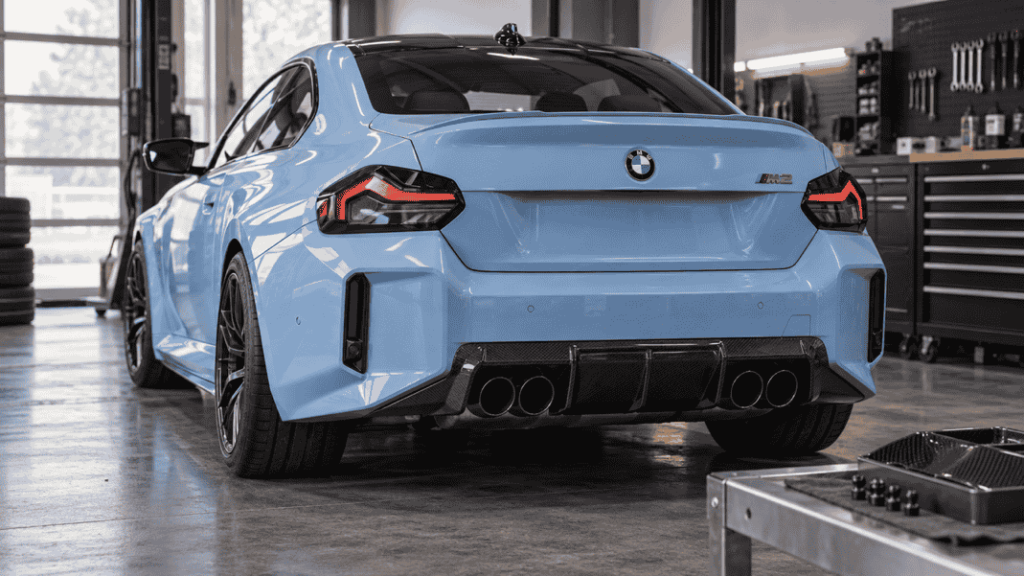
Request photographs of the rear bumper, exhaust outlets and relevant underside areas. Ask whether the car retains its original exhaust arrangement, has different tips or has had bumper repair work. The purpose is to describe the actual starting point, not to diagnose compatibility from images alone.
A product-specific example of configuration dependency
AC Schnitzer’s G14/G15 diffuser fitting document, part 5112 315 510, specifies configuration conditions involving the M aerodynamic package and its exhaust system, and excludes use with a towing attachment. This illustrates that a diffuser can belong to a defined installation combination rather than being an independent styling replacement.
Those conditions belong to that AC Schnitzer product and document. They are not universal restrictions for every G14/G15 diffuser, nor approval of a CCF equivalent. Ask the supplier to identify the requirements of the exact part being offered. Do not transfer the document’s operations, time allowance or approval statements to a different product.
Separate four interfaces in the enquiry
| Interface | Information to establish | Why the shop needs it |
|---|---|---|
| Bumper to diffuser | Confirmed bumper application and intended attachment arrangement | To identify whether the offered part matches the customer’s starting configuration |
| Diffuser to exhaust | Required outlet arrangement and any specified exhaust dependencies | To prevent a styling order from concealing a separate exhaust project |
| Diffuser to supplied package | Assembly pieces, mounting items and separately required components | To distinguish a complete quoted assembly from one visible section |
| Product to workshop | Applicable instructions and unresolved preparation requirements | To price the actual work instead of a presumed replacement procedure |
A clear answer links each interface to the quoted SKU. A general statement such as “fits the model” does not explain whether an exhaust change, additional component or different bumper application is part of the offer.
Do not hide an exhaust question inside the fitting price
If the proposed diffuser requires a different rear arrangement, list that as a separate scope item for review. Ask who is supplying the necessary parts and who is responsible for assessing the combination. Do not promise that adjusting an existing outlet is a suitable solution without the relevant product information and installer assessment.
The customer should be able to distinguish the diffuser price from a separate exhaust-related task. Our installation quotation framework helps make conditional work explicit. It is preferable to identify an unresolved dependency before purchase than to present it as an unexpected extra during installation.
Confirm the assembly and what is delivered
Ask whether the quote covers a complete diffuser or a center, corner or surround component. Request a list of supplied mounting items and any separately purchased materials required by the intended procedure. If a lighting feature is pictured, clarify whether it is included and whether it creates an additional installation scope.
For remote sample approval, request backside photographs and clear views of the connection areas. Use the remote sample review guide to organize those views. Do not treat a finish photograph as evidence that the attachment package is complete.
Build a conditional quote that the customer can understand
State the selected product and finish, the application information supplied, the included parts and the work being priced. Identify conditions that still need the installer’s review. If the vehicle must be inspected before a firm estimate is possible, describe the information that inspection will resolve.
For example, a hypothetical enquiry might identify the correct body code but disclose an aftermarket exhaust only after the diffuser is selected. Reopen the exhaust interface question before finalizing the order. Do not assume either that the part will fit or that it will fail; establish the relevant requirements first.
Use receiving checks to confirm the agreed scope
When the shipment arrives, compare the labels and contents with the accepted quote. Record the condition of the visible and mounting areas. The sample inspection checklist helps distinguish a cosmetic concern, missing item and unresolved application question.
If the delivered product differs from the reference used for approval, document the difference and seek clarification before altering it. The fitment issue evidence guide provides a structure for that request. Receiving inspection does not replace the installer’s assessment under the correct instructions.
Buyer questions
Does a G14/G15 label mean the part fits every rear configuration?
No. Confirm the bumper, exhaust and other relevant conditions for the quoted SKU.
Should I use the AC Schnitzer instructions for another diffuser?
No. They are a reference for the identified AC Schnitzer product. Request the information applicable to the part you are buying.
Can I advertise a complete kit before receiving the packing list?
Define the contents first. “Complete” should refer to a documented package, not everything visible in a reference photograph.
Request a scope review before placing the trade order
Send CCF the vehicle details, rear and underside photographs, existing exhaust information, preferred diffuser reference, quantity and destination. Ask whether a suitable product is available and which application, supplied-content and installation details can be confirmed before your workshop prices the job.
Editorial reference check: 18 October 2026. Referenced manufacturer documents apply to their identified products. Confirm CCF SKU requirements separately.