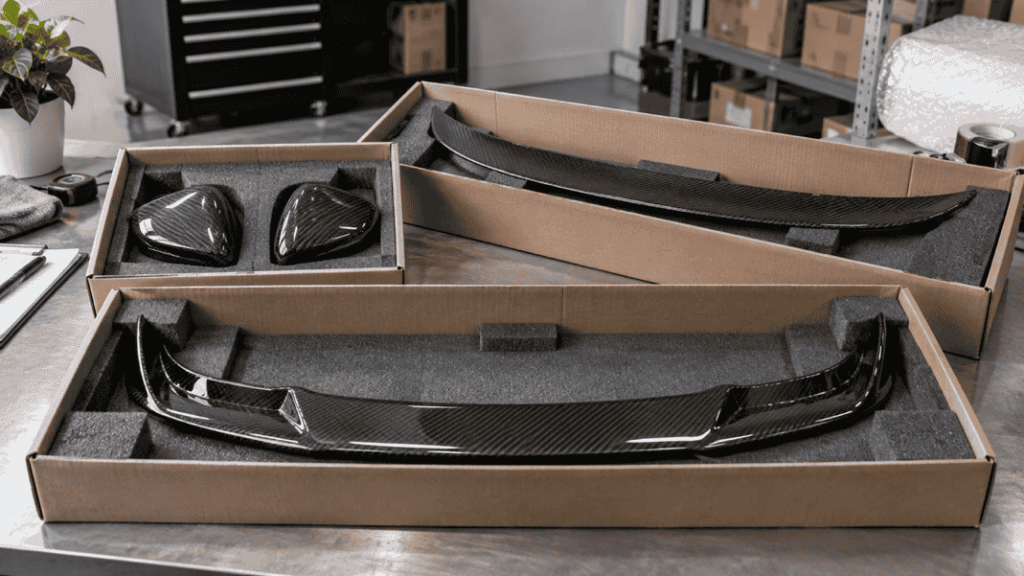
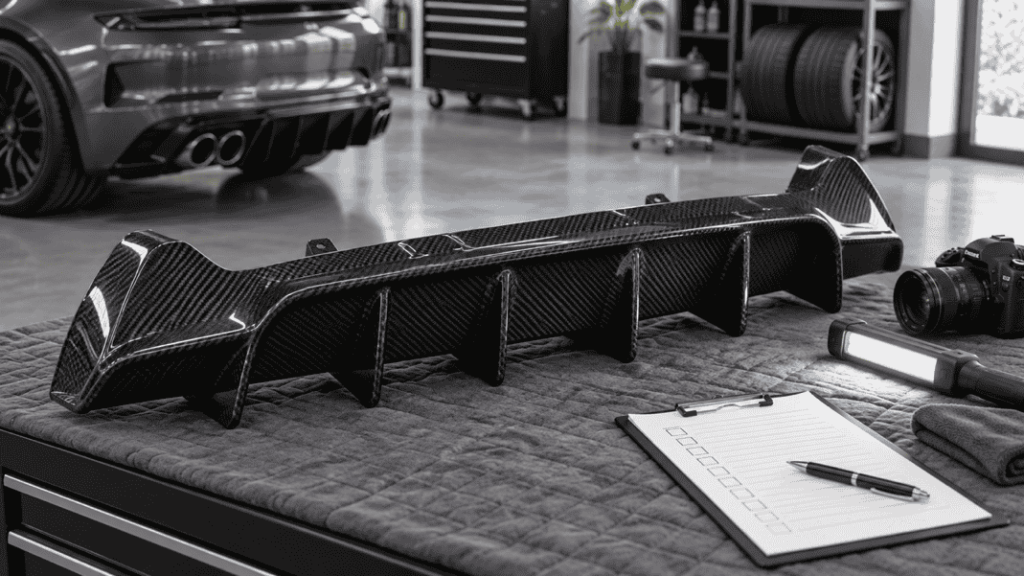
Choose a 3PL for carbon fiber hoods and body kits by testing its ability to receive, store, pick, dispatch and process returns for your actual packed products. A warehouse that handles ordinary parcels well may not offer the same service for long, awkward or appearance-sensitive components.
Do not start with a generic fulfillment price. Send a representative product profile, obtain written service limits and compare the complete operating scope. This guide helps you evaluate providers; it does not rank unverified warehouses.
Prepare a representative product profile
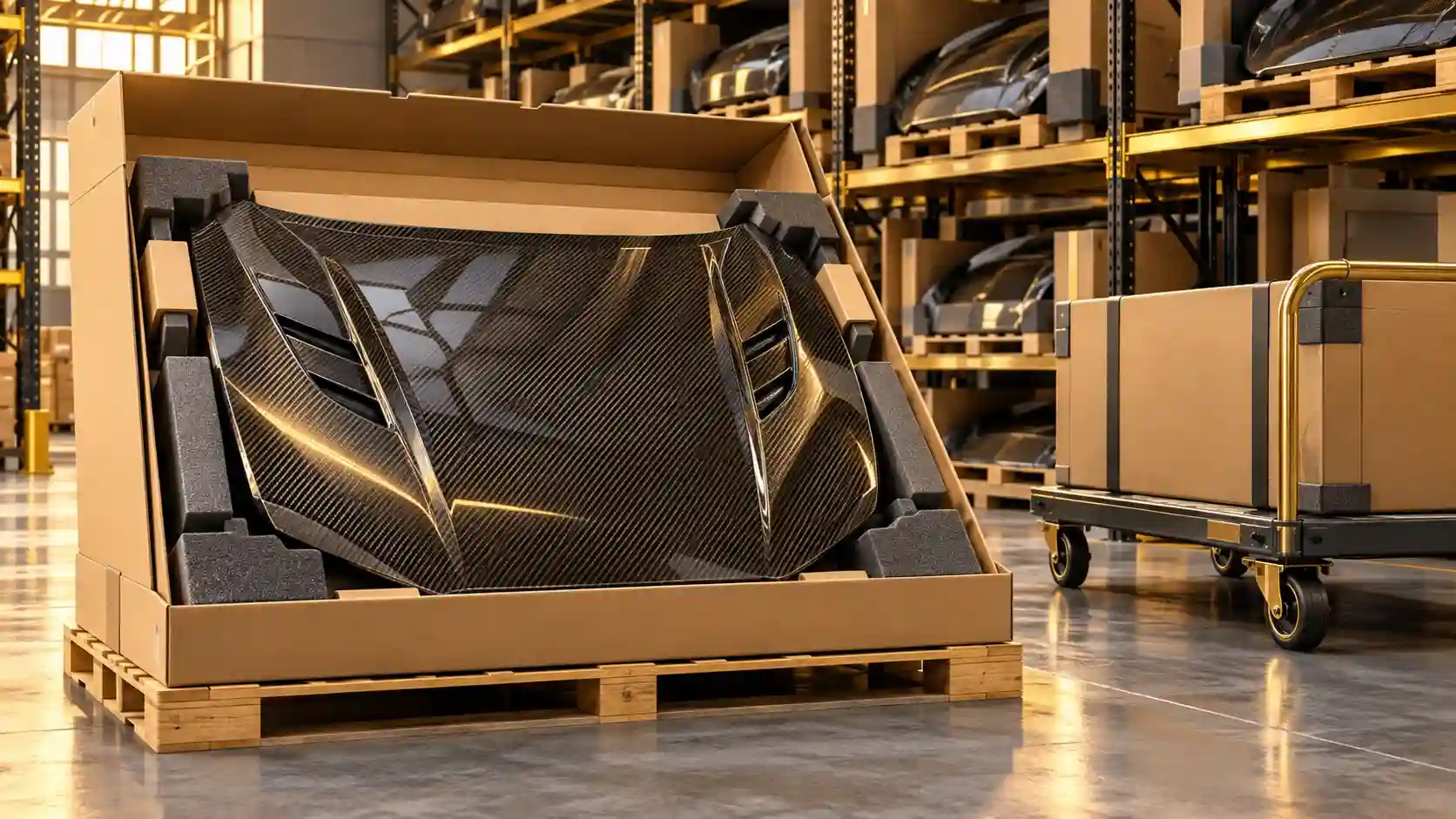
Provide actual packed dimensions and weight for the selected references, photographs of the protective packaging, handling information and expected order patterns. Distinguish individual cartons from multi-carton sets. Describe whether orders contain one item or mixed components.
If the packaging is still under development, mark the figures as provisional. A quote based on guessed dimensions can change significantly when the goods arrive. Ask the supplier for current packing information before requesting a binding warehouse proposal.
Compare services on the same basis
| Service | Question for the 3PL |
|---|---|
| Receiving | Can you accept these dimensions and document visible arrival damage? |
| Storage | How will the packed parts be supported and separated? |
| Picking | How will similar versions and multi-piece units be checked? |
| Dispatch | Will original protective packing be preserved or changed? |
| Returns | Can you isolate returned parts and provide agreed photographs? |
| Exceptions | Who decides whether an item is released, held or escalated? |
Ask for the complete fee schedule
Compare receiving, storage, picking, oversized handling, packaging materials, return inspection and exception work. Ask how minimum charges, long-stay storage and disposal requests are handled. Obtain the provider’s actual terms rather than assuming these services are included.
Use a sample month based on your expected mix of stock and orders. Include a return and an exception in the scenario so the comparison does not cover only the easiest transaction. Label forecast volumes as assumptions and test an alternative volume before committing.
Keep transport charges and warehouse services identifiable in the quote. Otherwise, a lower headline fulfillment fee may hide a different delivery or packaging scope.
Review handling before sending inventory
Request a description or demonstration of the intended storage and movement process for your packed items. Confirm whether any stacking or repacking is proposed and whether it is consistent with the product’s handling requirements.
Agree what receiving photographs establish. External carton photographs can document arrival condition, but they do not prove every concealed surface is undamaged. If opening inspection is required, define the handling, photograph set, repacking method and charge.
Ask how unidentified or damaged goods are isolated. The warehouse should have an agreed escalation route rather than making an unsupported decision to repair, discard or restock your product.
Run a controlled pilot
- Choose a small set representing your largest and most easily confused references.
- Confirm labels, packing information and service instructions.
- Review receiving records and stock visibility.
- Place a representative dispatch order.
- Review a planned exception or return workflow before scaling.
Agree success criteria in advance: correct identity, preserved packaging, timely records and accurate charges, for example. These are buyer-defined criteria, not universal industry thresholds.
Clarify responsibility for claims and available insurance with the provider and your adviser where needed. Do not assume a warehouse agreement automatically covers every type or value of loss. Keep the commercial agreement alongside the operational instructions.
A comparable warehouse quotation scenario
Use this record as a buyer working tool. Examples and sample labels below are illustrative, not CCF inspection, order or test records.
| Record | Example or required entry |
|---|---|
| Stock profile | Provide actual carton dimensions, weights and number of stored units by reference. |
| Ordinary month | Ask each provider to price the same assumed receipts and dispatches. |
| Exception | Add one oversized return requiring isolation, agreed photographs and repacking. |
Keep forecast volumes visibly labeled as assumptions. Compare service inclusions and exception charges before ranking the total; a low headline pick fee is not a complete offer.
For the connected decisions, use Best Practices for Picking Similar-Looking Carbon Fiber Parts in a Warehouse and How to Decide When to Stop Stocking a Carbon Fiber SKU.
Buyer FAQ
Can a normal parcel warehouse handle body kits?
Possibly, but only a review of its actual limits and handling process can establish whether it suits your packed products.
Should the 3PL inspect fitment?
Do not assume that service. Warehouse identity and condition checks are different from a vehicle-specific fitment evaluation.
What should I request from the parts supplier?
Request current packing dimensions, weight, sales-unit details and available handling information for the exact references you plan to store.
Get Packing Information for Your Warehouse Review
Send the references and planned quantities. Request current packed dimensions, weight and available handling information for your 3PL comparison.
Send an Inquiry
Include this article title, your product reference, vehicle details and the question you need resolved.