A useful carbon fiber UV-resistance report identifies the specimen, exposure method, conditions, evaluation criteria and result. A certificate image or an exposure-hour number alone does not establish how a finished automotive part will look after years outdoors.
For B2B buyers, the goal is to match evidence to the product and the claim. You do not need to become a laboratory engineer to notice when a report concerns a different coating, an unidentified coupon or a test without an agreed acceptance criterion.
Start with the specimen
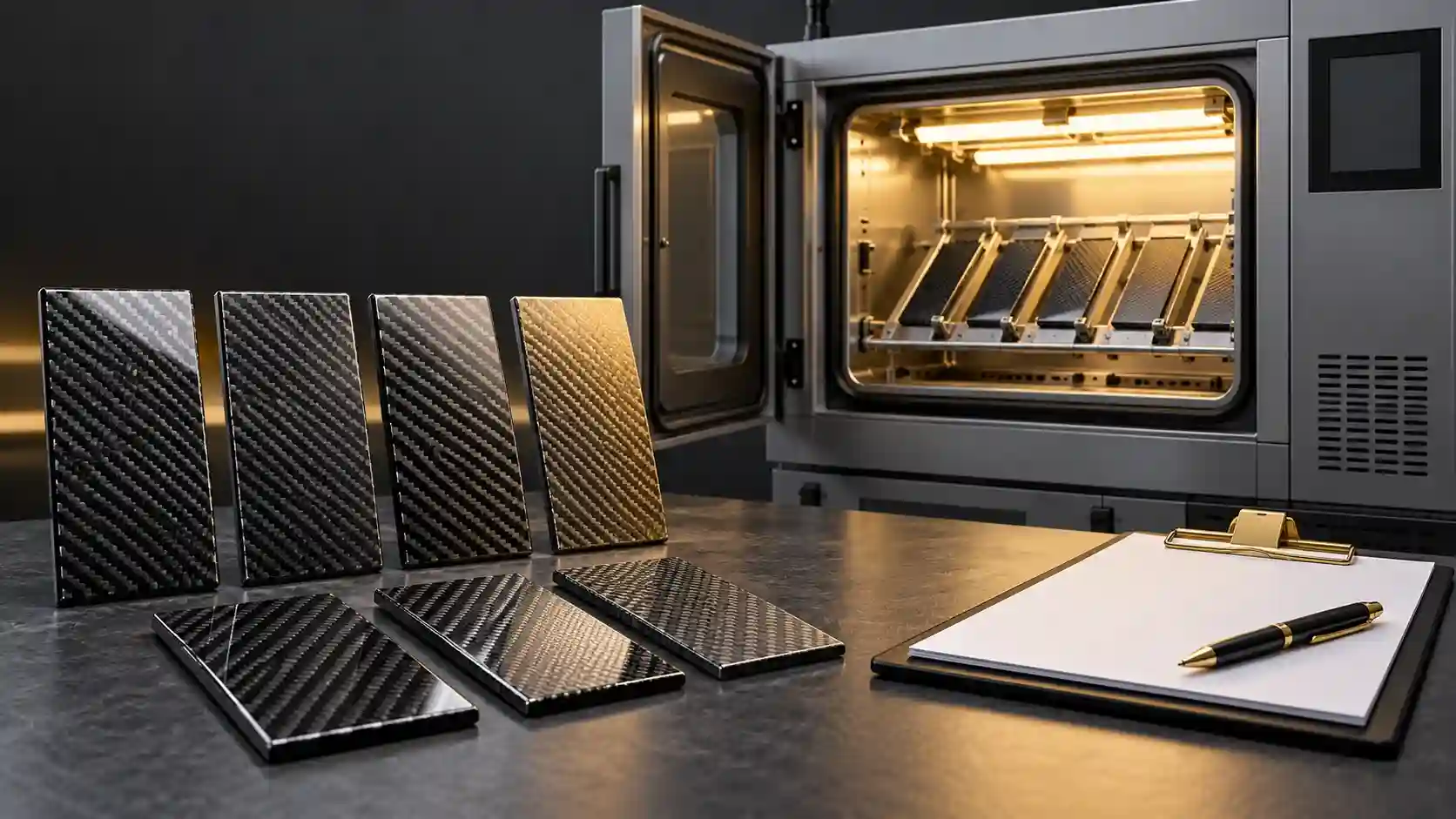
Check whether the tested item was a coating coupon, a laminate sample or a finished part. Record the substrate, coating system and preparation information available in the report. Ask how that specimen relates to the product you intend to buy.
A coating supplier’s report may be useful background, but it does not automatically validate every finished component using a similar description. Changes in materials or processing may require review by the relevant technical specialist.
Read the report in this order
| Field | Question to resolve |
|---|---|
| Identity | Who issued the report, when, and for which specimen? |
| Method | Which test method and applicable version are stated? |
| Exposure conditions | What light source, cycle, temperature and moisture conditions were used? |
| Duration | How long was the exposure and were there interruptions? |
| Evaluation | How were appearance or other changes measured? |
| Acceptance | What limits were agreed, and did the specimen meet them? |
| Applicability | What connects this specimen to the ordered product? |
Do not convert laboratory hours into outdoor years
Q-Lab explains that there is no universal conversion from accelerated exposure hours to years outdoors. Material, test conditions and real exposure affect the relationship.
Therefore, “tested for 1,000 hours” should not become “guaranteed for five years” by applying an invented multiplier. Those numbers are illustrative here, not CCF test results. Any service-life interpretation needs relevant supporting evidence and clearly defined scope.
Also distinguish an exposure procedure from a pass/fail requirement. Naming a method does not by itself tell you what amount of color change, gloss change or other deterioration the buyer agreed to accept.
Ask for results you can interpret
A useful report shows the evaluation method and actual observations or measurements. If a color or gloss result is quoted, ask for the measurement conditions and acceptance limits. Do not compare numbers from differently defined procedures as though they were interchangeable.
Before using before-and-after photographs, check whether the lighting, camera settings and presentation support a fair comparison. Images can illustrate a result, but they should not replace a documented measurement where the claim is quantitative.
If the report is incomplete, send a focused request: “Please identify the tested coating and specimen, exposure conditions, evaluation method and acceptance criterion.” That is more productive than asking for a generic “UV certificate.”
Turn evidence into controlled product copy
Use narrow wording tied to the actual report, such as a description of the tested specimen and exposure result. Avoid expanding a coating test into claims about fitment, impact resistance or every product in the catalog.
Keep the report reference with the product record and note which claims it supports. When the finish or construction changes, ask whether the evidence remains applicable. Your dealer network should receive the same approved wording instead of inventing stronger statements from a shortened screenshot.
For an initial order without a relevant report, you can still discuss appearance and supplied specifications. Keep unsupported long-term performance claims out of the listing until the appropriate evidence is available.
Worked example: a report that needs clarification
Use this record as a buyer working tool. Examples and sample labels below are illustrative, not CCF inspection, order or test records.
| Record | Example or required entry |
|---|---|
| Document received | An exposure-hour figure and a photograph labeled “passed.” |
| Still missing | Specimen identity, exposure conditions, evaluation method and the agreed acceptance criterion. |
| Buyer response | Request those fields and the link between the tested specimen and the proposed product. |
This fictional report excerpt is intentionally incomplete. It cannot support a service-life promise. Use the same review even when the report looks professionally formatted; presentation does not establish applicability.
For the connected decisions, use How to Compare Full-Carbon and Fiberglass-Backed Automotive Parts and Gloss or Matte Carbon Fiber: How to Choose for Customer Builds.
Buyer FAQ
Does “UV-resistant clear coat” mean it cannot change appearance?
No absolute lifetime conclusion follows from that phrase. Ask what performance is supported, under which conditions and for which coating.
Is a longer test always better?
Not without context. Different methods, cycles and evaluation criteria cannot be ranked solely by elapsed hours.
Does CCF have a report for every part?
This article does not make that claim. Request the available product-specific documentation and assess its scope before repeating a durability statement.
Request the Available Finish Evidence
Send the product reference and the claim you need to evaluate. Request relevant finish documentation and clarify how it applies to that component.
Send an Inquiry
Include this article title, your product reference, vehicle details and the question you need resolved.