CARBON PARTS WORKSHOP SERIES · 04
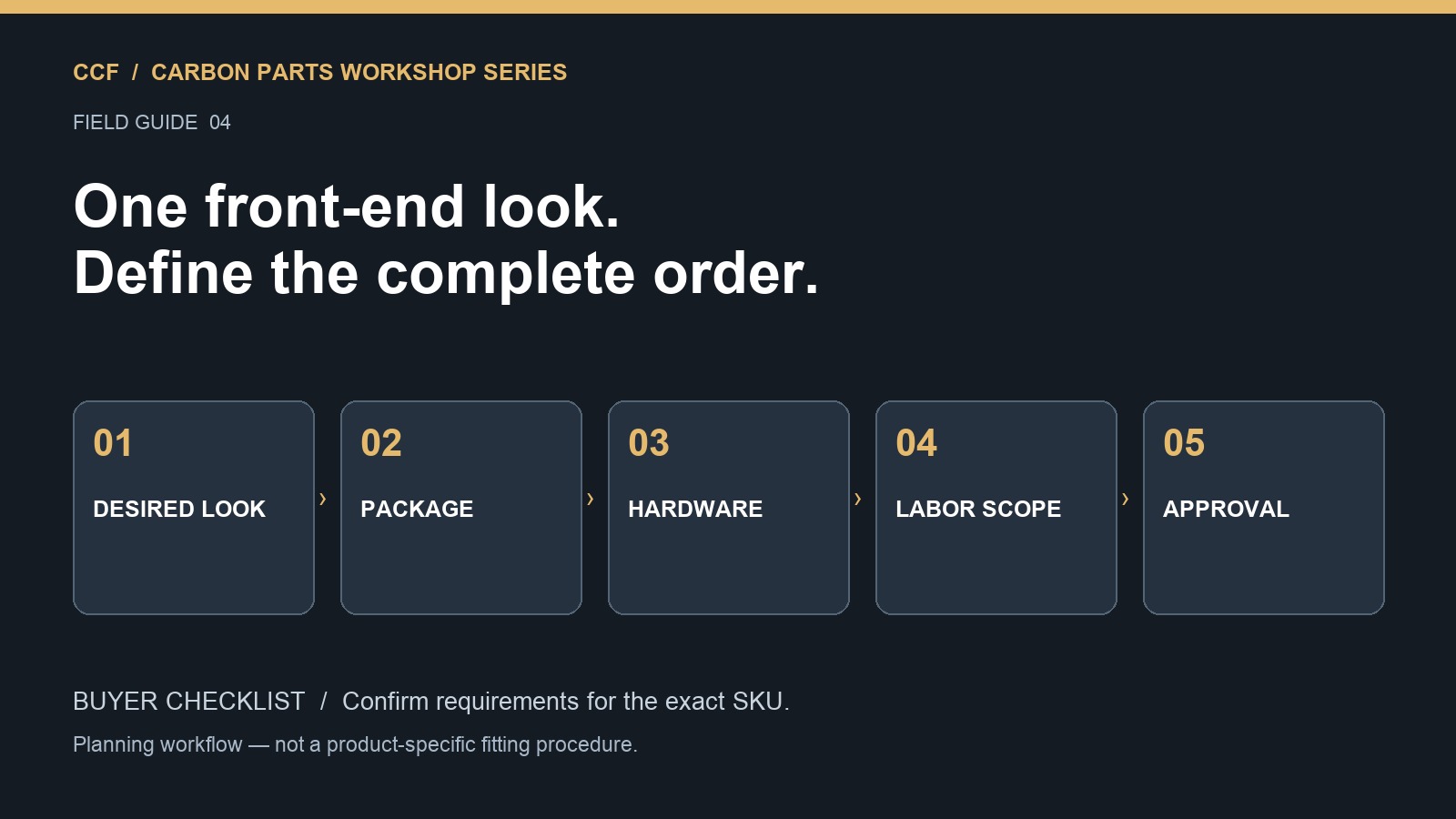
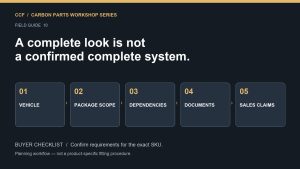
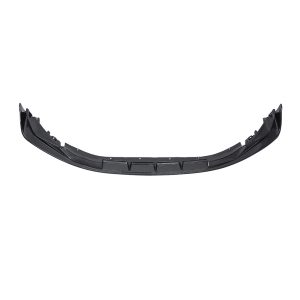
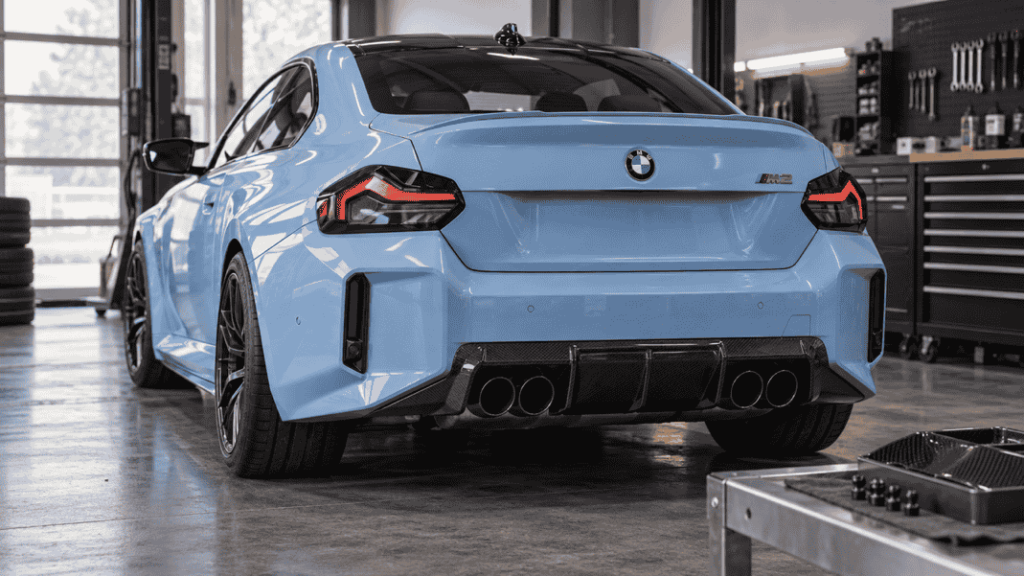
Before ordering an F80 M3 or F82 M4 front lip package, identify exactly which visible pieces, mounting components and installation tasks the quote includes. “Front lip,” “splitter” and “full front kit” can describe different packages. A photograph of a finished car is not an itemized offer.
This Carbon Parts Workshop Series guide helps tuning shops and distributors define a complete customer order. The focus is the commercial and workshop scope, rather than choosing a style or providing a universal fitting procedure.
Separate the desired appearance from the product list
Start with the customer’s reference image, then annotate which pieces they expect to receive. Ask the supplier to identify each quoted component by SKU and explain whether pictured items are sold separately. A lower splitter, corner attachments or support components should not be presumed included because they appear in the same photograph.
Record whether the vehicle is an F80 or F82, along with the bumper specification, existing accessories and modifications. If the request involves an F83, obtain separate confirmation rather than extending an F82 quotation automatically. The F80/F82 build planning guide helps organize the wider exterior package; this checklist defines the front-end order within it.
Why a lip-only order can differ from a lip-and-splitter order
Turner Motorsport’s F8x front lip and splitter installation guide distinguishes its lip-only purchase from its combined lip-and-splitter purchase. The latter includes a bracket-installation sequence. That distinction illustrates why the ordered configuration matters when reviewing instructions.
This is an example from Turner’s product system, not a statement about every F8x lip. It does not establish that CCF products share its brackets, mounting points or installation sequence. Request the contents and requirements for the actual CCF reference being quoted.
Make the supplier quote answer five questions
| Question | What the written offer should establish |
|---|---|
| What am I buying? | SKU, finish, revision where available, and quantity for each component |
| What does the sales unit contain? | One piece, a paired set or an identified assembly |
| How is the package supported? | Intended attachment system and the product-specific information available for installer review |
| What else is required? | Items supplied separately, reused components where specified, and unresolved requirements |
| What does the delivery price include? | Destination, shipping scope and the terms used for the quotation |
Keep these answers with the purchase order. If the supplier sends updated photographs later, check whether they show the same revision and contents. A conversation about a similar product should not silently replace the approved configuration.
Distinguish missing hardware from an unresolved specification
A missing component is one that was agreed but did not arrive. An unresolved requirement is something nobody has yet specified. Those situations need different responses. Ask for the missing item in the first case; ask for the intended installation requirements in the second. Neither should be solved by assuming an available screw or bracket is an acceptable substitute.
For sample orders, use the sample inspection checklist to record the delivered contents. Include reverse-side photographs and the supplier’s packing list. Cosmetic approval of the visible carbon finish does not approve the mounting system.
Price labor as a defined service
Give the installer the selected package information before asking for a firm labor estimate. Request a breakdown appropriate to the job: inspection, removal of existing accessories where relevant, preparation, installation under the applicable instructions and handover. Record anything conditional on inspecting the actual vehicle.
Do not transfer a competitor’s published fitting time into a guaranteed price for another product. Your vehicle may have previous repairs or accessories, and the supplied installation system may be different. The installation quotation framework helps explain those conditions without hiding them in a vague “extra labor may apply” sentence.
Compare two offers using the same scope
Consider a hypothetical quote A for a lip only and quote B for a lip, lower splitter and specified mounting package. A lower price for A does not establish that it is the better complete-build offer. First normalize the visible components, supplied installation items, delivery terms and documentation. Then ask the installer to assess the same requested result.
Use a comparison column labeled “unconfirmed” instead of assigning zero cost to an unknown requirement. That preserves the difference between a component genuinely included and one that has not been discussed. This is an illustrative buying example, not a price comparison between CCF and Turner.
Confirm whether future section replacement is possible
If the customer expects to replace a damaged lower section later, ask whether it is available separately and whether revision matching is necessary. A multi-piece assembly does not guarantee that each section will remain separately available. Record the answer without turning an initial enquiry into a lifetime spare-parts promise.
For distributors, retain the SKU and approved package images with the stock record. Your downstream installer may contact you months after the original purchase. The dealer product data guide explains why clear product identification matters after the first sale.
Buyer questions
Does “full kit” mean all fitting hardware is included?
Only if the written contents establish that scope. Ask what arrives, what must be purchased separately and which instructions apply.
Can I combine a lip from one supplier with a splitter from another?
Do not assume compatibility from matching vehicle labels. Have the proposed combination and mounting interfaces assessed before ordering; approval of each component independently does not approve the combination.
Can I guarantee a fixed installation price immediately?
Base any firm promise on a reviewed product and vehicle scope. Otherwise provide a clearly conditional estimate and identify what must be resolved.
Request a complete front-end quotation
Send CCF the vehicle details, bumper photographs, marked-up reference image, quantity and destination. Ask for an itemized package and the available mounting information. A clear scope lets your shop quote the customer’s intended result before committing to the order.
Editorial reference check: 18 October 2026. Referenced manufacturer documents apply to their identified products. Confirm CCF SKU requirements separately.