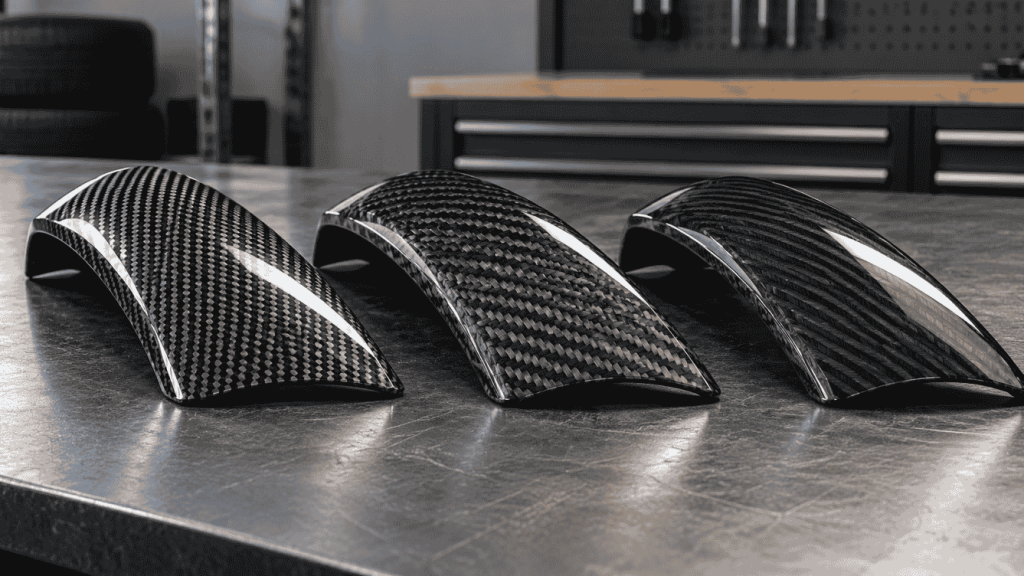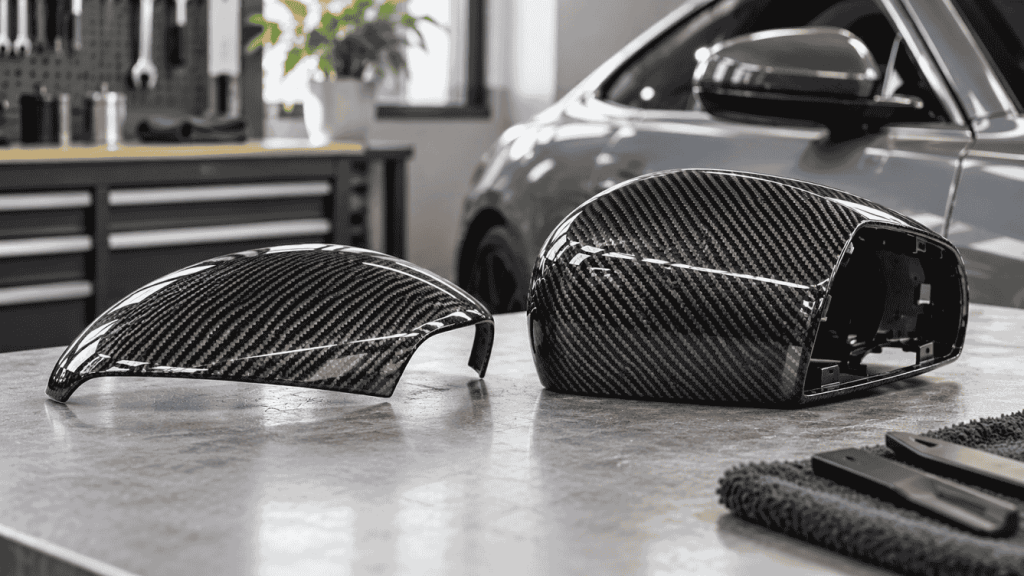
OEM-style and aggressive carbon fiber styling describe appearance goals, not verified quality or performance levels. Ask which shapes or areas the customer wants to change, then compare specific product references against the actual car and use case. OEM-style wording does not mean a part is supplied or approved by the vehicle manufacturer.
A customer asking for “something more aggressive” may mean a sharper front lip, a larger visible carbon area or a complete exterior change. Those requests lead to different purchases. A short visual brief prevents a small trim inquiry from becoming an unintentionally expensive bodywork proposal.
Define the customer’s words before showing a price
Use OEM-style to describe a design intended to resemble factory styling. It does not mean an aftermarket part is made by the vehicle manufacturer or has its approval. Likewise, race-inspired and aggressive describe a visual impression unless separate evidence supports a functional claim.
| Customer description | Translate it into a visible choice | Do not infer |
|---|---|---|
| Keep it close to stock | A restrained profile and limited visual change to the existing body lines | Genuine OEM manufacture or an automatic direct fit. |
| Make the carbon more noticeable | A larger exposed area or contrast with the body color | A different reinforcement system or lower weight. |
| Give it a sharper front end | Compare corner shapes, center profile and the complete front arrangement | More downforce from an angular appearance. |
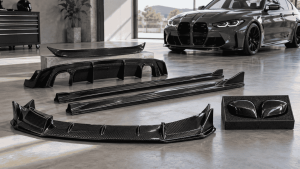
| Make the whole car look coordinated | Choose front, side and rear components together as a visual proposal | That adjacent catalog items form a tested kit. |
Compare the same part before comparing whole builds
Start with one position, such as the front lip. Use equivalent views of two candidates: a front or three-quarter view for appearance, a detached-part view for its boundary and an installed reference where an appropriate one is available. A close-up of one lip and a distant full-car photograph of another are a poor basis for judging visual prominence.
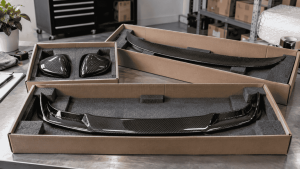
The two CCF references below show different G80/G82 front-lip presentations. One image lays out three separate sections; the other presents the lip in an assembled-looking arrangement. The photographs help identify the references, but their presentation alone does not settle the supplied assembly or rank one as more aggressive on a vehicle.
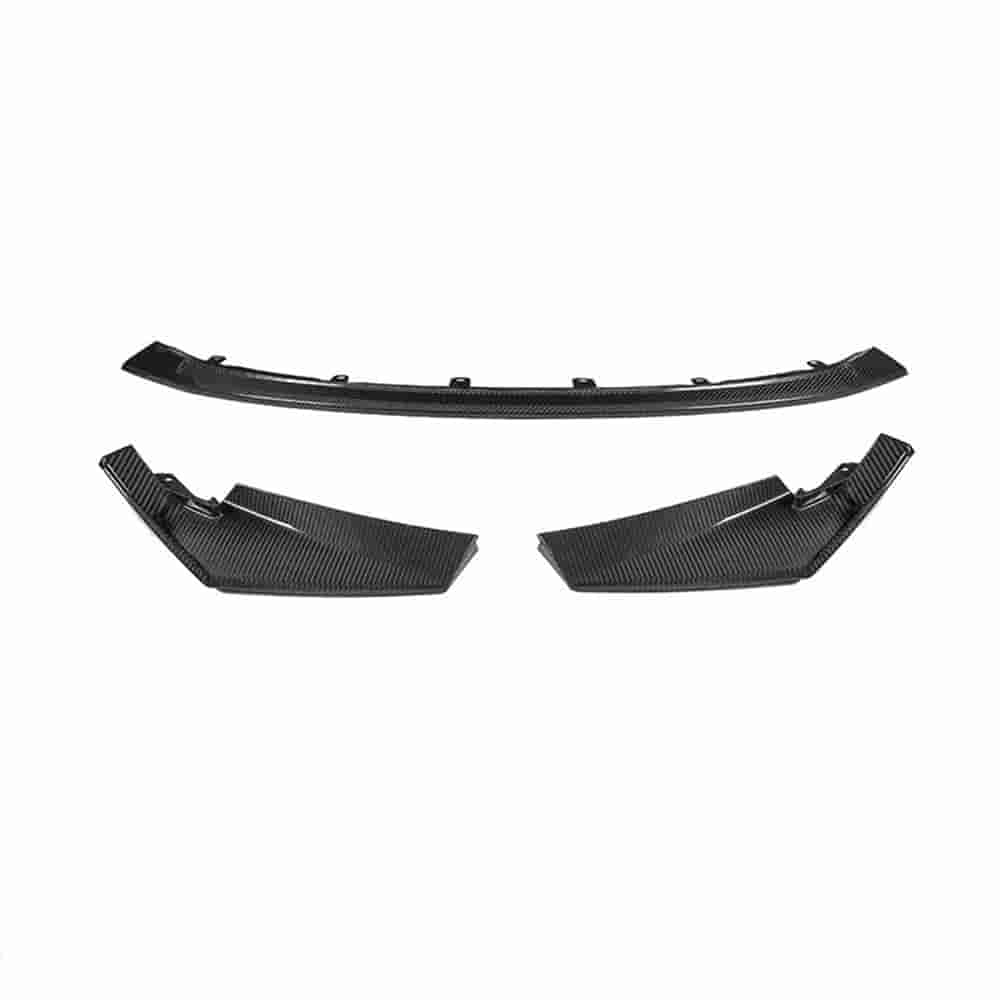
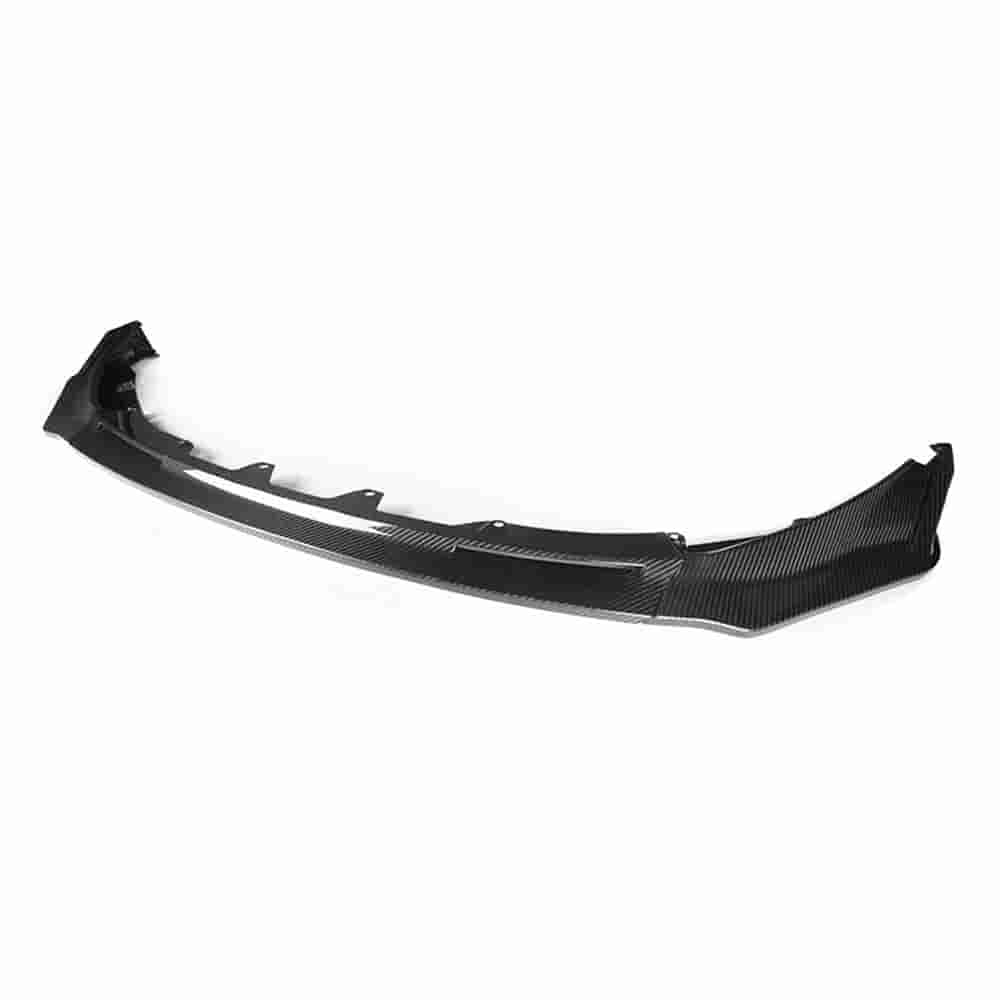
Use the three-piece CSL-style reference and the V-style reference as separate inquiry lines. Neither style name is a substitute for the customer’s actual bumper configuration.
A five-question styling brief a salesperson can use
- What should change first? Ask the customer to choose front, sides, rear or a complete exterior proposal.
- What should remain visually unchanged? Keeping the original rear appearance can be as important as changing the front.
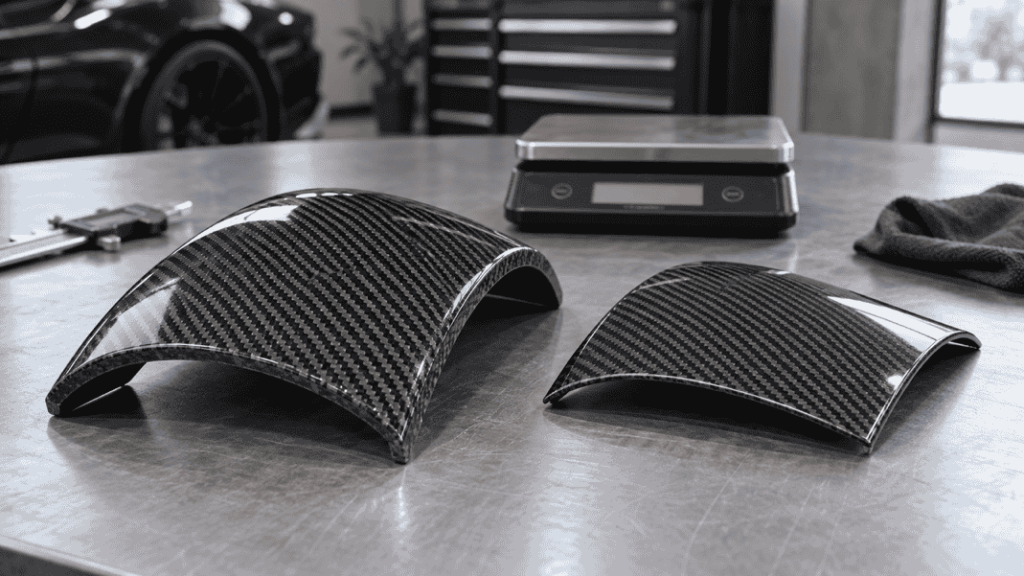
- How much carbon should be visible? Distinguish a small accent from a large exposed panel.
- Which reference image is closest to the goal? Circle the actual component rather than accepting the whole pictured car as the order.
- What is the complete spending boundary? Include the customer’s expectation for installation and finishing, not just the parts price.
Record the answers next to the selected photographs. A reference image becomes useful when everyone knows which visible pieces it represents and which parts of the image are only inspiration.
Show a restrained proposal and an expanded proposal
For an illustrative customer who wants a noticeable front-end change while retaining the rear appearance, show a selected front-lip proposal first. Put side or rear additions in a separate option rather than making them part of the base price. If the customer later wants a coordinated exterior, add those components visibly and explain what the extra scope changes.
This is not a rule that a front lip is always the cheapest first purchase. The appropriate starting point depends on the available reference, its required work and the customer’s goal. The purpose is to make the difference between proposals understandable.
A useful explanation is: “This proposal changes the front outline only. The expanded proposal adds the selected side pieces. Both require their own application review, and the expanded price includes only the extra components listed here.” That gives the customer a choice without claiming an unmeasured performance gain.
Separate a style recommendation from a technical promise
A photo can support a discussion about visible shape and finish. It cannot provide measured clearance, weight saving or aerodynamic performance. Where a car is lowered, use the clearance planning guide before turning the chosen appearance into a workshop commitment.
Keep material, included components and vehicle application on the selected product record. An OEM-style appearance does not establish original-equipment quality, and a dramatic profile does not establish suitability for track use. This separation helps the salesperson make a confident visual recommendation while leaving engineering questions with the appropriate evidence.
Buyer questions
Is aggressive styling always the more expensive choice?
No. Compare actual supplied contents, finish and project work. A subtle-looking large panel can have a different purchasing scope from a visually bold small trim piece.
Should a dealer call every low-profile design OEM-style?
Use the supplier’s accurate product description and explain the visible design. Do not invent an OEM affiliation or use a style label to expand the confirmed application.
What should a shop send after the customer picks a look?
Send the chosen product reference, the marked appearance image, actual vehicle details and the requested quantities. Separate optional components from the accepted shortlist.
Related selection and ordering guides
Continue Your Purchasing Research
Turn the chosen look into a clear quotation
Send CCF the two references your customer is considering and the parts they actually want. Request an itemized offer so you can explain the options with a defined scope instead of an assumed package.
Send an Inquiry
Include this article title, selected references, quantity and delivery country.