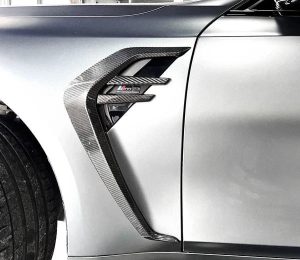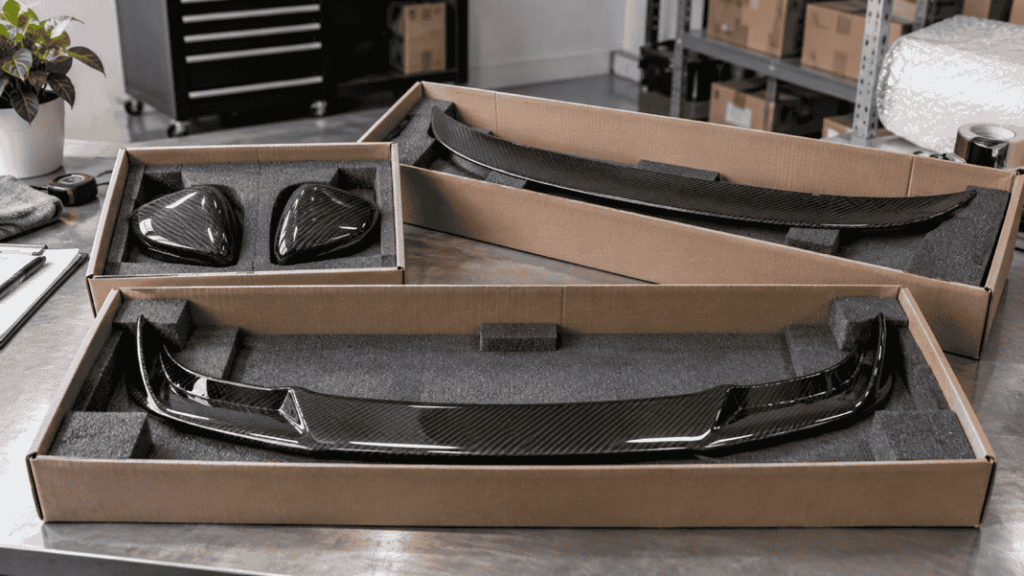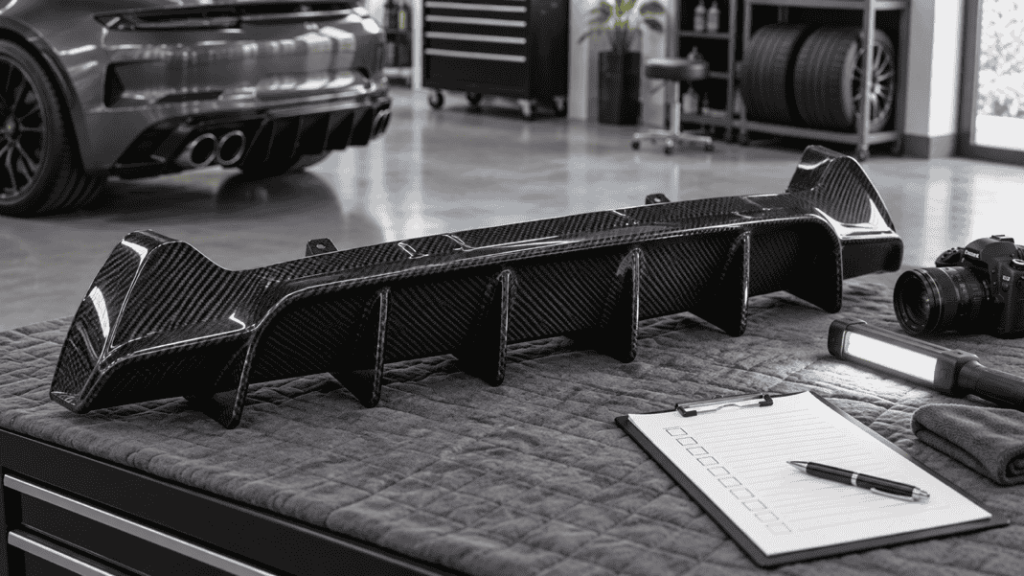
A carbon fiber fitment review is relevant when its product, revision and vehicle configuration can be compared with the intended order. Ask what work occurred before the finished photo and distinguish direct evidence from a broad customer impression. A positive review should not become an all-model fitment promise in a dealer listing.
For distributors, the risk is passing an ambiguous statement downstream as a firm fitment promise. For tuning shops, it is scheduling labor around a result that required undisclosed trimming, repairs or different components. The goal is not to distrust every review. It is to give each piece of evidence an appropriate role in the buying decision.
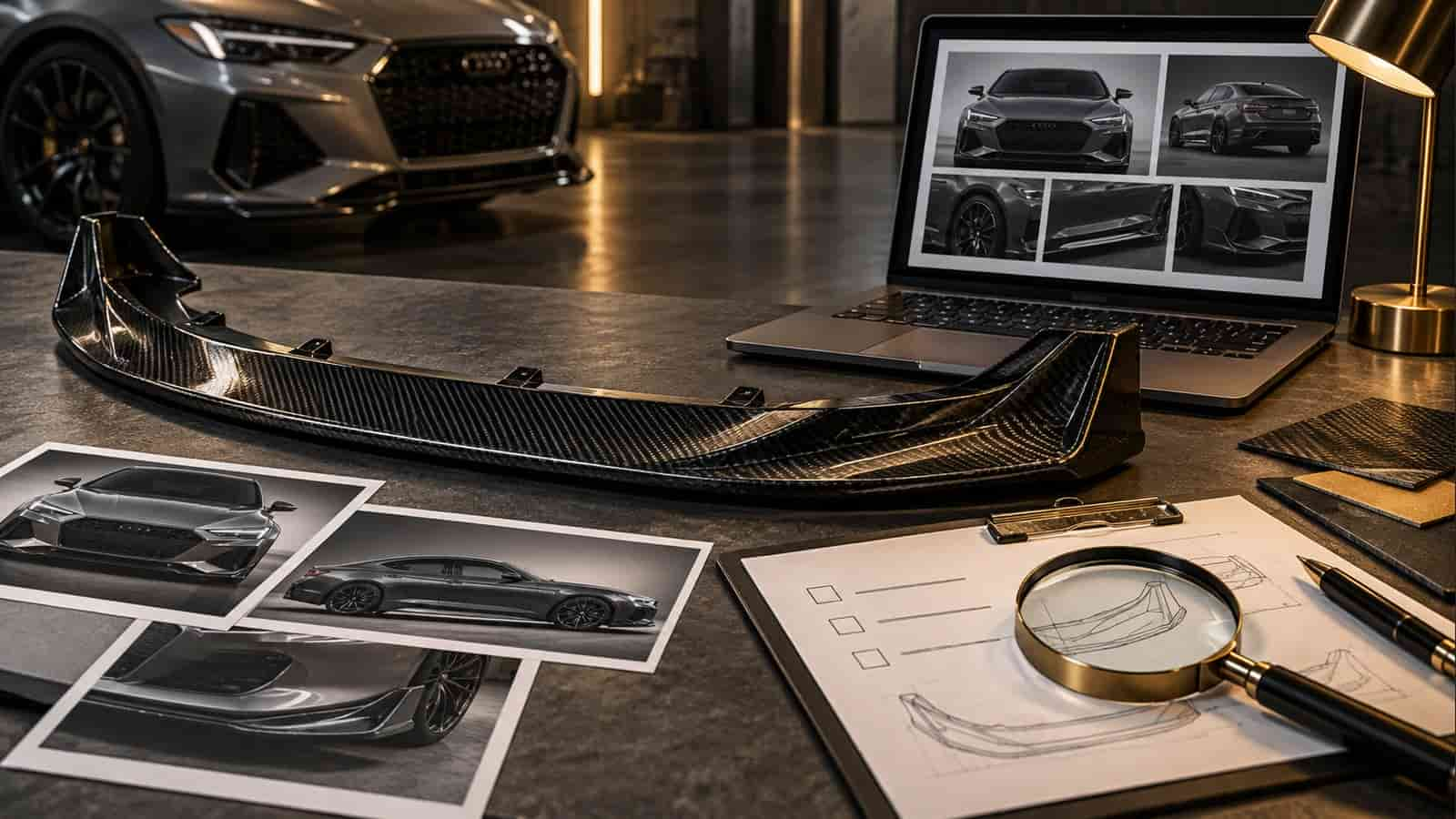
Separate three questions that often get mixed together
First, is the review traceable to a real source? Second, does it describe the same product version and vehicle configuration? Third, does it show that the installation conditions meet your requirements? A review can be authentic but irrelevant to your order. A photograph can accurately show a finished build without proving a straightforward installation.
For example, an authentic image of a coupe does not establish fitment on a visually similar convertible. A front lip fitted to an aftermarket bumper does not automatically establish fitment on the original bumper. A positive review from an earlier product version may remain useful background, but it needs a version check before becoming your sales copy.
Build a fitment evidence card
| Field | What to record | What remains unknown if missing |
|---|---|---|
| Source | Original post, supplier file or consenting installer | Who produced the evidence |
| Date | Original publication or installation date | Whether it relates to the current version |
| Vehicle | Model, year, body, relevant trim and modifications | Whether the installation matches your customer |
| Part | SKU, version, finish and supplied assembly | Whether you are ordering the pictured item |
| Work performed | Adjustments, separate brackets and other changes | The actual labor and supply scope |
| Views | Overall installation plus relevant interfaces | What a polished front view may hide |
| Outcome | Installer observations and any unresolved issues | What “fits well” means in practice |
Use “not provided” where evidence is missing. Do not turn blanks into assumptions. Keep private buyer details out of public marketing; an internal order reference can connect records without exposing the customer’s contact information.
Verify the source without making accusations
Ask for the original post or original-resolution file when a screenshot has been forwarded several times. Search for earlier appearances of the image if the claimed date or source matters. If you find another use, request an explanation. Reused imagery can have several explanations; it is not by itself proof of fraud, a copied mold or defective parts.
A screenshot of a chat is also limited evidence. It may omit the product identifier, vehicle details or later messages. Ask what order or sample the feedback concerns and whether the person has permitted public use. Your right to use an image is a separate issue from whether it supports a fitment claim; see the supplier photo permission checklist.
Do not publish a customer’s private information to make a testimonial look more credible. You can retain a redacted evidence record and describe the verified scope accurately.
Ask what happened before the finished photograph
A useful follow-up is: “What work was required between unpacking and this photograph?” Request clarification on test fitting, reused hardware, separate accessories, adjustments and any permanent changes. The answer affects installation estimates and whether the result can be repeated under the same conditions.
If a supplier says “no modification required,” ask what that statement includes and which vehicle it refers to. Does it cover the specific bumper, trunk or hood configuration? Does the installer still need materials or hardware that are not supplied? Record the answer rather than rewriting it into a broader guarantee.
A remote sample review can organize the evidence before shipment. It does not replace a product-specific installation assessment, but it can prevent the shop from discovering basic identity or contents questions only after booking the job.
Recognize the limits of positive and negative reviews
A five-star review may reflect delivery speed or appearance rather than fitment. A negative review may describe shipping damage, an incorrect order, a genuine part issue or a disputed installation. Read the substance rather than treating the rating as a technical verdict.
When accounts conflict, separate what can be observed from what is alleged. “The image shows a gap” is narrower than “all products from this supplier fit badly.” You generally cannot determine the cause of that gap from a cropped image. Avoid repeating unverified competitor accusations in your own article or sales conversation.
If your sample does not match expectations, use a documented fitment issue review process. Photograph the condition, identify the interfaces and seek clarification before permanent alterations make the situation harder to assess.
Turn evidence into an honest product description
A practical internal record might read: “Installer supplied images for SKU X, version Y, on the stated vehicle; separate mounting items were used; our customer’s configuration is still awaiting confirmation.” This is a hypothetical record format, not a CCF test result.
Do not publish “perfect fit for all years” when your evidence concerns one vehicle. You can state the intended application and ask buyers to confirm their configuration without making the page useless. Specific questions often help a serious buyer understand what to send next.
For repeat purchasing, connect the approved sample to the order specification. Ask whether a later shipment uses the same version and what change notification is available. The wholesale reorder checklist helps keep a successful first installation from becoming an untraceable reference months later.
A practical buying decision
Proceed with evaluation when the part and vehicle are identified and remaining questions can be tested. Request more evidence when there is an unexplained mismatch between the photo, review and quotation. Do not commit your customer to a fixed installation scope while essential mounting or accessory details remain unknown.
This approach does not require a public review for every SKU. Where reviews are absent, a supplier can explain what documentation is available and what still needs a sample assessment. An honest evidence gap is more useful than a confident but unsupported claim.
Frequently asked questions
Does a video prove fitment?
A video can clarify the version, interfaces and observed result. It still needs vehicle details and disclosure of installation changes. It is evidence of the recorded example, not every future vehicle or batch.
Is a lack of reviews a reason to reject a new part?
Not automatically. Evaluate the product documentation, sample process and unresolved requirements. Avoid promising a fitment result that has not been established for the application.
Can I reuse a supplier’s customer photos in my store?
Only after addressing permission and the accuracy of the claim you attach to them. Do not label someone else’s installation as your own customer project.
Ask for evidence tied to your order
Send CCF the proposed vehicle configuration and product reference. Request the available SKU-specific fitment information, supplied contents and any checks still required before ordering. A useful answer should help you decide your next evaluation step, not merely add another attractive photograph to the folder.
Send Your Product Enquiry
Include your company, vehicle details, product reference, quantity and destination.